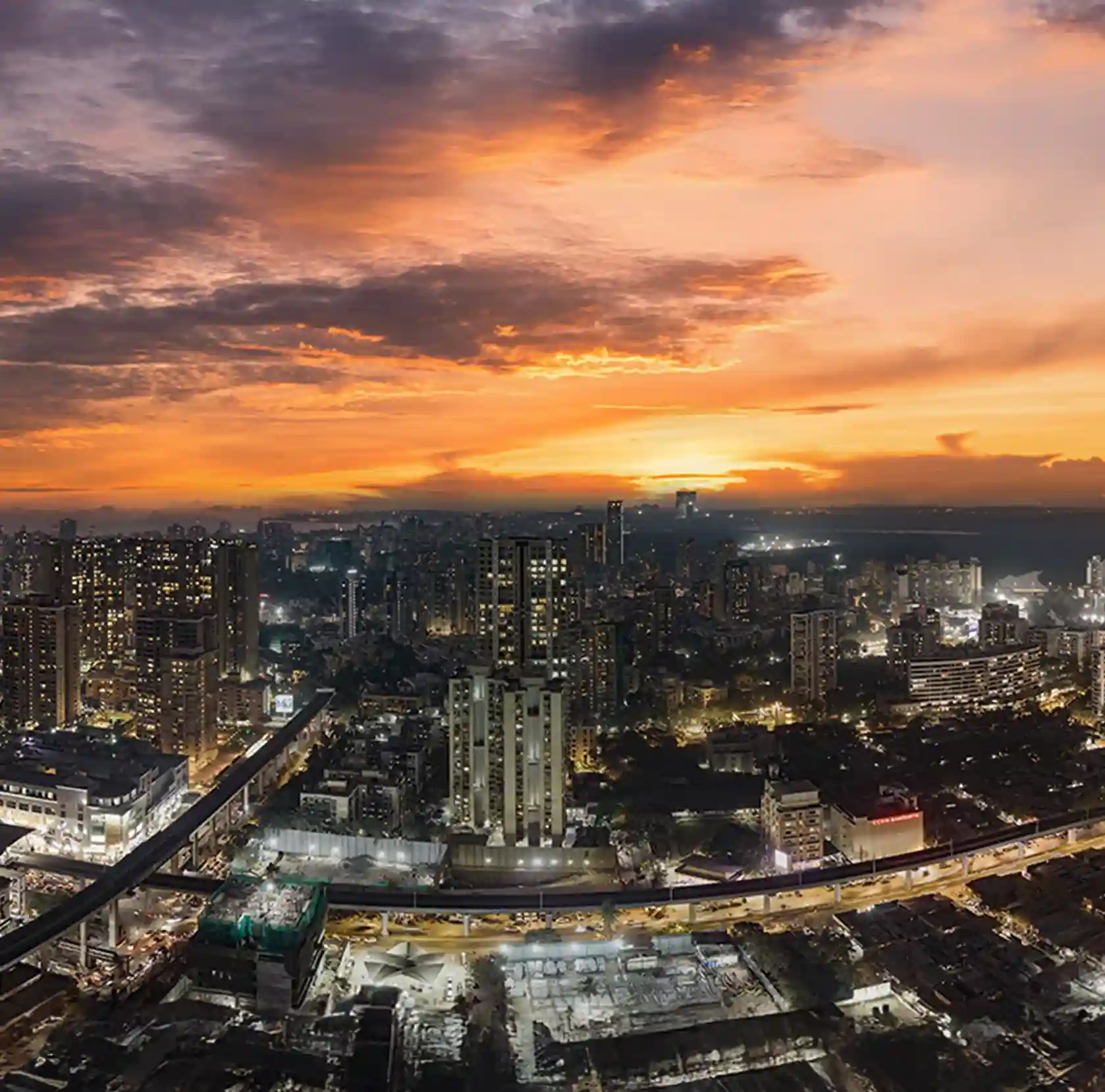
Why Andheri West luxury living has become the city's most complete urban address
Mumbai has always been a city of distinct personalities. Each neighbourhood carrying its own accent, its own tempo, its own particular relationship with ambition and ease. Bandra announces itself with a certain bohemian confidence. Worli speaks the language of corporate altitude. Lower Parel hums with the converted energy of old mills turned new money. And then there is Andheri West. A place that has, over the course of several remarkable decades, quietly assembled something that few urban addresses anywhere in India can genuinely claim: completeness. Not the completeness of a planned township sealed off from the city's vitality, but the organic, layered completeness of a neighbourhood that has grown intelligently alongside the metropolis it belongs to, absorbing the best of what Mumbai offers and arranging it, with a kind of unhurried generosity, within walkable, liveable, knowable distance. Andheri West luxury living, for those who have experienced it in its fullest expression, is less a real estate category than a particular quality of life. One that the city's more celebrated addresses have long aspired to replicate.
To understand Andheri West is to understand, first, the extraordinary geography it occupies within Mumbai's connective tissue. The Western Express Highway runs along its eastern edge like a great arterial current, channelling movement between the city's southern spine and its northern expanses with a fluency that residents of more congested neighbourhoods regard with frank envy. The Andheri railway station, one of the busiest on the Western Line, places the entirety of Mumbai's suburban rail network within reach. A convenience whose value, in a city where time is among the most fiercely negotiated commodities, is almost impossible to overstate. The Mumbai Metro's Line 1, running between Versova and Ghatkopar, threads directly through the neighbourhood, and the expanding metro network continues to deepen Andheri West's already formidable connectivity. The Chhatrapati Shivaji Maharaj International Airport sits within a distance that transforms international travel from a logistical ordeal into a manageable morning errand.
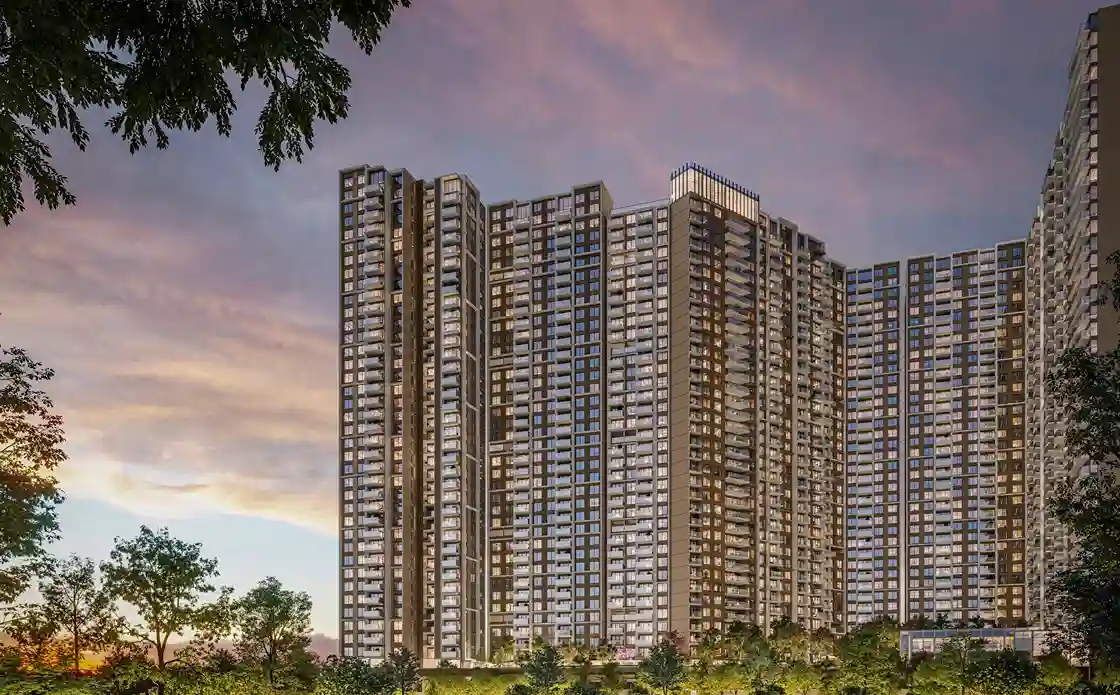
It is this geography, this precise, almost improbable convergence of road, rail, metro, and air, that gives Andheri West luxury living its foundational logic. For the professional whose calendar spans time zones, for the family whose life moves across the city's geography, and for the resident who simply values the freedom that genuine connectivity confers, Andheri West offers an access to Mumbai that few other neighbourhoods can match with such consistency. The Westpark by DLF, rising to thirty-seven storeys within this neighbourhood, understands this logic intimately. Its location is a thought through choice. A recognition that connectivity, at this quality and density, is among the rarest and most enduring forms of residential value that a great city can bestow.
There is a quality that the finest urban neighbourhoods share across the world's great cities. A cultural latitude, a willingness to accommodate the full range of human appetite for experience, from the contemplative to the celebratory. Andheri West possesses this quality in abundance, and it expresses itself in the extraordinary density of cultural and entertainment life that the neighbourhood sustains. The film and television industry, which has shaped Mumbai's imagination and economy for over a century, finds one of its most active homes here. In studios, production houses, and the particular creative energy that accumulates wherever artists and storytellers concentrate.
The restaurant landscape of Andheri West is a map of the world's cuisines rendered in the democratic, experimental spirit that Mumbai has always brought to the table. From the kind of measured, ingredient-focused cooking that earns critical attention to the deeply informal neighbourhood joints where the food carries the authority of decades. Andheri West holds them all without hierarchy, allowing a resident to live a gastronomically rich life within their own postal code.
A home within this cultural ecosystem is, in a very real sense, a home within the city's creative conversation. The Westpark's expansive balconies and grand windows, framing the neighbourhood's animated skyline against Mumbai's wide sky, make that conversation visible and immediate from within the private sanctuary of one's own living room.
Shopping, wellness, entertainment, and the particular pleasure of the well-stocked urban life are not destinations requiring planning and travel in Andheri West. They are simply the texture of the neighbourhood itself, and the residents of The Westpark will inhabit that texture from a position of remarkable elevation. Literally and experientially.
One of the more sophisticated achievements of Andheri West as an urban ecosystem is the manner in which it has integrated commercial vitality with residential quality. A balance that many of Mumbai's neighbourhoods have found elusive. The presence of significant corporate offices, media companies, advertising agencies, and entertainment studios within and immediately adjacent to the neighbourhood means that for a considerable proportion of residents, the distance between home and professional life is measured in minutes rather than hours.
This compression of the work-life geography, which urban researchers increasingly identify as one of the most significant contributors to sustained wellbeing in city dwellers, gives Andheri West a daily rhythm that is at once productive and inhabitable.
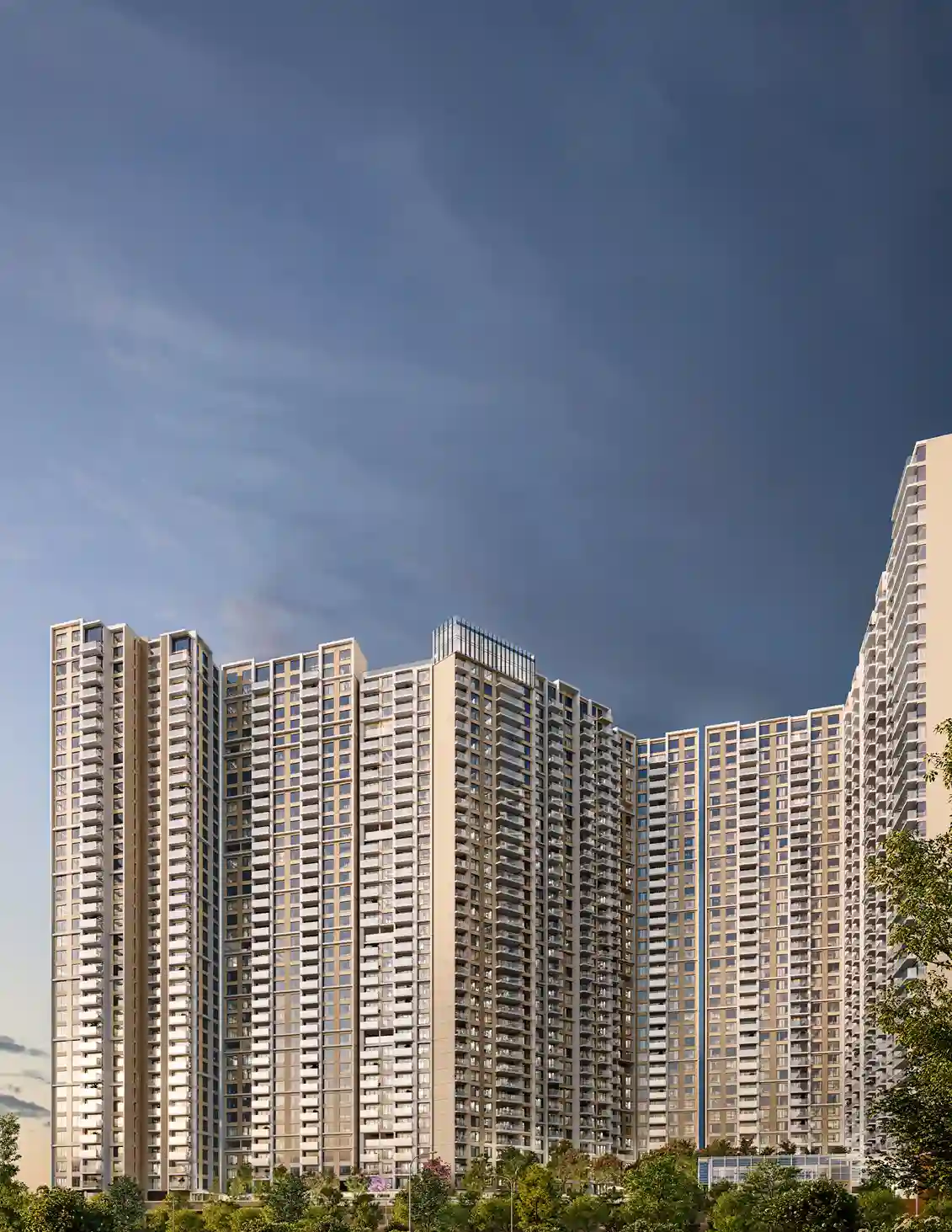
The Westpark sits within this rhythm as both beneficiary and anchor. Its four towers, each rising with the quiet confidence of a building that knows exactly where it stands, place their residents at the precise intersection of professional proximity and residential retreat. The social infrastructure that the neighbourhood sustains, the coffee houses where ideas are exchanged, the restaurants and lounges that serve as the city's informal boardrooms, the creative and commercial energy that animates the streets below, remains fully, readily available.
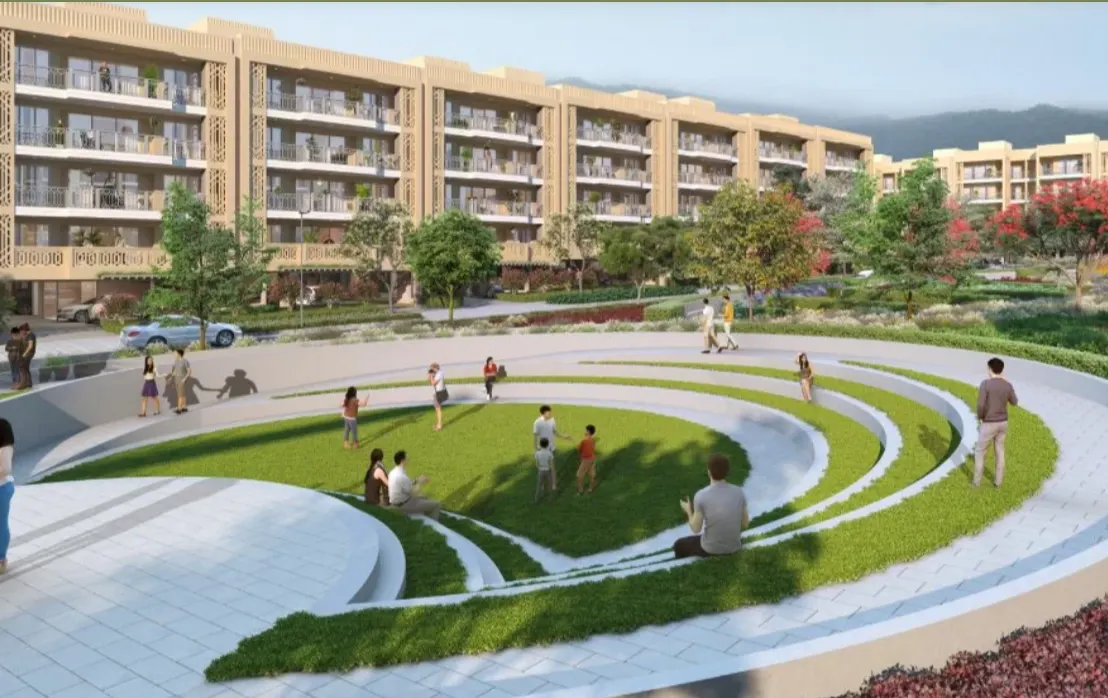
And then, when the day is done and the city's momentum calls for a counterweight, The Westpark offers its residents an Eco-Deck of six thousand square metres, a 1.2-kilometre walking track, and a plethora of amenities spanning across fifty thousand square feet of club facilities. A world whose pace is entirely its own, held within the same address that places them at the heart of everything.
Beneath every great neighbourhood's visible pleasures lies an invisible architecture. The schools, hospitals, markets, and civic institutions that make daily life genuinely sustainable across a lifetime. Andheri West's social infrastructure is, by Mumbai's demanding standards, exceptional. Some of the city's most respected educational institutions are within comfortable reach, offering families the assurance that a child's formative years will be shaped by quality without requiring the family to relocate in pursuit of it.
Leading hospitals and specialist medical facilities serve the neighbourhood with a comprehensiveness that transforms healthcare from an anxious logistical challenge into a reliable, accessible resource. Markets, from the large-format retail that accommodates a month's provisioning to the neighbourhood vendors whose relationship with their customers spans generations, give the area a domestic completeness that sustains the household as much as the spectacular sustains the spirit.
This invisible architecture is what distinguishes a neighbourhood one visits from a neighbourhood where one truly lives. For the families and professionals who choose The Westpark's generously proportioned three and four-bedroom residences, it is precisely this completeness that justifies the choice. The knowledge that the neighbourhood surrounding their home has already thought ahead, already assembled the infrastructure of a good life, and placed it within the easy reach of daily routine.
It is the particular logic of great urban neighbourhoods that premium living, when it arrives, feels less like an imposition upon the existing fabric than a natural culmination of it. Andheri West luxury living has evolved in precisely this organic manner. Drawn by the neighbourhood's connectivity, its cultural richness, its social infrastructure, and the quality of daily life it affords, developers and architects have brought their most considered work to this address. The Westpark represents, within this evolution, a significant moment of arrival. DLF, whose eight decades of experience have shaped some of India's most enduring residential landscapes, has brought to Andheri West a quality of design and scale that speaks to the neighbourhood's fullest potential.
The residences within The Westpark are conceived with the understanding that their inhabitants are people of discernment. People who have chosen Andheri West deliberately, and who expect their homes to honour that choice with equivalent seriousness. Floor-to-ceiling windows frame the skyline with the assurance of a building that understands the view it commands. Glass-railed balconies extend the living space into open air, into the particular quality of light that this part of Mumbai produces at dusk and dawn. Soaring ceilings and open-plan living areas create interiors that feel, in the way that only genuinely well-designed spaces do, both expansive and deeply personal. Rooms that hold a family's life with the same ease with which they hold the city's horizon.
Someone once said, with characteristic precision, that the places we choose to inhabit reveal something essential about who we understand ourselves to be. The resident who chooses Andheri West luxury living is, in this sense, a particular kind of ‘Mumbaikar’. Someone who wants the full experience of the city, who values connectivity as a form of freedom and cultural richness as a form of daily nourishment, but who also understands that a home must be a place of genuine restoration. They are people for whom the neighbourhood's layers.its commercial energy, its creative community, its social infrastructure, its parks and restaurants and studios and schools; represent a life rather than a location.
Within The Westpark, that understanding has been given architectural form. The swimming pool, the multi-sport training areas, the dedicated wellness zones both indoor and outdoor, the spaces conceived for children and for elders to occupy the same generous, planted grounds. These are the amenities of a building that has taken its residents seriously, that has imagined the full breadth of a life well-lived and designed accordingly. The neighbourhood provides the city. The Westpark provides the home. Together, they compose something that Andheri West has been quietly building toward for decades.
Mumbai is a city of extraordinary promises. Of possibility, of mobility, of a life lived at the pace and scale of one's own ambition. Andheri West keeps them all. Its connectivity places the whole city within reach. Its cultural life places the whole world within conversation. Its social infrastructure places the practical necessities of daily life within easy, reliable access. And its residential landscape that The Westpark represents, with its sky-facing towers, its curated green Eco-Deck, its fifty-plus amenities, and its four hundred and sixteen homes designed for people who have earned the right to expect excellence, places within reach the kind of home that does not merely accommodate a good life but actively participates in its creation. This is a neighbourhood that has grown up alongside its city, absorbed its lessons, and arrived, at this particular moment, at a maturity that is entirely, unmistakably its own.
Note: Amenities, landscaped areas, club and recreation spaces, specifications, phases, timelines, and access details are subject to applicable approvals, completion status, and user terms. Please refer to official project collateral for final details.