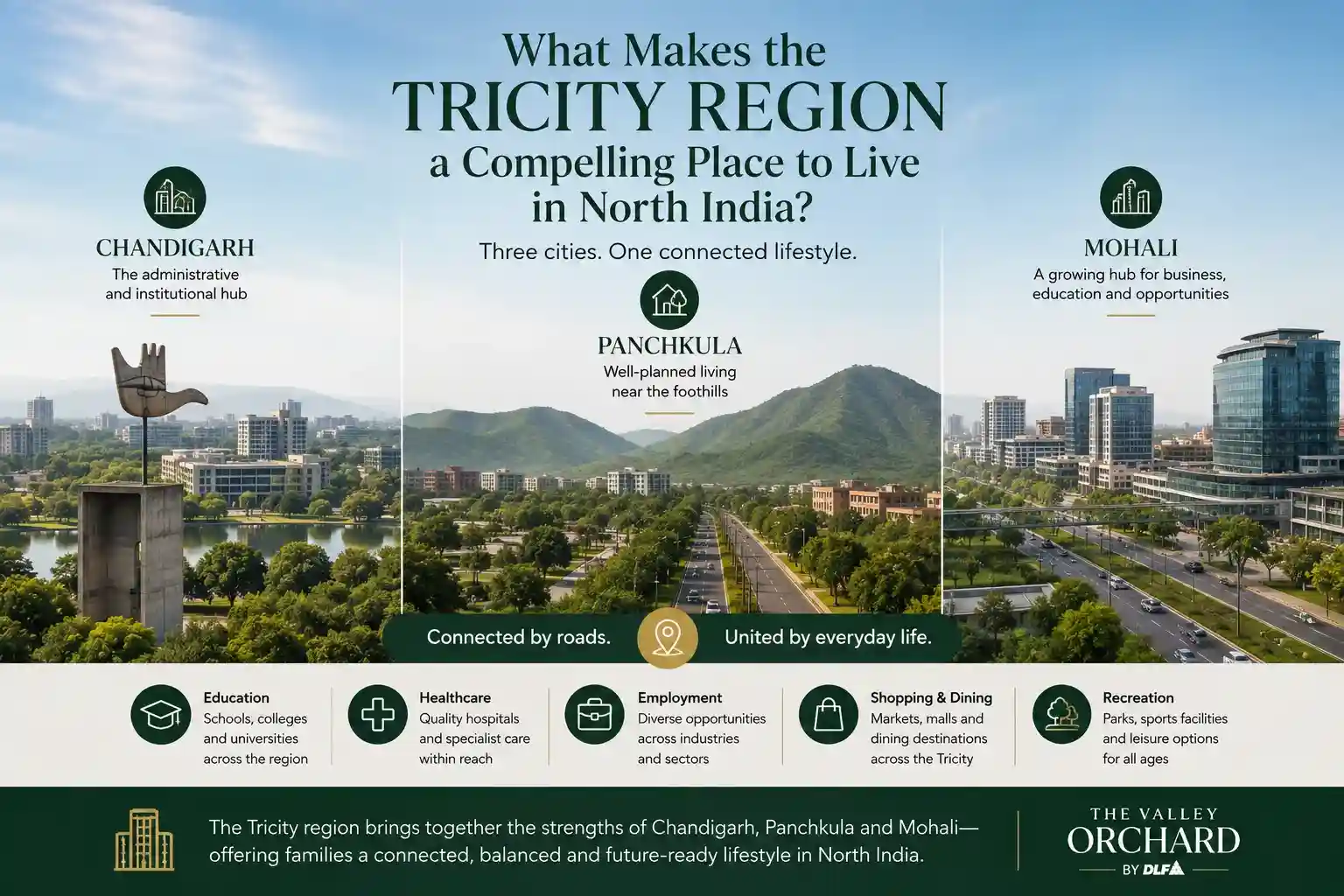
A family may live in Panchkula, work in Chandigarh, study in Mohali and use schools, hospitals, markets and recreation across all three cities.
That movement defines everyday life in the Chandigarh–Panchkula–Mohali region. Although the three cities have separate administrations and distinct urban identities, their workplaces, institutions, roads and residential areas remain closely connected.
For families choosing a home, this creates a wider field of possibilities. Work, education, healthcare and family commitments do not need to remain confined to one city. Daily routines can extend across the region while the household remains rooted in one address.
Chandigarh remains the administrative and institutional centre of the region. Its sector-based plan, road hierarchy, educational institutions, healthcare facilities and commercial areas continue to shape how residents move through the city.
Panchkula contributes established residential sectors, civic infrastructure and proximity to the foothills of the Shivalik range. Its connections with Chandigarh and Mohali allow residents to use workplaces, schools and services across the wider region.
Mohali adds universities, sporting facilities, commercial districts, technology and business centres, and airport access. Its continued growth expands the range of employment, education and residential options available within the Tricity.
Together, the three cities support a daily rhythm that regularly crosses municipal boundaries.
Sector-based planning remains one of the region’s most recognisable features.
Residential areas, schools, markets, institutions and commercial centres sit within a road structure that helps organise movement through Chandigarh and Panchkula. Mohali adds newer residential and commercial districts connected with the wider road network.
Urban growth inevitably brings congestion, longer journeys and changing neighbourhoods. Even so, the relationship between sectors, roads, institutions and commercial areas gives much of the region a recognisable physical structure.
For households, this can make regular journeys easier to understand and plan. School routes, office travel, shopping, healthcare visits and social commitments often extend across several parts of the Tricity.
The region includes schools, colleges, universities, professional institutes and research organisations across Chandigarh, Panchkula and Mohali.
Families can consider educational options across all three cities as children move from school to higher education. The same regional access supports working professionals pursuing specialised courses or professional development.
Healthcare facilities are also distributed across the wider region. Hospitals, clinics, diagnostic centres and specialist institutions serve households with different requirements and age groups.
Employment spans government, education, healthcare, technology, professional services, retail, hospitality, manufacturing and emerging businesses. Chandigarh continues to support administration and professional services, while Mohali adds newer commercial and institutional centres. Panchkula provides access to both cities while sustaining workplaces and services of its own.
Different members of a household may therefore work or study in separate parts of the region while sharing one home base.
Panchkula holds a distinct position within the Tricity.
Its established sectors and civic infrastructure connect residents with Chandigarh and Mohali, while the foothills of the Shivalik range form part of its wider landscape.
Work, education, shopping and healthcare may extend across the region, but Panchkula retains its own residential character. Low-rise neighbourhoods, planned sectors and regional road connections make it relevant for families considering a long-term home within the wider Chandigarh–Panchkula–Mohali region.
The city’s location also allows households to remain within practical reach of major institutions and employment centres without giving up the familiarity of an established residential address.
The region offers different types of homes across established sectors and newer residential developments.
The choice depends on how the household uses the home. A family may need an additional room for work or study, space for visiting parents, access to schools or healthcare, and manageable journeys to workplaces across the three cities.
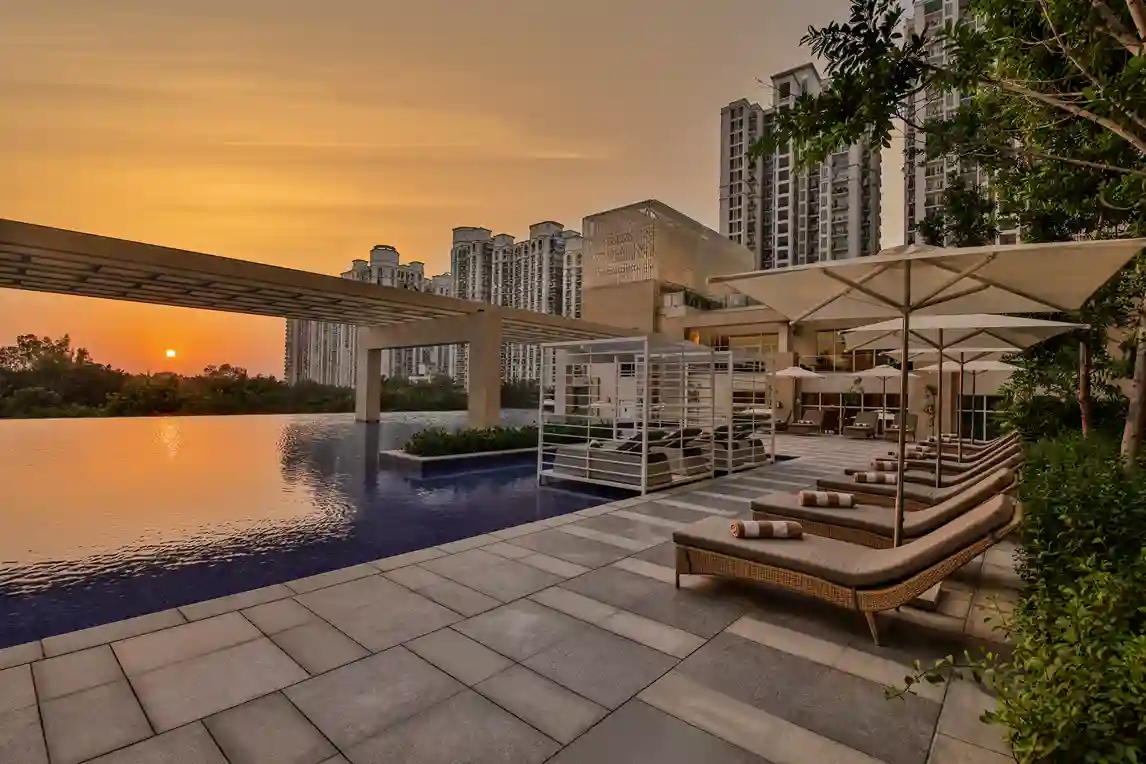
Outdoor areas may also influence the decision. Landscaped grounds, pedestrian paths and shared spaces can support walking and time outside when they remain close to the residence.
A suitable home therefore needs to align its configuration, location and surrounding connections with the family’s regular routines.
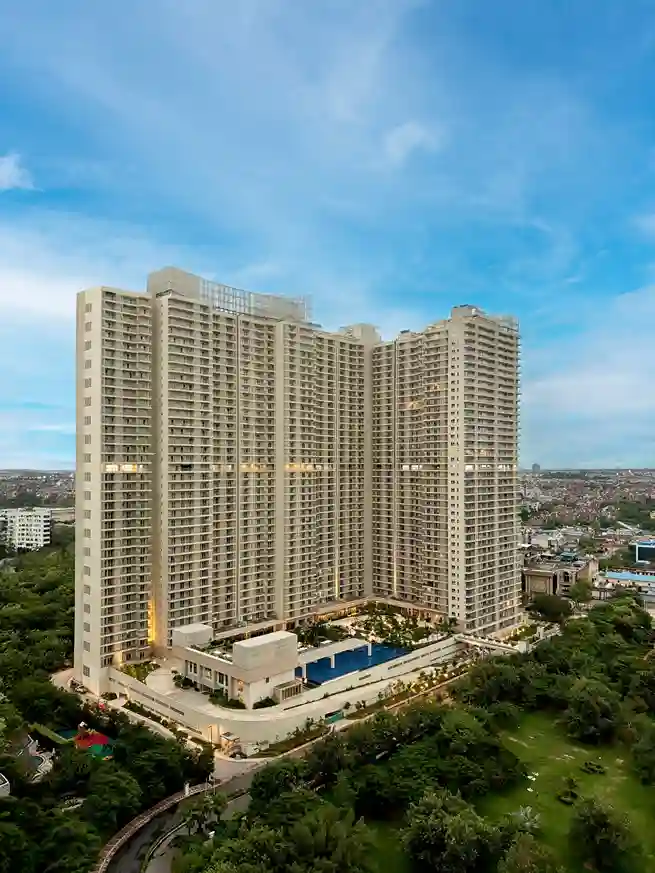
The Valley Orchard by DLF comprises spacious 3 BHK and 3 BHK + Study low-rise residences in Panchkula, near the foothills of the Shivalik range.
The project follows a basement + stilt + four-floor residential format. Deck spaces add an outdoor area connected to the home, while landscaped grounds and pedestrian paths extend movement across the project. Each residence is planned without another home directly behind it.
The 3 BHK + Study residences sold out within 10 days of launch, and all existing 3 BHK and 3 BHK + Study inventory is currently sold out.
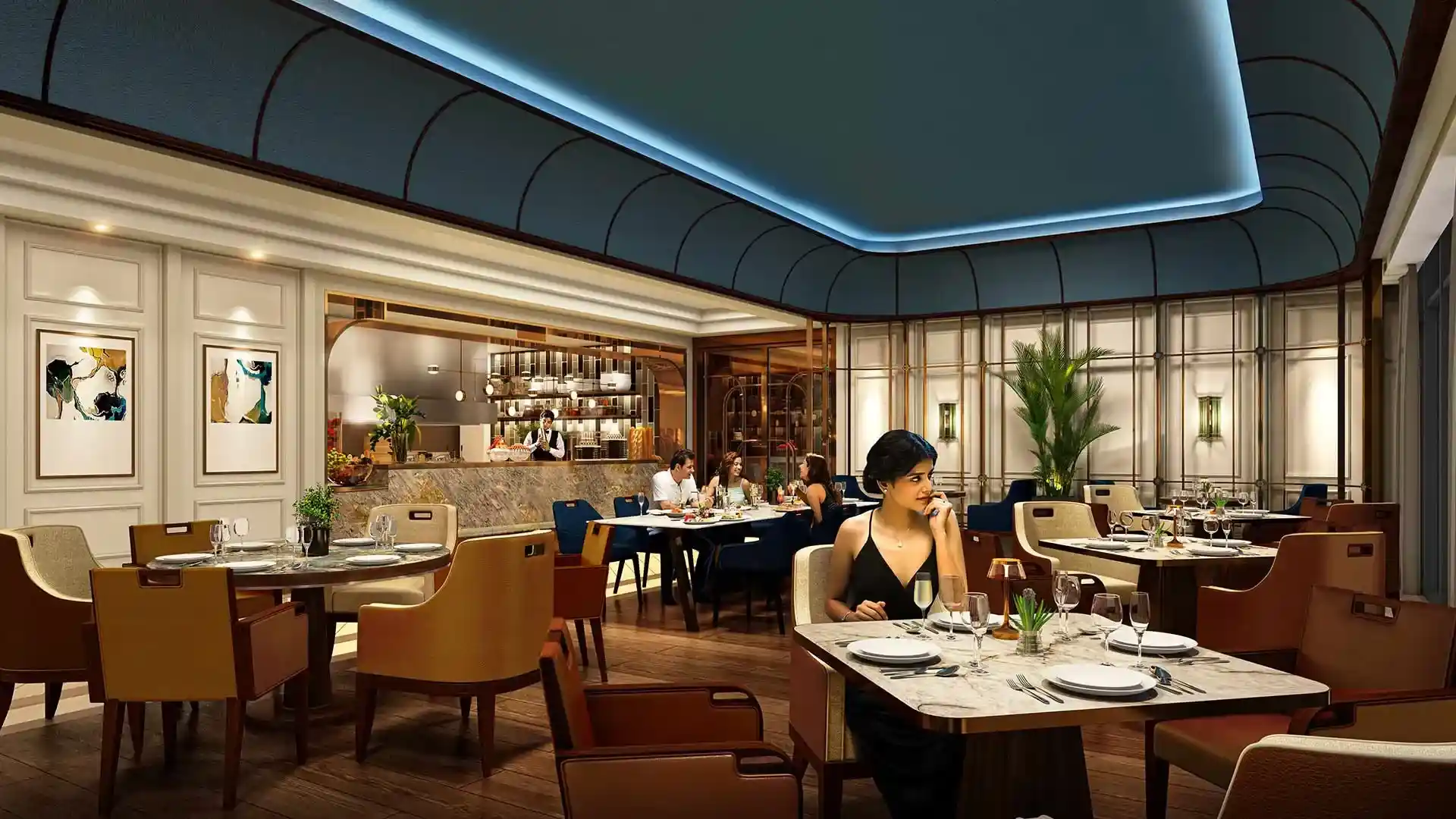
The Valley Club, located near the project, offers fitness, sport, dining and leisure facilities. The Valley Central, an upcoming adjacent commercial development, is proposed to introduce retail, leisure and business spaces. A proposed medical facility also forms part of the wider planning framework.
The appeal of the Tricity comes from the way its three cities function together.
Chandigarh contributes established institutions and sector-based planning. Panchkula brings residential sectors, civic infrastructure and proximity to the foothills of the Shivalik range. Mohali adds educational, commercial, sporting and transport infrastructure.
For families, the result is a region where the home can remain in one city while work, education, healthcare and social life extend across all three.
1. Which cities form the Tricity region?
Ans: The Tricity region comprises Chandigarh, Panchkula and Mohali. The three cities are administratively separate but closely connected through roads, employment, education, healthcare and everyday travel.
2. Why does Panchkula appeal to homebuyers?
Ans: Panchkula offers established sectors, civic infrastructure, connections across the Chandigarh–Panchkula–Mohali region and proximity to the foothills of the Shivalik range.
3. Is the Tricity suitable for families?
Ans: The region provides access to schools, higher education, healthcare, employment centres, shopping, recreation and different types of homes across the three cities.
4. What residences comprise The Valley Orchard by DLF?
Ans: The Valley Orchard by DLF comprises spacious 3 BHK and 3 BHK + Study premium low-rise residences.
5. Is inventory currently available at The Valley Orchard by DLF?
Ans: The 3 BHK + Study residences sold out within 10 days of launch, and all existing 3 BHK and 3 BHK + Study inventory is currently sold out.
To explore the project masterplan or learn more about The Valley Orchard by DLF, connect with the DLF client team.
Note: The Valley Club is near the project and outside the project offering. Membership charges, security deposits, user charges and terms apply. The Valley Central is an adjacent commercial development and sits outside the project. The proposed medical facility forms part of the wider planning framework and should be read as proposed.