


-
 1164
1164 - Posted in August, 2026
Business Park Office Space in India: Why Integrated Campuses Are Back in Demand
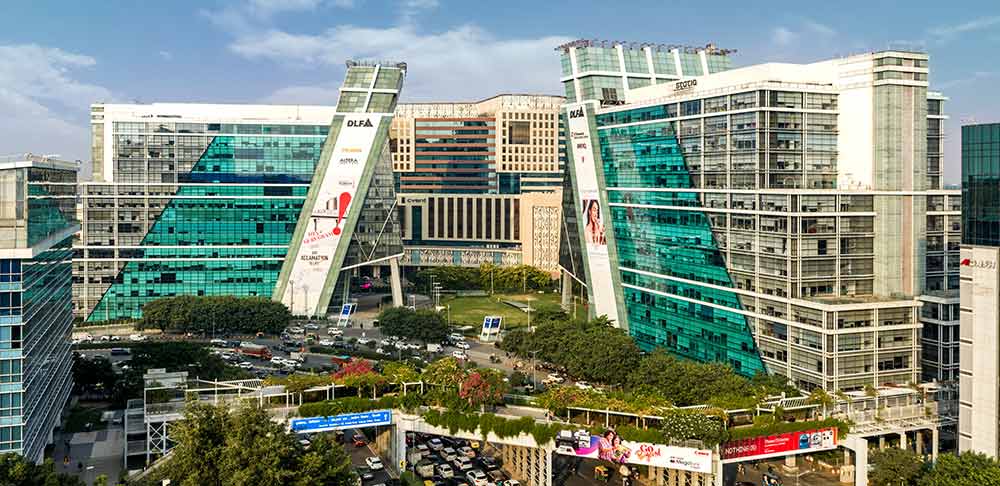
India's commercial real estate market has always been driven by ambition. But the kind of ambition companies are expressing now looks quite different from a decade ago. Demand isn't simply about square footage any more. The question enterprises are asking has shifted from "how much space do we need?" to something considerably harder to answer: "what kind of environment do we want our people working inside every day?" That question, in turn, has brought business park office space in India back to the centre of serious workplace strategy discussions.
Why Business Park Office Space in India Is Gaining Momentum Again
For a period, the standalone Grade A office tower seemed like the obvious answer for enterprises looking to establish a credible city presence. Clean, vertical, easy to photograph for an annual report. But the limitations became harder to ignore as workforces grew, work patterns changed, and talent expectations shifted. A single-building address, however prestigious, couldn't accommodate everything a large organisation now needs within a single campus footprint.
Business parks were always designed to solve a different problem. The model evolved specifically to give large employers room to breathe: multiple buildings, structured amenities, shared infrastructure, and enough land to plan for growth without relocating. What has changed is the sophistication with which these environments are now being developed and managed. Several factors have converged to push demand upward:
- Rapid expansion of global capability centres (GCCs) in India, with companies requiring scalable campuses that can absorb headcount growth without disrupting operations
- Post-pandemic reappraisal of the physical workplace, where organisations now need to justify the commute with a noticeably better experience than working from home
- Greater emphasis on employee wellbeing, sustainability credentials, and technology infrastructure as conditions of attracting senior talent
- The appeal of a consolidated real estate strategy, where a single campus partner replaces multiple fragmented leases across a city
What Makes an Integrated Commercial Business Park Different from a Traditional Office Building?
The difference isn't merely scale. A traditional office building gives a company a floor or a block of floors. An integrated commercial business park offers something closer to a planned ecosystem, one where the physical environment has been designed with the full working day in mind rather than just the hours spent at a desk.
The distinction matters in practice. When employees arrive at a well-designed campus, the experience begins before they reach their workstation. Food and beverage options, fitness facilities, open green spaces, banking and retail conveniences, medical support, and structured collaboration zones are embedded into the environment rather than existing as afterthoughts. This has real consequences for how people feel at the end of a working day, and over time, for how they feel about the organisation that chose to put them there.
There is also an operational argument for integrated campuses that often gets underweighted in initial conversations about real estate. A managed office campus in India, developed and operated by a single experienced developer, provides a consistency of standards that a patchwork of individual buildings rarely can. Security protocols, power backup, internet resilience, housekeeping, and facility management operate at the campus level rather than the building level, which creates predictability that enterprise leadership values.
Key structural differences between an integrated business park and a standard commercial building include:
- Multiple buildings and interconnected blocks allow phased expansion within the same address
- Dedicated amenity infrastructure rather than shared building lobbies
- Centralised facility management maintains consistent standards across the full campus
- Transport connectivity planning, including shuttle services, parking at scale, and proximity to metro or road networks
- Green landscapes and outdoor spaces that contribute meaningfully to employee experience
The Role of Business Parks in Supporting Enterprise Growth and GCC Expansion
India's GCC story is well documented at this point. Hundreds of multinational organisations now operate global capability centres from Indian cities, and a significant number are expanding the scope and size of those operations substantially. The underlying logic is familiar: access to deep talent pools, competitive cost structures, and a rapidly maturing business infrastructure.
What receives less attention is the real estate implication of this expansion. A GCC that starts with 500 employees and grows to 2,000 within three years needs a campus that can absorb that growth without forcing a disruptive relocation. Standalone buildings rarely provide that flexibility. Business parks, by contrast, are structured precisely to accommodate phased growth, often within the same address, sometimes within adjacent blocks.
The certifications that enterprise occupiers increasingly demand are also more naturally achievable at the campus scale. LEED Platinum-certified buildings, MERV-14 air filtration systems, WiredScore Platinum-certified connectivity infrastructure: these are specifications that make commercial sense when deployed across a large development. They signal to global headquarters that the India operation is being housed to international standards, which matters for internal governance as well as talent attraction.
There is a broader framework here, too. Leading campus developers now approach their projects through what might be described as a five-pillar lens covering sustainability, safety, social infrastructure, scale, and space solutions. Each dimension addresses something a GCC client genuinely needs, rather than representing a marketing abstraction.
Key Features Companies Should Look for in a Modern Corporate Campus Office Space
The gap between a business park that looks good on paper and one that functions well for its occupiers is wider than many real estate teams expect before they move in. Certain features that appear standard in developer brochures make a substantial difference in practice; others that receive less attention in initial conversations turn out to be operationally critical.
When evaluating corporate campus office space in India, enterprises should examine:
- Connectivity infrastructure: WiredScore Platinum-certified buildings provide verified assurance on internet resilience, redundancy, and capacity, which matters significantly for technology-intensive operations
- Air quality and health standards: MERV-14 air filtration and building management systems that actively monitor indoor environmental quality are no longer exceptional, they are expected by enterprise occupiers making long-term commitments
- Power and energy reliability: Uninterrupted power supply systems, renewable energy integration, and campus-level energy management are all indicators of operational maturity
- Amenity depth: Food courts, retail, healthcare, fitness, banking, and childcare facilities embedded in the campus rather than requiring a drive to access
- Flexibility of space: A genuine flexible office campus in India should provide options ranging from large contiguous floors to smaller configurable zones, accommodating different business units and working styles
- Sustainability credentials: LEED-certified buildings signal not only environmental responsibility but also operational efficiency, which translates directly into long-term occupancy cost control
How Integrated Campuses Improve Employee Experience, Collaboration and Productivity
There is a version of this conversation that quickly becomes theoretical, where terms like "culture" and "collaboration" float untethered from any observable reality. The more useful question is concrete: what do employees actually do differently in a well-designed campus compared to a conventional office building?
The answer involves daily friction. Not the dramatic problems that get escalated, but the accumulation of small inconveniences that erode energy over time. A 25-minute drive to find lunch. A gym that exists in theory but requires planning a separate journey. Meeting rooms that require booking three days in advance across three different systems. These are the textures of a workplace that hasn't been designed with the working day as its organising principle.
An integrated campus absorbs many of these frictions by design. The working day becomes more continuous and less interrupted, which has consequences for both individual productivity and the informal social interaction that genuine collaboration requires. Research consistently shows that proximity and ambient social exposure, the kind that comes from sharing a campus rather than just a building, are meaningful drivers of cross-functional collaboration.
For organisations running large GCC operations, the campus environment also functions as a retention signal. In markets where talent competition is intense, the quality of the physical environment is one of a relatively small number of factors an employer can visibly control. A campus that looks, feels, and functions well is an argument made in concrete terms, not just in offer letters.
Why Sustainability, Technology and Wellness Are Shaping the Future of Business Park Developments
The pressure on developers and occupiers alike to treat sustainability as a genuine operational priority rather than a compliance exercise has intensified considerably in recent years. For enterprise occupiers with global reporting obligations, the sustainability credentials of their physical real estate now appear in ESG disclosures and are visible to investors, regulators, and increasingly, to employees themselves.
LEED Platinum certification represents the most widely recognised benchmark in this space, covering energy efficiency, water management, indoor environmental quality, and materials. For a business park operation at scale, achieving and maintaining this certification requires sustained investment and operational discipline. Occupiers who choose LEED-certified buildings are effectively outsourcing part of their sustainability burden to the developer's operating standards.
Technology infrastructure has moved into the same category. WiredScore Platinum-certified campuses provide enterprises with verified assurance on connectivity standards, which is particularly relevant for organisations whose India operations involve intensive data processing, real-time communication with global teams, or regulatory requirements around data security and continuity.
Wellness has followed a similar trajectory, shifting from an optional amenity to a baseline expectation. Campuses that integrate natural light, air quality monitoring, outdoor spaces, fitness facilities, and food options that go beyond canteen-standard catering are responding to a genuine shift in what employees believe a reasonable employer should provide.
Leading Business Park Destinations in India for Global and Domestic Enterprises
India's commercial real estate landscape has matured significantly across several major cities, and the quality of business park development varies considerably between locations. The cities attracting the most enterprise interest share a combination of talent depth, infrastructure investment, and a critical mass of established occupiers that makes the ecosystem self-reinforcing.
Gurugram
Gurugram remains one of India's most significant enterprise office destinations, with a concentration of multinational occupiers that has accumulated over two decades. DLF Cyber City in Gurugram is among the most recognisable commercial business park addresses in the country, home to a large cluster of global organisations operating at scale. DLF Downtown Gurugram and DLF Cyberpark in Udyog Vihar represent newer and expanded options within the same city, each addressing different requirements in terms of building specification, campus character, and proximity to residential catchments. DLF Atrium Place on NH-48 offers an additional campus-format option for organisations looking for a distinct address within the Gurugram ecosystem.
Hyderabad
Hyderabad has built one of India's most competitive GCC ecosystems, with strong demand concentrated around Gachibowli and its surrounding corridors. DLF Cyber City Hyderabad in Gachibowli sits within this established technology and enterprise cluster, offering campus-format space to occupiers who want to be positioned inside an already-mature commercial ecosystem with good talent access and infrastructure.
Chennai
Chennai's commercial market is defined by a combination of engineering talent, operational cost efficiency, and a steady expansion of enterprise occupiers establishing or deepening their India presence. DLF Downtown in Tharamani, Chennai and DLF Cyber City in Manapakkam, Chennai both address this demand, providing large-format campus environments in established commercial corridors with good connectivity to the city's technology talent base.
Noida
DLF Techpark Noida serves enterprise demand in the National Capital Region for occupiers who want proximity to Delhi and access to northern India's talent pools within a campus office environment.
Chandigarh
DLF Techpark Chandigarh represents an interesting proposition for enterprises exploring second-tier city strategies or seeking to establish operations in a location with a distinct talent profile and lower competitive intensity than the primary metros.
Why Enterprises Are Choosing Integrated Campuses for Long-Term Workplace Strategy
The shift toward business park office space in India as a long-term strategic choice, rather than simply a pragmatic real estate decision, reflects something broader about how large organisations are thinking about their physical presence.
A campus is a statement of intent. It says the organisation expects to be here for a considerable period, that it intends to grow, and that it believes the environment in which its people work is worth investing in seriously. For GCCs in particular, where the India operation has moved from a cost-efficiency rationale to genuine strategic value, the quality of the campus has become part of how the organisation represents itself internally to global leadership.
Scalability is perhaps the most practically significant advantage. A flexible office campus in India, developed by a partner with a substantial land bank and operational experience, can absorb growth in ways that independent building leases simply cannot. When a capability centre expands its headcount by 40 percent over eighteen months, a campus can respond with adjacent space, additional amenity capacity, and consistent operational standards. A collection of fragmented leases cannot.
The financial logic is also worth examining. Consolidated occupancy at campus scale typically offers greater negotiating clarity than a patchwork of individual arrangements across multiple buildings and landlords. Facility management costs, energy procurement, and infrastructure investment all benefit from scale.
For enterprises thinking seriously about where their India operations will be housed over the next decade, the integrated campus model addresses scale, sustainability, technology, talent experience, and operational resilience in a single decision. That combination is proving compelling in ways that standalone buildings, however Grade A their specification, are finding difficult to match.
Discover integrated DLF office campuses to explore how a managed campus environment can support your organisation's growth ambitions in India.
FAQS
Business park office space refers to commercial workspace within a planned multi-building campus, offering shared amenities, infrastructure, and professional management. It is designed for enterprises requiring scale, operational consistency, and integrated facilities beyond what a single office building provides.
A standalone building provides individual floors or units within a single structure. A business park offers multiple buildings, campus-level amenities, shared infrastructure, and room for phased expansion, all managed under a unified operational framework, which standalone buildings typically cannot replicate.
Integrated campuses address enterprise demands for scalability, sustainability credentials, technology infrastructure, and strong employee experience. The growth of GCCs and rising talent expectations have made the quality of the physical environment a genuine strategic factor in India's enterprise real estate decisions.
Yes. Business parks are particularly well suited to GCCs because they offer campus-scale flexibility, LEED-certified and WiredScore Platinum-standard specifications, phased expansion options, and the kind of operational consistency that multinational governance requirements demand from their India real estate.
Modern business parks typically provide food and beverage outlets, fitness centres, healthcare facilities, retail conveniences, banking services, structured green spaces, collaborative zones, large-format conference facilities, and robust transport connectivity including shuttle services and proximate metro access.
