


-
 642
642 - Posted in September, 2026
Commercial Office Space in Chennai: What Global Occupiers Should Evaluate
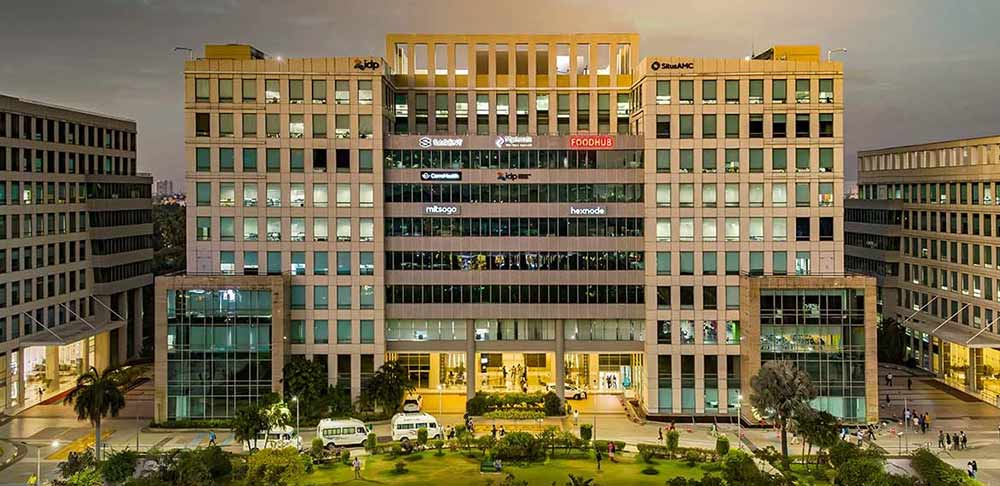
Global occupiers arriving in Chennai for the first time often carry a set of assumptions that the city quietly disproves. They expect a market still catching up. What they find is a commercial office ecosystem with decades of enterprise-grade experience, a workforce that many comparable markets would trade for in an instant, and a building stock that, in its best examples, holds its own against Grade A offices anywhere in Asia. The more instructive question is not whether Chennai can support a global operation. It is whether the global occupier knows what to look for when evaluating it.
That evaluation looks different here than it does in markets more familiar to international real estate teams. Understanding the specifics is what separates a sound location decision from an expensive course correction three years into a lease.
Why Chennai Attracts Global Office Occupiers
The honest answer has two parts, and most discussions emphasise only one. The first part is talent. Chennai's engineering and technology graduate output, sustained by institutions that have been producing technically credible professionals for decades, gives the city a workforce depth that matters considerably for operations requiring capability at scale. GCC operations running analytics, software development, finance, or legal functions rely on mid-career professionals with five to fifteen years of relevant experience. Chennai has that cohort in meaningful volume, and critically, it retains it better than markets where employer competition has pushed attrition to disruptive levels.
The second part, less frequently discussed, is operational predictability. Chennai's commercial office market has not experienced the boom-and-bust dynamics that have periodically distorted supply and pricing elsewhere. The city's steady pace of development has produced a leasing environment where occupiers can plan with reasonable confidence over a three-to-five-year horizon, which is exactly the timeframe that matters when committing to commercial office space in Chennai at enterprise scale.
Factors Drawing Global Occupiers to Chennai's Office Market:
- Sustained talent pipeline across engineering, finance, and technology disciplines
- Workforce stability and attrition rates that compare favourably to other major South Indian markets
- A mature commercial leasing environment without the supply distortions seen in faster-growing cities
- Infrastructure investment in key commercial corridors that has raised the quality ceiling
- Consistent government positioning in favour of IT and enterprise investment
Evaluating Commercial Office Locations in Chennai
Chennai's commercial geography is more nuanced than it appears on a city map. The distinction between micro-markets is substantial, and choosing the wrong one creates friction that runs through the organisation for the duration of the lease.
Two corridors currently define where serious enterprise and GCC leasing activity is concentrated.
Tharamani has evolved from a secondary IT zone into one of the city's primary commercial destinations for large occupiers. The transformation is reflected in the quality of the developments now located here. DLF Downtown Chennai in Tharamani is a large-format integrated development designed specifically for enterprise and GCC tenants that require scale, campus environments, and a complete workplace ecosystem rather than a standalone building with limited surrounding infrastructure. Tharamani's proximity to the southern residential belt, where a significant portion of Chennai's IT and finance workforce lives, gives it a commute logic that makes daily attendance easier to sustain at the headcount levels GCC operations require.
Manapakkam occupies the western corridor and draws from a different residential catchment: Porur, Guindy, and the western suburbs that house a substantial and growing professional population. DLF Cyber City Chennai in Manapakkam brings institutional-quality commercial space to a location that offers strong road connectivity from multiple directions, relevant for businesses managing large teams drawn from across the city rather than a single residential zone.
The location evaluation should therefore ask not just "which part of Chennai?" but "which part of Chennai for which workforce profile?" Those are different questions with different answers.
Access to Talent and Industry Ecosystems
Talent access is the primary reason global occupiers are in Chennai at all, so it deserves more analytical rigour than it typically receives during the office search process.
The commonly cited advantages, strong engineering institutions, high graduate output, lower costs than Bangalore, are all real but incomplete. The more operationally relevant question is how the building's location interacts with the commute experience of the specific professionals the business needs to attract and retain.
Senior professionals in Chennai, those with ten or more years of experience in technology, analytics, or finance, have options. They will tolerate a complicated commute for a role they value, but they will not tolerate it indefinitely. A Grade A office in the wrong part of the city, accessible from a narrow residential corridor, limits the recruitment pool more than most occupiers anticipate when they sign the lease.
The talent access evaluation for global occupiers should include:
- Mapping the residential zones of target hire profiles against the office location's commute time
- Assessing metro and road connectivity from the building relative to competing employers in the market
- Understanding whether the micro-market has the peer enterprise density to support lateral hiring over time
- Confirming that the building's amenities and quality are competitive with what employees could access at alternative employers in the same city
The Importance of Grade A Commercial Offices
Grade A is a category that covers significant variation in India's commercial real estate market. For global occupiers accustomed to independently verified building standards in their home markets, the label alone is insufficient.
The benchmarks worth specifying are documented and independently assessed. LEED Platinum certification covers a building's performance across energy, water, indoor environment, and materials. Within the indoor environment category, MERV-14 air filtration is a concrete specification: it defines filtration efficiency with a precision that can be verified rather than simply claimed. For large teams spending substantial working hours in a single building, the quality of ventilated air is an operational matter, not an amenity conversation.
WiredScore Platinum certification addresses digital infrastructure. The assessment evaluates not just current connectivity provision but the building's underlying capacity for technological evolution, its redundancy architecture for business continuity, and the quality of in-building wireless environments that support mobile workforces. For GCC operations maintaining constant connectivity with parent companies in the US, Europe, or Asia-Pacific, WiredScore Platinum certification is a meaningful assurance rather than a marketing credential.
Buildings developed under the 5S framework, covering Sustainability, Safety, Social Infrastructure, Scale, and Space Solutions, integrate these standards into a coherent workplace environment rather than presenting them as separate specifications. The distinction is felt rather than easily quantified: the building works as a system rather than as a collection of individually adequate components.
Scalability for Enterprise and GCC Operations
The scalability question surfaces almost universally when global occupiers reflect on past location decisions, usually in the context of explaining why they are looking for new space.
A GCC operation that enters Chennai at a hundred and fifty seats, projects modest growth, and finds itself at three hundred and fifty within two years has a problem if the original building cannot accommodate that trajectory. The cost of relocation is not just financial. It disrupts team stability, adds administrative burden during a period of operational intensity, and can affect the employee experience at exactly the moment the organisation most needs consistency.
What to establish before committing to any commercial office space in Chennai:
- Total leasable area within the development beyond the initial commitment
- Whether expansion rights or right-of-first-refusal clauses can be negotiated at lease signing
- The floor plate configuration and whether it supports team adjacencies important to the operation
- The developer's track record with expanding tenants within the same development
DLF Downtown and DLF Cyber City Chennai are developed at a scale designed for exactly this kind of growth trajectory. The integrated campus format means a business that starts at one scale can expand within the same address without the operational disruption that a building-to-building move creates.
Serviced, Managed and Conventional Office Formats
Global occupiers typically encounter three commercial office formats in Chennai, each suited to different operational circumstances.
Conventional leases remain the standard for established operations with predictable headcount. The economics are most compelling at scale, typically above a hundred seats, and over a stable three-to-five-year horizon. Security deposits in Chennai's Grade A market are typically equivalent to six to ten months of rent and are negotiated. Rent escalation of approximately 15% every three years is standard. The trade-off is the upfront fit-out capital and the facility management overhead, both of which require local management capacity.
Serviced and managed office space in Chennai suits global occupiers in specific situations:
- First-in-country or first-in-city operations where headcount certainty is limited
- Businesses that need operational readiness within weeks rather than months
- Satellite operations where a full direct lease would be disproportionate to the team size
- Interim requirements while a conventional lease is prepared or a new space is fitted out
The per-seat cost premium over a conventional lease is real, but for businesses in any of these situations, it buys operational speed and management simplicity that have genuine value. Many global occupiers start in managed space within a Grade A development and transition to a conventional lease in the same building as operations mature and team size becomes predictable. That path preserves address continuity, which matters for employer branding and client perception.
ESG and Sustainability Expectations
ESG expectations in global commercial real estate have moved from aspirational to operational. Parent companies with listed equity or institutional investors now routinely require that their real estate portfolio, including India operations, meet documented sustainability standards. The India office is no longer exempt from that reporting requirement.
LEED Platinum certified buildings in Chennai provide the independently verified sustainability performance data that feeds into global ESG reporting frameworks. Energy consumption benchmarks, water management performance, and indoor environmental quality metrics are all documented outcomes of LEED Platinum certification rather than aspirational design intentions.
For global occupiers managing scope 3 emissions reporting, the carbon performance of leased office space forms part of the disclosure. Choosing a building with documented LEED Platinum credentials is not a nice-to-have for these businesses. It is an audit-ready response to a reporting obligation.
The broader implication is that ESG credentials in Indian commercial office space are no longer a differentiator in the premium segment. They are becoming a baseline expectation from the global organisations that occupy it.
Choosing the Right Commercial Office Space for Long-Term Success
The global occupiers that have built stable, effective India operations from Chennai share a pattern in retrospect. They chose their office space at the same level of rigour they would apply to any other infrastructure decision: with documented evidence, a clear understanding of the leasing mechanics, and a view of the location that extended beyond the headline address.
Chennai's commercial office market has reached the point where global occupiers do not need to compromise on building standards to access the city's talent advantages. The best buildings here are genuinely comparable to what international real estate teams would expect in Singapore or London, with the certifications to demonstrate it. The question is whether the evaluation process is rigorous enough to find them.
Explore commercial offices by DLF in Chennai at DLF Downtown Chennai in Tharamani and DLF Cyber City Chennai in Manapakkam, with the institutional-quality standards, verified certifications, and campus-scale infrastructure that global occupiers and GCC operations require.
FAQs
Independent building certifications including LEED Platinum and WiredScore Platinum, location alignment with workforce commute patterns, floor plate size and scalability within the development, and the building's ability to support ESG reporting requirements from parent companies.
Chennai offers comparable Grade A quality to Bangalore and Hyderabad at a broadly stable cost base, with notably lower workforce attrition. It suits global occupiers who value operational predictability and talent retention as much as headline cost efficiency.
Serviced offices offer ready-to-use space with facilities managed by the provider, suited to early-stage or smaller operations. Conventional leases provide full control and better economics at scale but require fit-out investment and local facility management. Most global occupiers transition from serviced to conventional as operations grow.
LEED Platinum provides audited sustainability performance data required for ESG reporting. WiredScore Platinum independently verifies digital connectivity standards essential for GCC and global operations. Both certifications give global real estate teams documented evidence rather than developer assurances.
Tharamani and Manapakkam are Chennai's primary corridors for IT and GCC-grade commercial space. Tharamani suits occupiers drawing talent from the southern residential belt; Manapakkam serves the western and suburban catchments. Location choice should reflect the residential geography of the target workforce.
