


-
 672
672 - Posted in September, 2026
Commercial Office Space in Gurugram: Why Cyber City and DLF Phase 3 Matter
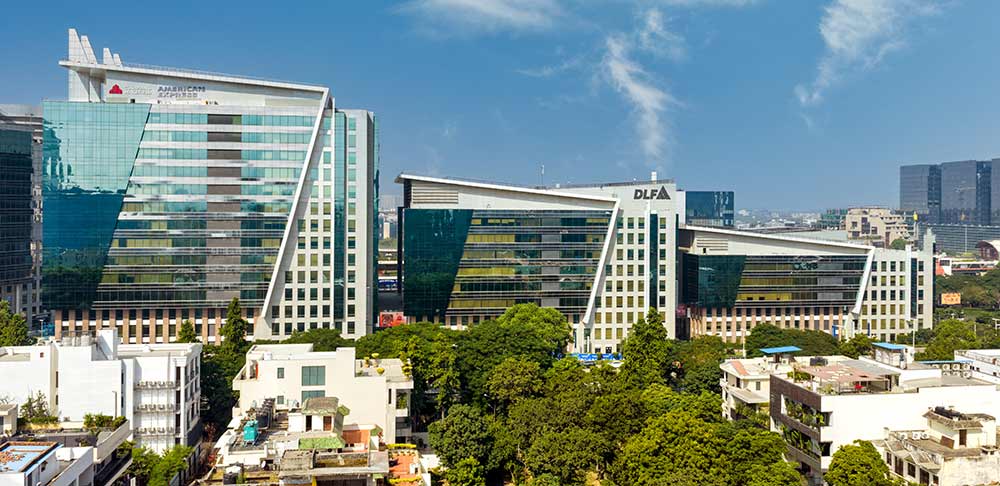
Ask a real estate advisor which part of Gurugram an enterprise should consider, and the answer will almost always circle back to two addresses. Not because the rest of the city lacks commercial space, and there is plenty of it, but because these two locations have developed a character that is genuinely difficult to substitute. Cyber City and DLF Phase 3 keep appearing in enterprise shortlists for reasons that go beyond availability and price. Understanding what those reasons actually are, tells you something useful about how commercial office space in Gurugram works at the top end of the market.
Why Commercial Office Space in Gurugram Is in High Demand
Gurugram's position as North India's premier enterprise office market was not an accident of geography. It was built over decades through a specific combination of factors that other NCR cities have tried to replicate with limited success.
The concentration of senior talent is the most important. Large enterprises need people with leadership experience in multinational environments, and that particular profile exists in greater density in Gurugram than anywhere else in the region. That concentration is self-reinforcing. Companies locate here because the talent is here; talent concentrates here because the companies are here. Breaking into that cycle from outside the city's core commercial zones is harder than it appears.
The demand profile has also shifted. Commercial office space in Gurugram is no longer driven primarily by cost efficiency. Global capability centres (GCCs) now account for a significant share of leasing activity, and GCC operations require quality space, not just affordable space. A GCC running technology or analytics functions for a US or European parent needs infrastructure and building standards that reflect the global organisation it supports. That requirement alone has pulled enterprise demand toward Gurugram's Grade A buildings in a way that mid-quality commercial space simply cannot satisfy.
Key Drivers of Continued Demand:
- Growth in GCC setups requiring institutional-quality office environments
- Senior talent density that makes recruitment at leadership level genuinely viable
- Airport connectivity that supports frequent international movement
- A mature commercial services ecosystem built around enterprise occupiers
- Rising workplace standards from businesses with global ESG and compliance requirements
Cyber City's Position in Gurugram's Commercial Landscape
DLF Cyber City is not simply the largest commercial zone in Gurugram. It is the one that functions most like a complete business district, with everything that phrase implies about density, ecosystem, and operational self-sufficiency.
DLF Cyber City in Gurugram sits at the centre of this district and has done so long enough that the address carries genuine weight in enterprise real estate conversations. The occupier mix across technology, financial services, and professional services creates the kind of peer proximity that matters for recruitment, for client confidence, and for the informal professional networks that develop when a critical mass of enterprise-grade businesses share a postcode.
What the DLF Cyber City address delivers in practical terms:
- Rapid Metro connectivity linking the district to the Delhi Metro network, reducing commute dependency on road infrastructure
- A well-developed hospitality and retail ecosystem within walking distance of the offices themselves
- Established visibility that makes the address recognisable to prospective senior hires and international visitors
- Building infrastructure, including LEED Platinum certified buildings and WiredScore Platinum connectivity, that meets global enterprise standards
Why DLF Phase 3 Remains a Preferred Business Address
DLF Phase 3 operates on a different frequency from Cyber City. It is less dense, less congested during peak hours, and carries a slightly different occupier profile. For certain enterprise types, those characteristics are precisely the point.
The area has a maturity to it that newer commercial zones in Gurugram have not yet accumulated. The supporting infrastructure, residential connectivity, and transport access have had time to develop around the commercial core in a way that feels settled rather than provisional. Enterprises that have operated from DLF Phase 3 over time tend to stay, which itself tells you something about how the address performs in practice.
Atrium Place in DLF Phase V sits within this broader geography and offers enterprises the combination of high-quality commercial space and a somewhat less congested environment compared to Cyber City's busiest zones. For businesses where the daily experience of their workforce matters as much as the headline address, that balance is worth considering seriously.
What Defines Premium Commercial Office Space
The term premium is applied freely in Indian commercial real estate marketing. For enterprises evaluating space in Gurugram, the meaningful differentiators are specific and verifiable rather than descriptive.
LEED Platinum certification measures sustainable building performance across energy, water, materials, and indoor environmental quality. MERV-14 air filtration, which features in buildings meeting the highest LEED standards, is a concrete and testable specification for air quality. In a city where ambient air quality fluctuates, MERV-14 filtration is not a luxury addition. It is a workplace health standard that global enterprises increasingly include in their building requirements.
WiredScore Platinum certification independently assesses digital infrastructure. The assessment covers not just current connectivity but the building's capacity to support evolving technology requirements, redundancy for business continuity, and the quality of in-building wireless environments. For commercial occupiers running technology operations or maintaining constant connectivity with overseas teams, WiredScore Platinum is a substantive assurance.
Buildings developed under the 5S framework, which encompasses Sustainability, Safety, Social Infrastructure, Scale, and Space Solutions, approach workplace quality as a system rather than a checklist. The result is a more integrated working environment rather than one where individual specifications are strong but the overall experience is uneven.
Commercial Office Demand from GCCs and Global Businesses
The GCC wave has reshaped what enterprise occupiers in Gurugram actually require from commercial office space. GCCs running significant operations for multinational parents are not simply looking for a desk allocation. They are building workplace environments that need to attract and retain talent capable of performing complex, high-value functions. That requirement changes the specification conversation entirely. A GCC operation needs:
- Building infrastructure certified to international standards, for both operational performance and ESG reporting alignment
- Workplace amenities that compete with what employees could access at peer employers in the same city
- Scalability within the development to accommodate growth without the cost and disruption of relocation
- An address that supports talent attraction, particularly for senior hires who have options
DLF Downtown Gurugram is designed with this kind of occupier in mind. The development operates at a scale that accommodates GCC growth trajectories, with the infrastructure and campus character that large, complex operations require. For enterprises projecting meaningful headcount growth over a three-to-five-year horizon, the ability to expand within a single development rather than face repeated relocations has real financial and operational value.
Leasing Commercial Office Space in Cyber City and DLF Phase 3
Understanding the mechanics of commercial leasing in these micro-markets prepares enterprises for a negotiation that has specific local characteristics.
Lock-in periods in Gurugram's Grade A buildings typically run three to five years. Security deposits are substantially higher than Western equivalents, usually six to ten months of rent, and are negotiated. Rent escalation clauses of approximately 15% every three years are standard across the market.
Beyond headline terms, enterprise occupiers should understand:
- Handover condition: Bare shell, warm shell, and fitted spaces represent fundamentally different capital requirements. Confirming handover condition before comparing quoted rents is essential.
- CAM charges: Common area maintenance costs are billed separately from rent and can add materially to effective occupancy cost. The calculation methodology varies between buildings.
- Rent-free periods: Standard in the Gurugram Grade A market, typically offered to cover fit-out time. These are negotiable and represent real economic value.
- Expansion rights: For GCC and enterprise occupiers projecting growth, securing the right of first refusal on adjacent space at the time of initial lease is standard practice in major buildings and worth negotiating proactively.
Managed and Flexible Commercial Office Options
The managed office market in Cyber City and DLF Phase 3 has matured to the point where it offers enterprise-grade space, not just startup-oriented hot desks. For specific operational situations, managed space in these locations provides a credible alternative to a direct lease.
Managed office space in Gurugram suits enterprise occupiers in particular scenarios:
- Market entry where headcount certainty is limited and a direct lease commitment is premature
- Interim requirements between lease expiry and new space becoming ready
- Satellite operations where the team size does not justify the overhead of a full facility
- Operations that need a Grade A Cyber City address with minimal setup time
The premium over a direct lease is real, but for businesses in the situations above, that premium buys operational flexibility and reduced management burden that have genuine value. Many enterprises use managed space as a first step in Gurugram, transitioning to a direct lease as operations stabilise and the building relationship develops.
Sustainability in Modern Commercial Buildings
Sustainability credentials in Gurugram's top commercial buildings have moved beyond aesthetics and into measurable performance territory. For enterprises with global reporting obligations, that shift matters.
LEED Platinum buildings in Cyber City and DLF Phase 3 deliver documented outcomes in energy consumption, water efficiency, and indoor environmental quality. These are not aspirational metrics. They are audited and certified figures that feed directly into the scope 3 emissions reporting, increasingly required by global parent companies and institutional investors.
MERV-14 air filtration provides a specific and verifiable indoor air quality standard. In commercial buildings where large teams spend extended working hours, the quality of ventilated air affects both health outcomes and, over time, productivity. Enterprises that specify MERV-14 filtration in their building requirements are not being unnecessarily demanding. They are applying a standard that is routine in Grade A buildings internationally.
Why Cyber City and DLF Phase 3 Continue to Attract Businesses
The simplest explanation for why enterprises keep returning to these addresses is that the cost of a mistake here is lower than the cost of a mistake elsewhere. A business that commits to a smart office address like DLF Cyber City and subsequently finds it underperforms expectations has access to a talent pool, transport links, and building quality that will sustain it. A business that chose a cheaper micro-market to save on rent and found the talent acquisition harder than projected has a more expensive problem to solve.
That asymmetry explains much of the persistence of demand. Enterprises are not irrational in paying a premium for addresses that have proven themselves over time. They are pricing in the risk reduction that comes with a known quantity.
Discover DLF Gurugram office locations across Cyber City, DLF Phase V, DLF Downtown Gurugram, and DLF Cyberpark in Udyog Vihar, with a portfolio that also spans Hyderabad, Chennai, Noida, and Chandigarh for businesses managing multi-city India operations.
FAQs
Cyber City combines the highest concentration of multinational enterprise occupiers in North India with Rapid Metro connectivity, a mature commercial ecosystem, and Grade A buildings certified to LEED Platinum and WiredScore Platinum standards. That combination has proved durable over time.
Yes. DLF Phase 3 and the surrounding DLF Phase V area host enterprise-grade commercial space, including Atrium Place, which suits large occupiers seeking high-quality space with a slightly less congested environment than the densest part of Cyber City.
LEED Platinum certification for sustainable building performance and indoor environmental quality, and WiredScore Platinum certification for digital infrastructure quality. Both are independently verified and reflect operational performance rather than design intent.
GCCs typically require larger floor plates, scalability within a single development, higher infrastructure specifications, and workplace environments competitive enough to attract senior talent. Buildings like DLF Downtown Gurugram are designed with these requirements specifically in mind.
Most Grade A commercial leases run three to five years with a lock-in period, after which exit provisions apply. Rent escalation of around 15% every three years is standard, and security deposits are negotiated, typically equivalent to six to ten months of rent.
