


-
 666
666 - Posted in September, 2026
Commercial Office Space in Hyderabad: What Enterprise Tenants Should Know
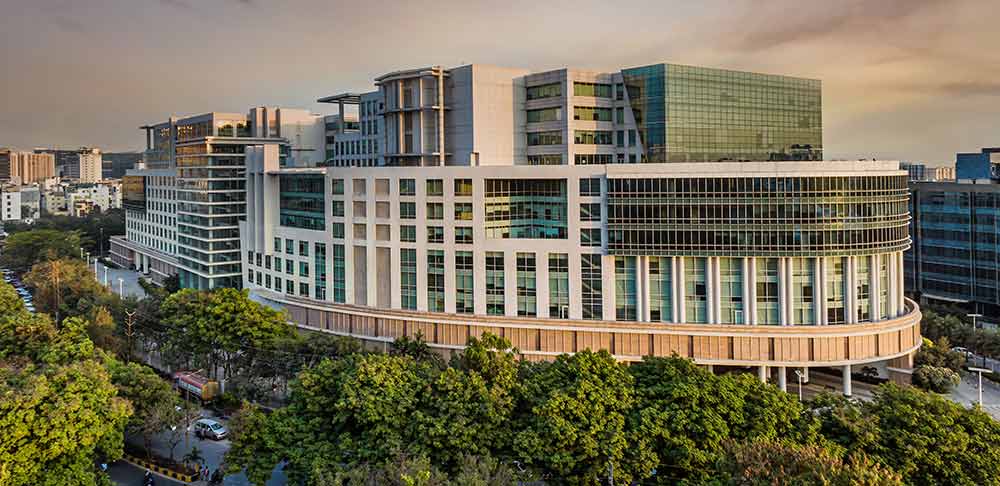
Enterprise tenants evaluating commercial office space in Hyderabad often walk into the process with a checklist built for a different market. They know what to ask for in London or Singapore. They have a mental model of what Grade A means in those contexts. Hyderabad then surprises them: not because it falls short, but because the variables that actually determine long-term success here are weighted differently. The building specification matters, but so does something that rarely appears on a spec sheet. Understanding what that something is requires looking at how Hyderabad's enterprise office market actually functions, rather than how enterprise real estate markets generally do.
Why Hyderabad Has Become an Enterprise Office Hub
The simplest way to understand Hyderabad's commercial office trajectory is to note what has not happened here. The city has not experienced the cyclical oversupply that periodically destabilises leasing markets. It has not seen the attrition spiral that makes talent retention expensive in faster-growing cities. The government's orientation toward enterprise and IT investment has been consistent rather than episodic.
That absence of disruption is itself a strategic asset. Enterprise tenants making five-year lease commitments are, in effect, making a bet on where their operations will sit and what the operational environment around them will look like. In Hyderabad, that bet has paid off consistently for businesses that chose the right buildings in the right micro-markets.
The factors driving sustained enterprise demand for commercial office space in Hyderabad India:
- A technology and finance talent pool that has deepened steadily without the cost escalation seen in more saturated markets
- Policy stability that allows businesses to plan medium-term operations with confidence
- International airport connectivity that supports management teams managing frequent international travel
- A commercial real estate market where quality has improved at scale rather than only in isolated premium projects
- Growing GCC activity that has raised the specification baseline across the Grade A segment
Understanding Hyderabad's Commercial Office Landscape
The commercial office market in Hyderabad is not geographically uniform, and that non-uniformity has real consequences for enterprise tenants who do not map it carefully before committing.
The western corridor, running through Hitec City, Gachibowli, and the Financial District, is where the concentration of Grade A enterprise-grade space is highest. This is where the supporting ecosystem, hotels, executive dining, transport links, and professional services, has developed around the requirements of large enterprise occupiers. The rest of the city has commercial space, but the infrastructure built around a large workforce operating daily is not replicated to the same degree elsewhere.
Within this corridor, the distinctions matter. Gachibowli has the deepest concentration of multinational occupiers and the most mature surrounding infrastructure. DLF Cyber City in Gachibowli, Hyderabad sits within this ecosystem, offering institutional-quality commercial space in the location that enterprise tenants have consistently chosen when the full range of factors is weighed rather than just rent per square foot.
What the Micro-Market Choice Actually Determines
The micro-market decision shapes outcomes that extend well beyond the physical office. It affects:
- Which residential zones your team can realistically commute from, and how long that commute takes
- The peer enterprise density around you, which feeds lateral hiring and informal professional networks
- The quality of the immediate environment that employees experience daily, from transport to food to after-hours infrastructure
- The address signal sent to prospective senior hires evaluating your employer brand against alternatives
Enterprise tenants that choose locations based primarily on rent tend to revisit that decision when recruitment data starts reflecting commute difficulty or when senior candidates mention the location as a hesitation.
What Defines High-Quality Commercial Office Space
This is where the checklist problem becomes most visible. Enterprise tenants accustomed to international markets often apply the Grade A label as a sufficient filter. In Hyderabad, as across India's commercial real estate sector, Grade A is a category rather than a specification.
The independently verified standards that translate across markets are the ones that matter:
- LEED Platinum certification covers building performance across energy efficiency, water management, material quality, and indoor environmental standards. The indoor environment component includes MERV-14 air filtration, a verifiable specification for air filtration efficiency that is documented, tested, and comparable across buildings. For enterprise tenants with large teams spending significant working hours in a single building, this is an operational metric rather than an amenity consideration.
- WiredScore Platinum certification assesses digital infrastructure independently. The assessment covers current connectivity provision, redundancy architecture for business continuity, capacity for technological evolution, and in-building wireless quality. For enterprise operations maintaining constant connectivity with international headquarters or running technology-intensive GCC functions, WiredScore Platinum is a substantive assurance that the building's underlying digital infrastructure has been evaluated against global benchmarks.
- Buildings developed under the 5S framework, encompassing Sustainability, Safety, Social Infrastructure, Scale, and Space Solutions, approach workplace quality as an integrated system. The distinction between a building that meets individual specifications and one where those specifications work together as a coherent environment is felt in daily use even when it is difficult to quantify.
Talent Access and Workforce Considerations
Talent is the primary reason enterprises are in Hyderabad. The office space decision either supports or undermines the talent strategy, often in ways that only become visible after the lease is signed.
The senior talent profile in Hyderabad, professionals with ten or more years of relevant experience in technology, finance, or analytics, is concentrated in the western corridor. That concentration reflects decades of employer activity in Gachibowli and surrounding areas, which drew experienced professionals to live nearby. For a GCC operation needing to hire delivery leads and senior contributors quickly, proximity to that talent pool shortens recruitment timelines in ways that affect time-to-operational-readiness.
Beyond proximity, the office building itself forms part of the employer value proposition. Senior candidates evaluate where they will work as part of their assessment of who they will work for. A LEED Platinum certified building with strong amenities and a credible address in a recognised business district sends a signal that a compromised space in a secondary location does not.
Workforce considerations that enterprise tenants should assess before committing:
- Commute mapping: residential zones of target hire profiles and travel time from those zones to the specific building
- Peer enterprise presence in the micro-market and what it implies for lateral hiring over the lease term
- Amenities available within or immediately around the development, which form part of the daily employee experience
- Building wellness features including air quality standards and access to natural light, which increasingly feature in talent retention conversations
Scalability and Future Expansion Needs
Scalability ranks consistently among the most consequential variables in enterprise leasing decisions and receives less systematic attention than it deserves. The cost of getting it wrong is not just financial. It is operational: a relocation during a period of growth disrupts team stability, affects employee morale, and creates management overhead at precisely the moment the organisation needs operational focus elsewhere.
Before finalising any commercial office space in Hyderabad, enterprise tenants should establish with specificity:
- Total leasable or developable area within the project beyond the initially committed space
- Whether expansion rights or right-of-first-refusal clauses on adjacent floors or buildings can be negotiated into the initial lease agreement
- The developer's documented approach to accommodating growing tenants within the same development
- How the floor plate configuration supports team adjacencies and operational arrangements at larger headcounts
DLF Cyber City Hyderabad in Gachibowli is developed at a scale that serves enterprise growth trajectories rather than constraining them. That design intent reflects the profile of the occupiers the development is built for: businesses that arrive at one scale and need the infrastructure to support a substantially different one within the lease term.
Managed, Serviced and Conventional Office Models
For enterprise tenants at different stages of their Hyderabad operations, the format of commercial office space matters as much as the location.
Conventional leases remain the standard for established operations. The economics are most compelling at scale, typically above a hundred seats and over a stable three-to-five-year horizon. In Hyderabad's Grade A market, security deposits typically run six to ten months of rent and are negotiated, with rent escalation of approximately 15% every three years. The trade-off is the upfront fit-out capital and the facility management overhead, both of which require local operational capacity.
Managed and serviced office space in Hyderabad serves specific situations well:
- First-in-market entry where headcount certainty is limited and a full conventional lease commitment is premature
- Rapid deployment requirements where a team needs to be operational within weeks rather than months
- Satellite operations where the team size does not justify the overhead of independent facility management
- Interim requirements between lease expiry and a new space reaching operational readiness
Many enterprise tenants use managed space as an entry point in Hyderabad, transitioning to a conventional lease within the same building or development as the operation matures. That approach preserves address continuity, which carries value for employer branding and client perception that is easy to underestimate from a purely financial analysis.
Amenities That Add Long-Term Value
The amenity conversation in enterprise leasing tends to be treated as secondary to the specification and financial terms. That ordering is questionable when the amenity environment directly affects whether the organisation can attract and retain the talent its commercial model depends on.
The amenities that consistently matter to enterprise workforces in Hyderabad's Grade A buildings include food infrastructure within or immediately adjacent to the development, fitness and wellness facilities, quality meeting and conference infrastructure, reliable transport links, including provisions for cab and public transport access, and security and access control systems that protect both people and data.
Beyond the practical, the overall quality of the environment shapes the daily experience in ways that aggregate into retention outcomes. A workforce that finds the building pleasant, well-managed, and well-serviced is more likely to remain engaged than one that experiences daily friction with inadequate infrastructure.
Choosing the Right Commercial Office Space in Hyderabad
The enterprise tenants that perform best in Hyderabad over a five-year lease horizon are, almost without exception, those that treated the building selection as a strategic decision rather than an administrative task. They verified certifications rather than accepting Grade A labelling. They mapped commute geometry against their actual workforce profile. They negotiated expansion rights before signing, not after growing.
What is worth noting about Hyderabad specifically is that the right decision here tends to stay right. The city's commercial market is not prone to the volatility that can make a well-chosen office become a poorly-located one within a lease term. A LEED Platinum, WiredScore Platinum building in Gachibowli, chosen for sound reasons in 2026, will, based on current trajectory, still be a sound address in 2031.
That durability is not guaranteed, but it is a feature of Hyderabad's commercial market that enterprise tenants making long-term commitments should weigh alongside the more immediate variables.
Discover DLF Offices in Hyderabad at DLF Cyber City in Gachibowli, with institutional-quality infrastructure, certified building standards, and the development scale that enterprise tenants require for sustainable India operations.
FAQs
Building certifications including LEED Platinum and WiredScore Platinum, location alignment with the workforce commute profile, floor plate scalability within the development, and lease terms that include expansion provisions. These factors collectively determine how the space performs over the full lease term.
Grade A is a broad category in Hyderabad's market. The meaningful distinction is between buildings with independently verified certifications, LEED Platinum, WiredScore Platinum, and those that apply the Grade A label without third-party assessment. Verified buildings provide documented performance standards that uncertified buildings cannot match.
Standard Grade A commercial leases run three to five years with a lock-in clause. Security deposits are typically equivalent to six to ten months of rent and are negotiated at signing. Rent escalation of approximately 15% every three years is standard across the Grade A market.
Managed offices suit enterprise entry-stage operations, rapid deployment requirements, satellite functions, and interim space needs. Most enterprise tenants transition to conventional leases as operations stabilise, ideally within the same development to maintain address continuity and avoid the disruption of relocation.
Gachibowli has the highest concentration of multinational enterprise occupiers in Hyderabad, the most developed surrounding commercial ecosystem, and proximity to the residential zones where senior technology and finance professionals are concentrated. That combination of factors produces better recruitment outcomes and a more functional daily work environment than alternative micro-markets currently provide.
