


-
 604
604 - Posted in September, 2026
Corporate Office Space in India: How to Choose a Future-Ready Workplace
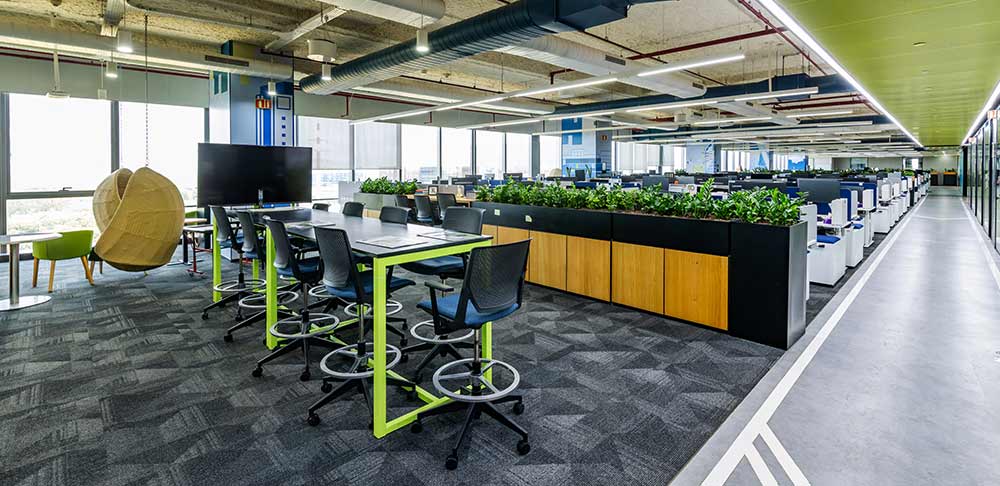
Most corporate office decisions get made twice. The first time, quickly, under pressure from a lease expiry or a headcount milestone. The second time, more slowly and expensively, when the building chosen in haste starts creating friction that nobody anticipated: a location that was supposed to be accessible turns out to be a daily ordeal for the majority of the workforce or a floor plate that felt generous at signing, feeling cramped eighteen months into growth.
India's commercial real estate market has matured substantially, which means the quality gap between a well-chosen and a poorly chosen corporate office has narrowed at the top end but widened everywhere else. Grade A now encompasses a wider range of genuinely excellent buildings than it did a decade ago, but the label is also applied more loosely. Understanding what actually constitutes a future-ready workplace, rather than simply a new one, is where the real evaluation begins.
What Defines a Future-Ready Workplace?
The phrase gets used often enough that it risks losing meaning entirely. A future-ready corporate office is not simply a building with fast internet and a coffee machine. It is a physical environment designed to remain operationally relevant and competitive across the full term of a lease, typically five to ten years, during which the organisation, its workforce expectations, and the surrounding business environment will all change in ways that are only partially predictable.
What distinguishes genuinely future-ready space from merely contemporary space:
- Structural flexibility to reconfigure floor layouts as team structures evolve, without expensive reinstatement work.
- Infrastructure headroom: power, cooling, and connectivity capacity that exceeds current requirements by a meaningful margin.
- Sustainability standards verified through independent certification rather than claimed through marketing.
- A location that will remain relevant to the talent market over the lease term, not just at the point of signing.
- A developer with the operational depth to maintain the building to the standard at which it was delivered.
Why Location Still Matters
The rise of hybrid working prompted a reasonable question about whether office location still carries the weight it once did. The evidence from enterprise and global capability centre leasing in India suggests that it does, though the calculus has shifted slightly.
Proximity to talent catchment areas has become the dominant location variable. A building that saves the company money on rent but adds forty-five minutes to the commute of the majority of the workforce is not a bargain. Attrition and recruitment costs absorb the savings quickly.
DLF's portfolio illustrates how location decisions can be calibrated against specific workforce profiles. DLF Cyber City in Gurugram occupies one of India's most established commercial addresses, with deep professional services and technology talent ecosystems built over two decades. DLF Downtown Gurugram and Atrium Place in DLF Phase V serve parts of the city where residential density is high and commute times are shorter. DLF Cyberpark in Udyog Vihar offers large-format space in a well-connected western Gurugram corridor without the premium pricing of the core Cyber City address.
In Chennai, the choice between DLF Downtown Chennai in Tharamani and DLF Cyber City Chennai in Manapakkam reflects two distinct workforce catchment areas within the same city. In Hyderabad, DLF Cyber City Hyderabad in Gachibowli positions occupiers within what has become the primary GCC and technology precinct for the city, with road connectivity and residential depth that support large workforce operations.
Location Criteria Worth Assessing Rigorously
- Where the majority of the target workforce currently lives, based on real data rather than assumptions.
- Metro station proximity and the quality of last-mile connectivity from transit points.
- Airport access for leadership and visiting international teams.
- The density and quality of retail, dining, and services within or near the campus.
Choosing the Right Corporate Office Format
Not every enterprise requirement suits the same format. The decision between a standalone building, a floor within a multi-tenant tower, and an integrated business park campus involves trade-offs that are worth mapping against actual operational priorities.
Standalone buildings offer identity and control. A company occupying an entire building can shape the ground-floor experience, control access and security protocols, and present a unified brand environment throughout. The trade-off is that the operational overhead of managing a building falls more squarely on the occupier, and expansion options within the same address are limited.
Multi-tenant towers within a managed campus, of the kind DLF operates across multiple India markets, offer a different balance. The shared infrastructure, amenities, and management take the operational burden off the occupier's facilities team. The peer environment of a campus like DLF Cyber City Gurugram or DLF Cyber City Hyderabad also creates a professional gravity that supports talent attraction in ways that an isolated office park cannot replicate.
Business park campuses with multiple buildings and shared amenity zones are increasingly the preferred format for global capability centres. The scale allows for phased occupation and expansion without relocation, which is operationally and commercially significant for organisations with aggressive growth plans.
The Importance of Grade A Office Space
Grade A is a classification that signals a minimum standard of building quality, but experienced occupiers know that the range within that classification is considerable. What to look for beyond the label:
- Floor-to-ceiling heights of at least 2.8 to 3 metres, which affects both perceived spaciousness and the practicality of raised floor systems.
- Structural loading capacity adequate for data centre pods, UPS equipment, and high-density server racks.
- HVAC systems with verified air quality performance, including MERV-14 air filtration, which removes fine particulate matter at a level relevant to occupant health and productivity.
- Power supply with dedicated feeders and DG backup at 100% of connected load, not a partial backup that leaves critical systems at risk.
- Building management systems that provide real-time monitoring of energy, water, and HVAC performance.
- LEED Platinum-certified buildings sit at the top of the verified quality hierarchy for sustainable construction and operation. Planning for Scale and Business Growth
Practical Mechanisms for Embedding Scalability:
- Right of first refusal on adjacent vacant space within the same building or campus.
- Phased occupation arrangements that allow the organisation to activate additional space at predefined triggers rather than committing to it upfront.
- Shell-and-core floors are held in reserve, particularly relevant in large campus environments where a developer controls significant inventory.
DLF's presence across India's major commercial markets, from DLF Techpark Noida to DLF Techpark Chandigarh and from Gurugram to Hyderabad and Chennai, means that multi-city enterprises can structure expansion within a single developer relationship. This simplifies the commercial negotiation and reduces the due diligence burden significantly when a new market requirement arises.
Technology and Smart Building Capabilities
Technology infrastructure in a corporate office affects operational efficiency from day one. The gap between a building with adequate connectivity and one with genuinely excellent digital infrastructure is most visible during periods of peak demand, high-stakes video conferencing, or when network resilience is tested by an external incident.
Key Infrastructure Benchmarks
- Fibre entry from multiple independent service providers, which creates genuine redundancy rather than a single point of failure.
- WiredScore Platinum certification, which independently verifies a building's active connectivity, passive infrastructure, and mobile signal coverage across all floors and zones.
- Smart building integration: sensors, energy management systems, and occupancy analytics that allow the building management team to optimise performance in real time.
- Infrastructure riser capacity that allows occupiers to run dedicated cabling for sensitive functions without complex building modifications.
- WiredScore Platinum-certified buildings represent the highest independent standard for digital infrastructure verification.
Employee Experience as a Business Priority
The relationship between physical workspace quality and workforce behaviour is well-documented at this point, even if the precise mechanisms remain debated. Employees who find their office environment functional but uninspiring tend to treat it accordingly, attending when required and leaving at the minimum. Employees who find it genuinely well-designed, comfortable, and socially connected to their colleagues tend to use it more voluntarily, which has measurable effects on collaboration, culture, and retention.
This is not an argument for extravagant office design. It is an argument for taking the experience of arriving at, working within, and leaving a corporate office seriously as an operational variable, particularly in competitive talent markets.
Workspace experience elements that consistently affect employee sentiment:
- Natural light access across the majority of workstations, not just perimeter offices.
- Acoustic design that creates appropriate quiet zones without making the entire floor feel like a library.
- Meeting room availability and booking systems that prevent the chronic under-supply of enclosed spaces that affects productivity in open-plan environments.
- Temperature control that actually works uniformly across the floor plate, rather than creating hot and cold zones based on proximity to HVAC units.
The Value of Amenities and Social Infrastructure
Workplace amenities have moved from differentiator to baseline expectation in the enterprise office market. The question is no longer whether a building has a café, fitness centre, and concierge services, but whether those amenities are of sufficient quality and variety to serve a large and demographically diverse workforce throughout the working day.
DLF's ‘5S’ framework, which covers Sustainability, Safety, Social Infrastructure, Scale, and Space Solutions, treats social infrastructure as a deliberate design priority rather than an add-on. In practice, this means campuses where food and beverage options are genuinely varied, wellness facilities are properly equipped and maintained, and communal spaces are designed for use rather than for appearance.
For GCCs and large enterprise occupiers, the quality of on-campus social infrastructure also affects recruitment conversations. A candidate evaluating two similar roles at similar compensation will notice whether the office environment suggests that the organisation takes employee experience seriously.
Sustainability and ESG Considerations
The ESG dimension of corporate real estate is no longer peripheral. For listed organisations, those with international parent companies, and businesses operating under institutional investor scrutiny, the sustainability credentials of leased space feed directly into annual disclosures.
What sustainability due diligence should cover:
- LEED certification level: Certified, Silver, Gold, or Platinum, with Platinum representing the highest verified standard.
- Energy consumption benchmarks relative to comparable buildings, and whether the asset has committed to renewable energy sourcing.
- Water recycling and rainwater harvesting systems are particularly relevant in water-stressed cities.
- Waste segregation and management protocols.
- Green transport provisions: EV charging infrastructure, cycle storage, and proximity to public transit nodes.
Why Business Park Campuses Are Gaining Attention
Integrated business park campuses have captured a disproportionate share of enterprise and GCC leasing activity in India over the past several years, and the reasons are structural rather than cyclical.
A well-designed campus provides something that a standalone building or a floor in a commercial tower cannot: the ability to grow in place. An organisation that enters a campus at 30,000 sq ft and expands to 200,000 sq ft over five years has not changed its address, disrupted its workforce commute patterns, or rebuilt its brand environment. The campus has absorbed the growth.
Campuses also create a quality of day-to-day operational experience that isolated buildings struggle to match. The shared investment in landscaping, public realm, food courts, transit infrastructure, and security creates a working environment that justifies the premium it commands in the talent market.
Lease Flexibility and Long-Term Occupancy Planning
Commercial terms in large enterprise leases deserve the same rigour as physical due diligence. The headline rent is one number; the total cost of occupancy over the lease term, including escalations, fit-out costs, operating expenses, and any reinstatement obligations, is a very different one.
Flexibility provisions worth negotiating:
- Break clauses at defined intervals, with clear conditions for exercise.
- Rent-free periods tied to fit-out timelines rather than arbitrary commercial calendars.
- Developer contributions to fit-out costs are more commonly available than occupiers assume in current market conditions.
- Sub-letting rights that provide optionality if the headcount projection changes materially before the lease runs its course.
- Expansion rights are documented at the heads of terms stage, not raised as an afterthought once the developer's negotiating position has improved.
Evaluating Safety and Business Continuity
Safety infrastructure in commercial buildings is most visible when it fails. The better approach is to verify it as part of the initial evaluation rather than discovering its adequacy through an incident.
Building Safety Criteria for Enterprise Occupiers
- Structural certification date and the standards under which the building was assessed.
- Fire suppression system specifications and the maintenance record for the past three years.
- Access control protocols for common areas, car parks, and after-hours entry.
- Emergency response procedures and the frequency of practice evacuations.
- Business continuity provisions for building management: what the developer's operational response looks like during a facilities emergency.
What Global Enterprises Look for in Office Space
Global capability centres and multinational enterprises applying India office criteria from international frameworks tend to apply a consistent set of requirements, regardless of the city or micro-market. Understanding this framework helps Indian commercial real estate decisions align with the expectations of international decision-makers who may never have visited the building in person.
Criteria that recur consistently in global enterprise evaluations:
- LEED or equivalent environmental certification at Gold or Platinum level.
- WiredScore Platinum-certified connectivity infrastructure.
- Published developer ESG commitments with audited progress reporting.
- Verified air quality management, including MERV-14 filtration and CO2 monitoring.
- Campus-level safety and security standards consistent with international commercial standards.
- Developer track record: the longevity, portfolio depth, and operational reputation of the landlord matter to global occupiers in ways they may not to domestic tenants.
Building a Workplace Strategy for the Future
The buildings that age best are the ones chosen with a deliberate view of where the organisation is heading, not just where it currently sits. A corporate office strategy that accounts for three-year headcount projections, hybrid working patterns, ESG obligations, and the talent dynamics of the relevant city will consistently outperform one that optimises only for today's rent per square foot.
This is particularly relevant in India's current market, where the supply of genuinely high-quality corporate office space has grown, but the competition for the best addresses and the most credible developers has also intensified. The organisations that do their leasing homework, engage the right professional advisors, and negotiate with a clear view of their long-term requirements tend to emerge with arrangements that serve them through the full lease term.
Choosing the Right Corporate Office Partner in India
The developer behind a building matters as much as the building itself. A landlord with a shallow India portfolio or a short track record creates a different occupancy experience from one with decades of operational presence, a multi-city footprint, and an institutional approach to building management.
DLF's network of corporate and commercial office assets across India reflects this depth. The portfolio spans Gurugram's established Cyber City address, the contemporary workspace of DLF Downtown Gurugram, Atrium Place in DLF Phase V, and DLF Cyberpark in Udyog Vihar, alongside major positions in Hyderabad through DLF Cyber City Hyderabad in Gachibowli, two significant Chennai assets, and properties in Noida and Chandigarh through DLF Techpark. The consistency of infrastructure, sustainability standards, and operational management across this portfolio is what allows enterprise occupiers to plan multi-city India strategies around a single developer relationship.
What matters, ultimately, is not which building looks best on a shortlist, but which building serves the organisation best when the lease is still running in year six. The future-ready workplace is one chosen with that question already answered.
Explore future-ready DLF corporate offices to find the right fit for your organisation's long-term India strategy.
FAQs
Grade A office space in India refers to premium commercial buildings with high-quality construction, reliable power and HVAC systems, professional building management, and strong location credentials. LEED-certified and WiredScore Platinum-certified buildings represent the verified upper tier of this category.
For enterprises with ESG reporting obligations, LEED certification is increasingly essential rather than optional. LEED Platinum-certified buildings provide independently audited confirmation of environmental performance that supports corporate sustainability disclosures and meets international occupier standards.
A well-structured enterprise lease should include expansion rights or right of first refusal on adjacent space, defined break clauses, developer fit-out contributions, rent escalation mechanisms, and sub-letting rights. These provisions protect occupiers against headcount changes over the lease term.
Campus environments allow organisations to scale without relocating, maintain consistent infrastructure and brand standards across growth phases, and benefit from shared amenities and social infrastructure that standalone buildings cannot replicate at the same quality level.
Gurugram, Hyderabad, and Chennai are among India's most active enterprise office markets, alongside Bengaluru. Each serves different talent profiles and business ecosystem needs. Developers like DLF operate Grade A assets across all three, enabling consistent standards for multi-city enterprise strategies.
