


-
 165
- Posted in October, 2026
DLF Downtown Chennai Phase 2: What Enterprises Should Know
Organisations occupying office space in Chennai within one of the biggest office campuses in the city face a strategic question around year two or three of a lease:
- If growth accelerates faster than expected, is expansion possible within the same location without disruption?
- If market conditions shift and space utilisation changes, does the campus provide flexibility?
- If the organisation wants to consolidate regional operations or establish new centres in the same city, is adjacent space available?
The answers to these questions determine whether a location remains viable as an organisation scales or becomes a constraint.
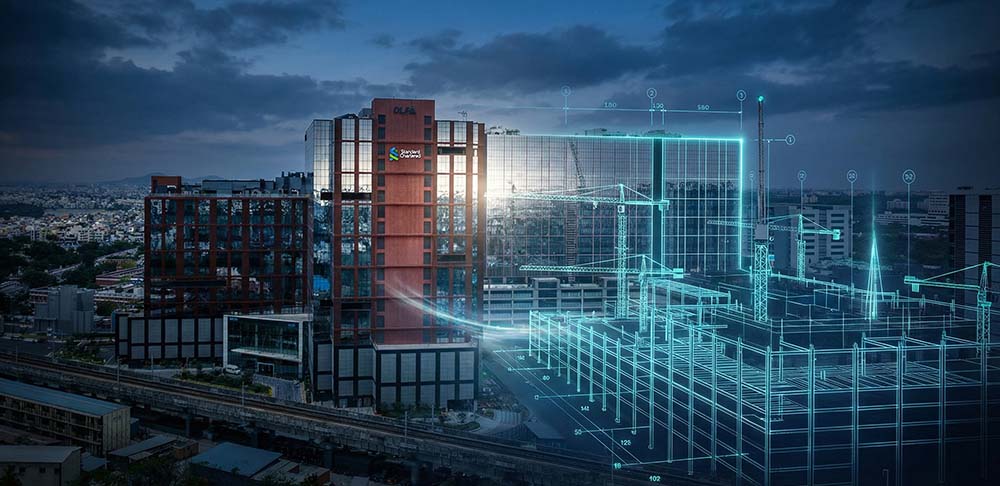
DLF Downtown in Chennai directly addresses these questions. The upcoming phase of the campus expansion provides current occupants with expansion options that most single-building developments cannot offer. It provides new occupants evaluating DLF Downtown Chennai with a larger campus ecosystem accommodating growth trajectories exceeding typical single-building expectations. The current campus phase proved the location works. The expanded campus provides scaling capability demonstrating the location can grow with enterprise operations.
Why Phase Expansion Changes Enterprise Location Strategy
Most enterprises approach office location decisions with current headcount as the anchor. A team occupying 50,000 square feet evaluates buildings with 50,000 to 60,000 square feet of available space. This strategy appears conservative. It ensures rent cost aligns with the current need. But it creates a structural vulnerability: the moment headcount grows beyond forecasts, the only options are external expansion (renting space elsewhere in the city at premium costs) or relocation (expensive and disruptive).
Multi-phase campus development addresses this vulnerability. An organisation occupying space in the current campus with additional towers available nearby can expand without relocation. Growth happens through lateral moves to adjacent towers rather than across the city. The organisation maintains location benefits (talent accessibility, ecosystem proximity, commute consistency), preserves team cohesion, and avoids the productivity loss that relocation triggers.
DLF Downtown Taramani Chennai enables this strategy explicitly. The current phase (100% leased, three office towers, 3.4 million square feet) accommodates 500-to-1,500-person operations. The upcoming expansion phase (four additional office buildings, 3.6 million square feet, under construction) accommodates scaling from 1,500-plus to 2,000-plus-person operations. An organisation can occupy one tower in the current campus, expand to additional towers within the same phase, then scale to the new phase as growth accelerates. The entire trajectory happens cohesively within the campus ecosystem.
What Campus Expansion Adds to the Ecosystem
The upcoming expansion of DLF Downtown is not a replica of the current phase. While both phases meet Grade A standards, Phase 2 incorporates enhanced certifications and operational upgrades that reflect evolving enterprise procurement requirements.
The current phase of the office development carry LEED Platinum certification and WiredScore Platinum ratings. These certifications verify energy efficiency, water management, waste handling (LEED) and high-capacity digital infrastructure (WiredScore). They address core enterprise procurement criteria.
The upcoming expansion targets advanced certifications reflecting multinational corporate requirements:
- LEED Platinum certification (like Phase 2, with enhancements in waste diversion and water recycling)
- LEED Zero Water certification (water recycling reducing municipal water dependency)
- LEED Zero Waste certification (waste diversion exceeding 95% toward zero landfill)
- LEED Zero Energy certification (net-zero energy performance through renewable generation and efficiency)
- British Safety Council Sword of Honour (safety protocols and occupational health systems)
- BEE Star Rating (Energy Conservation Building Code compliance and efficiency benchmarking)
- WELL Health-Safety Rating (occupant health standards, air quality, water quality, light quality)
This certification stacking goes beyond Phase 1 because Phase 2 was designed with knowledge of what multinational enterprises increasingly require. A financial services company with ESG reporting obligations benefits from LEED Zero Water and Zero Waste certifications. A technology company concerned with occupant health prioritises WELL ratings. A manufacturing GCC focused on energy efficiency needs LEED Zero Energy. Phase 2 addresses these diverse requirements more comprehensively than Phase 1.
Infrastructure Continuity and Operational Consistency
Enterprise occupants benefit from infrastructure consistency across phases.Current occupants of DLF Downtown experience continuity: the same building management standards, the same security protocols, the same amenity ecosystem, and the same commute accessibility. Discontinuity creates operational friction that outweighs cost savings.
DLF Downtown Chennai commercial office space maintains consistency by design. Both phases operate under unified campus management. Both phases provide 100 percent backup power capacity (ensuring zero downtime during grid outages). Both phases feature MERV-14 air filtration (supporting occupant health at 24x7 operational scales). Both phases connect through pedestrian concourses and shared plazas (eliminating the perception of separate buildings).
The unified amenity ecosystem is expanding with the new campus phase. Current occupants experience no disruption during campus expansion, only additional benefits. Expanded food courts, enlarged wellness facilities (Thrive, 45,000 square feet), enhanced business centre (Guild, 30,000 square feet), new retail services, and significantly expanded plaza areas become available to all campus occupants. The integration is seamless. An enterprise expanding within the campus ecosystem does not face the operational disruption that typically accompanies relocation.
Scalability for Enterprise Growth Trajectories
DLF Downtown Chennai Phase 2 enables specific growth scenarios that single-phase developments cannot accommodate:
- Expansion within Phase 1 (three towers): Teams growing 20-50% can remain within Phase 1
- Graduation from Phase 1 to Phase 2: Teams requiring 50-100% growth can move to Phase 2 towers while freeing Phase 2 space
- Consolidation strategies: Regional teams can consolidate operations by occupying adjacent towers across phases
- New centre launches: Organizations establishing new centres in Chennai (manufacturing GCC, financial services hub, product development centre) can commit to multi-tower campuses supporting rapid headcount escalation
- Hybrid occupancy: Some organizations occupy both Phase 1 and Phase 2 simultaneously, using Phase 1 for established operations and Phase 2 for growth initiatives or new functions
This flexibility is not available in single-building developments. It is a structural advantage that integrated, multi-phase campuses provide.
Timeline Considerations and Planning
The campus expansion is under construction with phased completion aligning with enterprise growth planning. Two office buildings are prioritised for near-term completion, with additional buildings following in subsequent phases. This staged delivery means available space increases in tranches rather than all at once, providing growth flexibility matched to realistic enterprise timelines.
For organisations planning expansion timelines, this staged delivery is strategically valuable. An organisation with a two-year growth plan can commit to the current campus now and plan expansion within two years when new buildings become available. An organisation with a four-year trajectory can time campus expansion commitment to match building availability. The development's capacity timeline aligns with realistic enterprise growth planning.
Organisations (and GCCs, multinationals, and large companies) should account for this timeline when evaluating location options. A location with single-phase completion has no expansion optionality beyond that phase. A location with multi-phase campus development over several years provides expansion flexibility that matches enterprise planning horizons.
Cost-Performance Alignment Across Phases
DLF Downtown Chennai maintains cost competitiveness across both phases. Phase 2 occupancy costs remain aligned with Phase 1 despite enhanced certifications. This alignment is unusual. Typically, newer phases command premium pricing. Here, the campus strategy is to maintain occupant cohesion by keeping Phase 2 pricing competitive with Phase 1.
This cost alignment means enterprises planning multi-phase expansion do not face increasing per-square-foot costs as they scale. A 500-person operation and a 2,000-person operation occupy space at comparable economics. This cost consistency simplifies long-term financial modelling and makes extended-tenure commitments viable.
Competitive Positioning in Chennai Market
The expanded campus with advanced certifications (LEED Zero Water, Zero Waste, Zero Energy, WELL ratings, British Safety Council Sword of Honour) positions DLF Downtown Taramani Chennai competitively against peer campuses in Bengaluru and Hyderabad. Chennai's historical reputation in commercial real estate has been lower-cost but lower-spec. DLF Downtown's advanced certification profile changes that narrative. A campus carrying LEED Zero Energy, Zero Waste, and WELL certifications competes on quality standards, not just cost advantage.
For organisations evaluating Chennai as a location, DLF Downtown elevates the competitive proposition. An organisation considering Bengaluru (premium market) versus Hyderabad (value market) versus Chennai can now find Grade A office space with advanced certifications in Chennai. The location becomes viable for organisations that previously dismissed Chennai as lacking sufficient infrastructure specification.
Enterprise Decision Framework for Phase Expansion
Enterprises occupying Phase 1 should evaluate Phase 2 expansion based on:
- Growth trajectory (is headcount growth visible, or constrained by current space?)
- Expansion economics (is adjacent space cheaper than external leasing or relocation?)
- Operational efficiency (does Phase 2 expansion preserve team location and commute consistency?)
- Timeline alignment (does Phase 2 construction schedule match expansion requirements?)
- Certification benefits (do Phase 2 enhancements (LEED Zero, WELL) support corporate sustainability or occupant health priorities?)
Phase 2 answers "yes" to each question. Growth is accommodated within the campus. Expansion is cost-efficient relative to external options. Team consistency is maintained. The timeline is phased to match growth planning. Certifications exceed most corporate requirements.
Future-Proofing Through Planned Expansion
DLF Downtown Chennai offices explicitly designed Phase 2 with future-proofing logic. The campus addresses not only current enterprise requirements but also emerging standards in sustainability, occupant health, and operational intelligence. A technology company occupying Phase 1 with a commitment to Phase 2 expansion knows the campus will remain competitive through the five-to-seven-year lease lifecycle.
This future-proofing is valuable. Commercial real estate ages rapidly when standards evolve. A building designed to 2020 standards faces a procurement disadvantage by 2027 when enterprise requirements shift. Phase 2, designed with 2024-2025 requirements in mind, provides 5-to-7-year viability without the risk of premature obsolescence.
Scaling Operations While Maintaining Campus Coherence
The ultimate value of Phase 2 is that it allows enterprises to scale operations while maintaining the location and ecosystem benefits that made the location attractive initially. An enterprise can grow from a satellite office (Phase 1, single tower) to a significant operation (Phase 2, multiple towers) without losing the OMR corridor proximity, the transit accessibility, or the talent positioning that made DLF Downtown Taramani Chennai strategic.
Discover DLF Downtown Chennai Phase 2 and understand how planned campus expansion enables enterprise growth while maintaining location strategy, ecosystem access, and operational coherence.
FAQs
The expanded campus is under construction, with the first set of new office buildings completing in near-term phases, followed by additional buildings over 2-3 years. Staged completion over multiple phases allows organisations to time expansion commitments to match growth timelines and building availability.
No. The expanded campus maintains cost alignment with current campus rates despite enhanced certifications. Cost consistency across campus phases simplifies financial modelling for multi-phase expansion planning.
The second phase of campus expansion targets LEED Zero Water, Zero Waste, and Zero Energy, plus WELL Health-Safety ratings and the British Safety Council Sword of Honour. These enhance the current campus's LEED Platinum and WiredScore Platinum foundation.
Yes. Unified campus management, consistent building standards, shared amenities, and pedestrian connectivity enable seamless expansion across campus phases without operational disruption.
Planning expansion options within the campus provides cost-effective growth paths. External leasing or relocation costs exceed on-campus expansion. Planned multi-phase occupancy is cost-efficient and operationally efficient.
Multi-phase campus development enables scaling from 500-person operations to 2,000-person operations within the same location, eliminating relocation disruption while maintaining talent accessibility, commute consistency, and ecosystem cohesion throughout the growth trajectory.
