


-
 636
636 - Posted in September, 2026
Enterprise Office Space in India: Checklist for Large Office Leasing
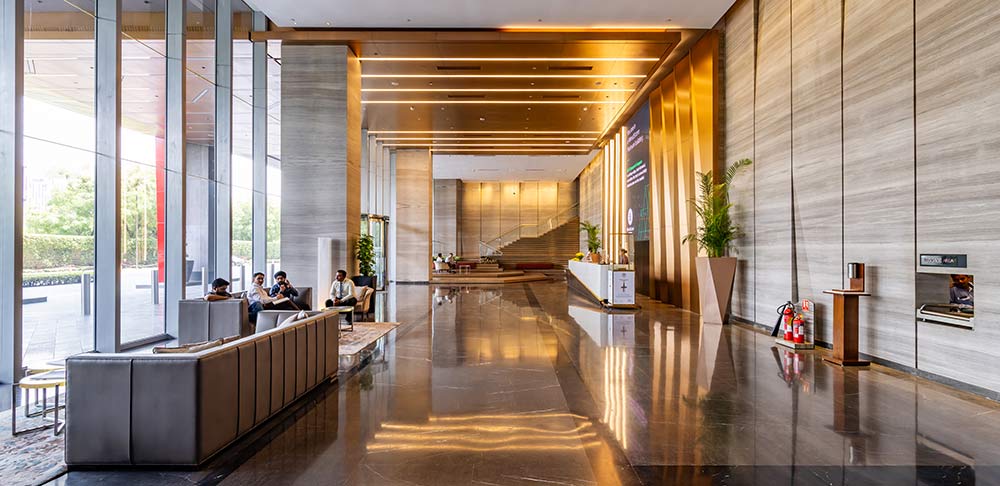
Large office leases rarely go wrong because of a single bad decision. They go wrong because of a sequence of assumptions that seemed reasonable at the time: that a 50,000 sq ft requirement would stay at 50,000 sq ft, that the location would serve talent well enough, that Grade A meant the same thing in one building as it did in another. By the time the gap between assumption and reality becomes visible, the lease is already signed.
Enterprise office leasing in India has become significantly more complex than it was even five years ago. The supply of quality commercial space has grown across Gurugram, Hyderabad, Chennai, Noida, and Chandigarh, which is genuinely good news. But more supply means more decisions, more variables, and more room for a leasing process to drift toward the path of least resistance rather than the best strategic fit. This checklist exists to prevent that drift.
Why Enterprise Office Leasing Requires a Different Approach
Most leasing guides assume the occupier knows what they need and simply requires help finding it. Enterprise leasing works differently. At a large scale, the building itself becomes part of the operational infrastructure, and the wrong choice creates compounding friction rather than a single contained problem.
A workforce of 800 people tolerates a flawed location decision differently from a team of 80. The talent acquisition implications are larger. The commute burden is larger. The reputational signal the address sends to candidates is amplified. So the due diligence required is proportionally more rigorous.
There is also the question of the future state. Enterprise organisations rarely lease for where they are today. They lease for where they expect to be in three, five, or seven years, which means scalability and expansion optionality are not bonus features. They are core requirements.
Define Your Current and Future Space Needs
Before engaging brokers or evaluating buildings, the internal space brief needs to be genuinely precise; ambiguity at this stage creates misaligned shortlists and wasted evaluation cycles. Key dimensions to define upfront:
- Total headcount at lease commencement, with a modelled projection for year three and year five.
- Seat density requirements, which vary significantly between collaborative tech teams and structured back-office functions.
- The ratio of enclosed offices, open floor workstations, meeting rooms, and social or breakout areas.
- Any dedicated infrastructure requirements: server rooms, trading floors, training centres, or lab space.
- Whether the footprint will consolidate multiple existing locations or represent a net new requirement.
Getting this precise before shortlisting saves considerable time and prevents organisations from evaluating buildings that were never actually suitable.
Evaluate the Right Location Strategy
Location decisions for enterprise office space carry more weight than they appear to on a map. The right micro-market within a city matters as much as the city itself. DLF's portfolio illustrates this well.
DLF Cyber City in Gurugram is not simply an address. It is a commercial ecosystem with established vendor networks, transit access, dining and retail infrastructure, and a peer occupier environment that signals something specific to candidates.
DLF Downtown Gurugram serves a different profile: occupiers seeking contemporary workspace with a strong residential catchment in the southern Gurugram corridor. DLF Cyberpark in Udyog Vihar suits operations that need large floor plates in a well-connected but less premium-priced location. The evaluation criteria for location should include:
- Proximity to the primary talent catchment area, assessed honestly rather than optimistically.
- Metro and road access for the majority of the workforce, not just those with private transport.
- Airport connectivity for leadership and international visitors.
- The presence of comparable employers in the vicinity, which indicates a functioning talent ecosystem.
- Availability of retail, food, banking, and ancillary services within or near the campus.
In Hyderabad, DLF Cyber City in Gachibowli sits within a corridor that has become the natural home for global capability centres, combining strong road access, a deep technology talent pool, and large-campus availability. DLF Offices’ Chennai assets, DLF Downtown in Tharamani and DLF Cyber City in Manapakkam, serve different nodes of that city's commercial geography, and the right choice between them depends on where the workforce actually lives.
Check Floor Plate Size and Space Efficiency
Enterprise occupiers frequently underestimate how significantly floor plate configuration affects operational productivity. A 100,000 sq ft requirement spread across four narrow floors operates very differently from the same area across two wide, open floor plates.
- Larger, more regular floor plates reduce internal communication friction and improve team adjacency planning.
- Irregular geometries or floor plates with excessive column density create layout inefficiencies that compound at scale.
- The ratio of usable to gross area, often called the efficiency ratio, varies between buildings and directly affects the cost per productive workstation.
- Core locations for lifts, stairs, and services affect how much of each floor is genuinely usable.
This is an area where a technical workspace consultant adds real value before any lease heads to negotiation.
Assess Scalability and Expansion Potential
The single most common regret in large office leases is insufficient expansion optionality. Businesses that expect to grow find themselves renegotiating from a position of weakness or accepting operational fragmentation across multiple buildings when a more considered initial brief would have protected them.
Questions worth resolving before heads of terms are agreed:
- Does the building or campus have adjacent vacant space that could be activated under a right of first refusal?
- Is the developer willing to structure phased occupation with predetermined expansion triggers?
- What is the realistic supply picture in the same micro-market over the next three to five years?
- If the lease runs to seven years, what does year-six flexibility actually look like?
DLF Offices’ scale across India, from DLF Techpark Noida to DLF Techpark Chandigarh, and from DLF Cyber City Gurugram to DLF Cyber City Hyderabad, means that multi-city enterprise occupiers can negotiate within a single developer relationship across markets, which simplifies the expansion conversation considerably.
Prioritise Grade A InfrastructurePrioritise Grade A Infrastructure
Grade-A is not a uniform standard. The difference between a building that uses the label and one that consistently delivers on it becomes apparent in the detail. Infrastructure benchmarks that matter for enterprise occupiers:
- Power supply reliability: dedicated feeders, transformer redundancy, and DG backup capacity as a percentage of full load.
- HVAC quality: systems that maintain consistent temperature and air quality across full occupancy, including MERV-14 air filtration that removes fine particulate matter at a level relevant to both comfort and health.
- Structural loading capacity for server and UPS equipment.
- Floor-to-ceiling heights, which affect both the sense of workspace quality and the ability to run raised flooring or overhead cable management.
- Fire suppression, emergency lighting, and evacuation system standards.
LEED Platinum Certified buildings and WiredScore Platinum Certified assets represent the upper tier of verified infrastructure quality. These certifications are independently audited, which means they carry more reliable information than a developer's own marketing claims.
Review Technology and Connectivity Standards
For organisations running technology-heavy operations, connectivity infrastructure is not a secondary consideration. It is foundational.
- Fibre entry points: the number of independent service providers with physical infrastructure in the building.
- Internal riser capacity and the flexibility to run dedicated cabling to specific floors or zones.
- Mobile signal quality throughout the building, including basements and enclosed meeting rooms.
- Smart building systems and whether they integrate with an occupier's own facilities management platforms.
WiredScore Platinum certification provides a credible independent assessment of a building's digital infrastructure, covering active connectivity, passive infrastructure, and mobile coverage. For enterprise technology teams, this is a more reliable benchmark than unverified claims about bandwidth availability.
Examine Safety and Business Continuity Measures
Safety frameworks in commercial buildings are frequently assessed only during incidents. The better approach is to evaluate them as part of the initial due diligence.
- Structural certification and the year of the most recent independent structural audit.
- Fire safety system maintenance records and the frequency of evacuation drills.
- Access control standards, including visitor management and after-hours security protocols.
- Business continuity provisions for building management: what happens if the primary facilities management team is unavailable?
DLF's ‘5S’ framework, which encompasses Sustainability, Safety, Social Infrastructure, Scale, and Space Solutions, operationalises these concerns at a developer level rather than leaving them to individual building management teams.
Evaluate Employee Amenities and Workplace Experience
Workplace experience has become a legitimate factor in talent attraction and retention, not a peripheral concern. An enterprise campus that offers a functional but sterile environment will be consistently compared, unfavourably, to campuses that invest in the day-to-day quality of the work experience. Amenity considerations for large enterprise leasing:
- Food and beverage options within or directly adjacent to the building, including options at different price points.
- Fitness and wellness facilities, which have become an expectation rather than a differentiator for many professional profiles.
- Crèche or childcare availability, particularly relevant for organisations with significant working-parent populations.
- Concierge and administrative support services.
- Outdoor or semi-outdoor spaces for informal work and breaks.
The social infrastructure component of a campus has a measurable effect on how long employees stay and how they feel about returning to the office in hybrid working arrangements.
Check Sustainability and ESG Credentials
ESG reporting requirements have expanded significantly for listed organisations and those operating under international governance frameworks. The sustainability credentials of leased real estate now feed into corporate disclosures in ways they did not five years ago.
- LEED certification level, distinguishing between Certified, Silver, Gold, and Platinum.
- Energy consumption benchmarks and whether the building has committed to renewable energy sourcing.
- Water recycling and waste management systems.
- Green transportation provisions: EV charging, cycle storage, and access to public transit.
- The developer's own published sustainability commitments and their track record of delivery.
LEED Platinum Certified buildings represent the highest tier of recognised environmental performance. For enterprise occupiers with ESG obligations, leasing in a certified building is increasingly a compliance consideration, not merely a preference.
Understand Lease Flexibility and Commercial Terms
The commercial structure of a large office lease deserves as much attention as the physical building. Organisations that focus exclusively on headline rent often find the total cost of occupancy significantly higher than anticipated.
- Rent-free periods and fit-out contributions from the developer, which are more negotiable than most occupiers realise.
- Break clauses and the conditions under which they can be exercised.
- Rent escalation mechanisms and whether they are linked to fixed percentages or external indices.
- Security deposit structures and the conditions for return.
- Sub-letting rights, which provide optionality if the space requirement changes materially before the lease expires.
Large enterprise transactions carry negotiating leverage. Using it effectively requires understanding the developer's occupancy position in the relevant building, the broader supply picture in the micro-market, and the relative priority of the transaction to the developer's own portfolio performance.
Consider Managed and Hybrid Workspace Options
Not every component of an enterprise footprint needs to be directly leased. Many organisations are structuring their India presence with a mix of committed core space and managed or flexible workspace for overflow, project teams, or geographic satellite requirements. The practical implications:
- Managed workspace within a developer's own portfolio, such as options available within DLF's India network, allows organisations to maintain consistent infrastructure and security standards across both committed and flexible footprints.
- Hybrid arrangements reduce risk during periods of headcount uncertainty and allow more precise rightsizing over time.
- Co-location within a managed campus does not necessarily mean a loss of identity or branded environment. Most Grade A managed workspace providers now offer customisable configurations.
An Enterprise Leasing Checklist: Use Before You Decide
Bringing the due diligence together into a structured checklist reduces the risk of overlooking a factor that compounds into a significant problem post-occupation. The key domains to clear before signing:
- Space brief confirmed with modelled growth projections.
- Location assessed against talent catchment, transit access, and ecosystem maturity.
- Floor plate configuration and efficiency ratio validated.
- Expansion optionality documented in heads of terms.
- Infrastructure is independently assessed against Grade A benchmarks.
- Technology and connectivity verified against WiredScore or equivalent certification.
- Safety and business continuity provisions reviewed.
- Sustainability credentials verified against LEED or equivalent standards.
- Commercial terms negotiated with full awareness of market comparables.
- Managed workspace optionality is assessed as a complement to committed space.
Choosing an Office Space Built for Long-Term Growth
The most important shift in enterprise office leasing thinking is treating the decision as a strategic one rather than an operational one. The building a business occupies shapes how its workforce experiences work, how easily it attracts talent, and how credibly it presents itself to clients and partners.
India's Grade A commercial real estate market now offers genuinely world-class options. The challenge is not finding a building that meets minimum standards. It is finding a developer partner whose portfolio depth, infrastructure commitments, and long-term presence in the market align with a business that intends to grow.
DLF's footprint across Gurugram, Hyderabad, Chennai, Noida, and Chandigarh reflects exactly this kind of long-term market commitment. Whether the requirement is a flagship campus at DLF Cyber City Gurugram, a scalable GCC build-out at DLF Cyber City Hyderabad, or a stable long-term presence through DLF Techpark Noida or DLF Techpark Chandigarh, the portfolio offers enterprise occupiers something genuinely useful: consistent infrastructure standards, sustainable design, and the scale to accommodate growth without requiring a disruptive relocation.
Compare DLF office locations across India to find the right fit for your enterprise requirement.
FAQs
Enterprise office leasing in India generally refers to requirements from 30,000 sq ft upward, though some organisations classify enterprise mandates from 50,000 sq ft. The threshold varies by developer and market, but large-format requirements attract different lease structures and negotiation leverage.
LEED certification has moved from a preference to a requirement for many enterprise and GCC occupiers with ESG reporting obligations. LEED Platinum-certified buildings offer the highest verified environmental performance standard and directly support corporate sustainability disclosures.
Yes. Expansion options, including rights of first refusal on adjacent space, phased occupation structures, and pre-agreed expansion triggers, are commonly negotiated in large enterprise leases. Developers with significant portfolio depth, such as DLF across multiple Indian markets, are better positioned to accommodate these structures.
WiredScore Platinum is an independent certification verifying a building's digital infrastructure, including active connectivity, fibre provider diversity, passive cabling infrastructure, and mobile signal coverage. For technology-heavy enterprise occupiers, it provides a reliable independent benchmark rather than relying on unverified developer claims.
GCCs typically require larger contiguous floor plates, stronger sustainability credentials, campus-level amenities, and developers experienced in accommodating complex fit-out requirements. Locations like DLF Cyber City in Gachibowli, Hyderabad have become preferred GCC addresses due to their combination of scale, infrastructure quality, and supportive state ecosystem.
