


-
 95
- Posted in October, 2026
Tharamani, OMR or West Chennai: How GCCs Should Compare Office Locations
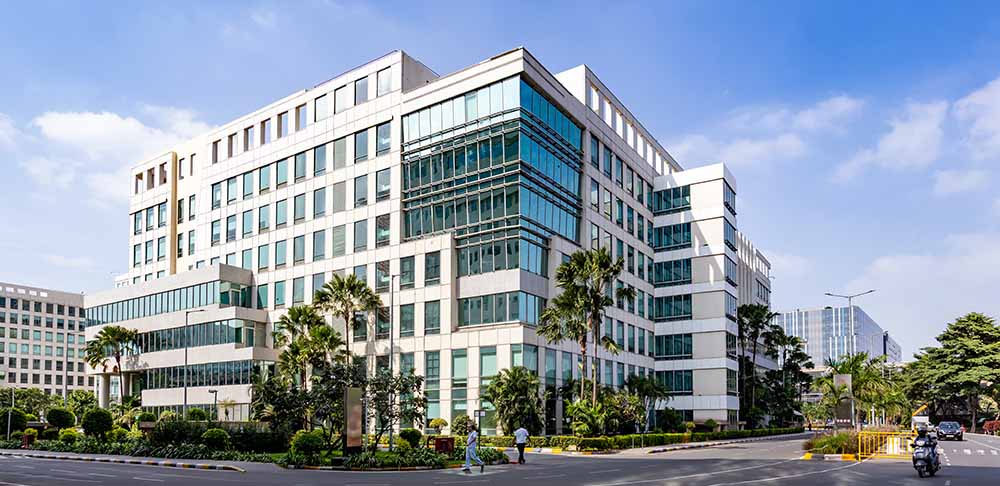
Global Capability Centres considering GCC Office Space Tharamani face a decision that looks straightforward but carries profound implications for organisational success. Three distinct location options exist across Chennai: Tharamani and the broader OMR corridor (established technology zones) and West Chennai or Manapakkam (emerging location with different positioning). Each location offers distinct advantages and constraints. Choosing correctly requires understanding not just where each location currently stands but also where it will be when the GCC reaches mature scale (typically three-to-five years into operations).
Most organisations evaluate locations based on current conditions: which has the best available space, the most competitive rent, or the most immediate accessibility. But location maturity matters enormously. A location that is accessible today might become congested in three years. A location that is affordable today might become expensive as demand rises. A location that is peripheral today might become central when infrastructure develops. Evaluating locations requires forward-looking analysis, not just current-state assessment.
The distinction between these three location zones determines whether a GCC experiences growth-enabling infrastructure or grows into infrastructure constraints.
Establishing the Location Assessment Framework
Comparing Office Space in Chennai Tharamani, the broader OMR corridor, and West Chennai requires structured assessment across dimensions that actually determine GCC success. A location is not simply "convenient" or "affordable". It is strategically valuable when it enables talent recruitment, supports operational scaling, provides ecosystem services, and offers long-term stability. The assessment framework includes:
- Talent Accessibility: Distance from residential clusters, transit connectivity, commute viability for core technical talent
- Infrastructure Quality: Building specifications, backup systems, digital connectivity, sustainability certifications
- Campus Scalability: Multi-building options, expansion capacity, infrastructure enabling growth from 300 to 2,000 people
- Amenity Ecosystem: On-campus services supporting operations, retention, and employee satisfaction
- Connectivity: Metro access, airport proximity, transit networks, future infrastructure planning
- Cost-Performance: Total occupancy cost, maintenance structure, long-term financial sustainability
- Ecosystem Density: Proximity to other technology companies, service providers, specialised vendors
- Strategic Positioning: Current maturity level, future potential, competitive positioning
This framework reveals how locations differ significantly beyond surface-level comparisons.
Tharamani and the OMR Corridor: Established Technology Hub
Premium Office Space in Tharamani sits at the intersection of Chennai's most mature technology employment zones. The OMR corridor has concentrated technical employment for two decades. This concentration created self-reinforcing ecosystem effects: talent migrated to the zone because employment density was high; companies migrated because talent was available, and service providers and specialised vendors located nearby to serve companies and talent.
Tharamani specifically benefits from this maturity. The location combines several advantages:
- Talent Accessibility: Three major residential clusters (Velachery, Perungudi, Tambaram) within a 25 to 35-minute commute; existing talent already employed in the area enables rapid hiring
- Transit Infrastructure: MRTS Taramani Station on operating Beach-Velachery line (15-minute commute to central Chennai), planned metro FOB 300 meters away opening 2027 further enhances connectivity
- Ecosystem Density: Hundreds of technology companies, established training providers, consulting networks, specialised vendors all concentrated in the corridor
- Infrastructure Quality: Mature office park ecosystem with Grade A building standards, multiple campus options, established security and operations protocols
- Long-Term Stability: The zone has demonstrated resilience and growth over two decades and is unlikely to decline in strategic importance
DLF Offices operates DLF Downtown Taramani Chennai within this established ecosystem. Phase I (3.4 million square feet, LEED Platinum, WiredScore Platinum) and Phase II (3.6 million square feet, under construction) provide integrated campus infrastructure: 200,000 square feet of amenities (Guild business centre, 30,000 square feet; Thrive wellness, 45,000 square feet), 100% backup power, MERV-14 air filtration, a medical centre, a crèche, and retail services. The campus explicitly supports GCC scaling from 300 to 2,000+ people without relocation.
Tharamani's constraint is cost. Two decades of establishment have driven occupancy costs higher than emerging alternatives. A GCC prioritising cost will find Tharamani expensive relative to West Chennai options.
West Chennai or Manapakkam: Emerging Alternative
West Chennai locations, particularly Manapakkam, represent emerging alternatives to the established OMR corridor. The area has undergone substantial infrastructure investment over the past five years: new office developments, improved road connectivity, planned metro expansion, and growing technology employment.
Office Space in Manapakkam Chennai offers distinct characteristics:
- Cost Advantage: Occupancy costs run 20 to 30% lower than Tharamani, creating significant economic advantage for GCCs optimising capital efficiency
- Growth Potential: Emerging technology employment creates opportunity to access talent at lower compensation premiums than established zones
- Modern Infrastructure: Newer office developments feature Grade A specifications without legacy constraints of older buildings
- Planned Connectivity: Metro expansion planned (2027-2030) will enhance future accessibility significantly
- Emerging Ecosystem: Growing concentration of technology companies establishing footprints, creating ecosystem density benefits
DLF Cyber City Chennai in Manapakkam exemplifies this emerging positioning. The development provides modern office space with planned connectivity and room for expansion as the area matures.
West Chennai's constraint is maturity. The area lacks the established talent concentration, mature ecosystem, and proven infrastructure resilience of Tharamani. A GCC in West Chennai might struggle to recruit niche technical talent until the ecosystem matures (typically three-to-five years). Client hosting might be less convenient due to lower geographic centrality. Long-term location viability is less certain because infrastructure is still developing.
The Broader OMR Corridor: Middle Ground
The broader OMR corridor (beyond Tharamani but within the established technology zone) offers middle positioning: more established than West Chennai, less expensive than central Tharamani, reasonable talent accessibility. Large Office Space Near OMR IT Corridor in this zone provides graduated options.
The OMR corridor has capacity for GCC expansion. Not every organisation requires Tharamani's central positioning or West Chennai's cost advantage. Middle-corridor locations provide reasonable balance when both factors matter.
Evaluating Strategic Fit Against GCC Model
The three location options serve different GCC strategies:
- Tharamani for Strategic Positioning: Organizations prioritizing speed-to-capability, client hosting, talent recruitment quality, and operational certainty should prioritise Tharamani. The established ecosystem enables faster GCC scaling. Higher costs are offset by faster capability development.
- West Chennai for Cost Efficiency: Organisations prioritising capital efficiency, willing to accept slower talent recruitment in an emerging ecosystem, and confident in the location's long-term development should prioritise West Chennai. Cost advantages during the GCC build-up phase are substantial (20-to-30% lower occupancy cost compounds across five years into significant capital savings).
- OMR Corridor Middle Options: Organisations seeking balance between cost and infrastructure maturity should evaluate broader OMR corridor locations offering both advantages without specialising in either.
Scalability and Campus Infrastructure Differences
A critical difference between locations is campus infrastructure supporting GCC scaling. Tharamani offers integrated campuses with multiple towers: DLF Downtown Taramani Chennai spans 28 acres with Phase I and Phase II providing 7 million square feet combined. A GCC can occupy one tower initially, expand to adjacent towers as growth occurs, and reach mature scale without relocation.
West Chennai locations are newer and may offer single buildings or smaller campus infrastructure. A GCC scaling rapidly might exhaust available space within the development. External expansion or relocation becomes necessary.
This scalability difference is operationally significant. A GCC relocating mid-scale faces productivity loss, team disruption, and operational continuity challenges. Integrated campus infrastructure avoiding relocation is strategically valuable.
Infrastructure Resilience and Long-Term Viability
Tharamani's established position provides infrastructure resilience. The area has experienced infrastructure disruptions, infrastructure investments, and market fluctuations. The zone has proven resilience and recovery. Long-term viability is high-confidence.
West Chennai's emerging status creates uncertainty. Future metro connectivity might materialise or face delays. Talent ecosystem development might accelerate or stall. Office market development might flourish or plateau. The zone's long-term viability is less confident.
For GCCs making five-to-seven-year commitments, infrastructure resilience and long-term location viability matter substantially. A location experiencing mid-lease infrastructure challenges creates operational friction that cost savings cannot offset.
Making the Location Choice for GCC Success
Commercial Office Space Chennai options across Tharamani, the OMR corridor, and West Chennai serve different organisational priorities. The choice depends on whether the GCC prioritises:
- Tharamani for established infrastructure, talent accessibility, ecosystem density, and operational certainty (at premium cost)
- West Chennai for capital efficiency, cost advantage, modern infrastructure, and willingness to accept emerging ecosystem risks
- OMR Corridor Middle Options for balanced positioning addressing multiple factors without specialising in either extreme
DLF Offices provides options spanning the range: DLF Downtown Taramani Chennai for established location strategy and DLF Cyber City Chennai in Manapakkam for emerging locations with cost advantage. Understanding which model aligns with organisational strategy and risk tolerance determines which location enables GCC success.
FAQs
Both factors apply. Tharamani has genuinely superior infrastructure (mature ecosystem, established talent, proven reliability). Premium cost reflects this value, not just location prestige.
Initially, no. Established zones have higher talent concentration. As the West Chennai ecosystem matures (2-3 years), recruitment becomes easier. Early-stage talent recruitment requires compensation premiums offsetting cost advantages.
Critical. Metro access determines commute accessibility for 60-70% of technical talent. Planned metro expansion (2027-2030) significantly enhances West Chennai's long-term viability, but current connectivity is weaker than Tharamani.
Only if the organisational timeline allows infrastructure maturation. Three-to-five-year locations experience infrastructure uncertainty. Seven-to-ten-year GCCs benefit from West Chennai cost advantages as the ecosystem stabilises.
Scalability without relocation. GCC growth from 300 to 2,000 people happens within campus boundaries, avoiding relocation costs (15-25 million rupees) and operational disruption (3-6 months).
