


-
 136
- Posted in October, 2026
LEED-Certified Offices Near Tharamani: What Businesses Gain
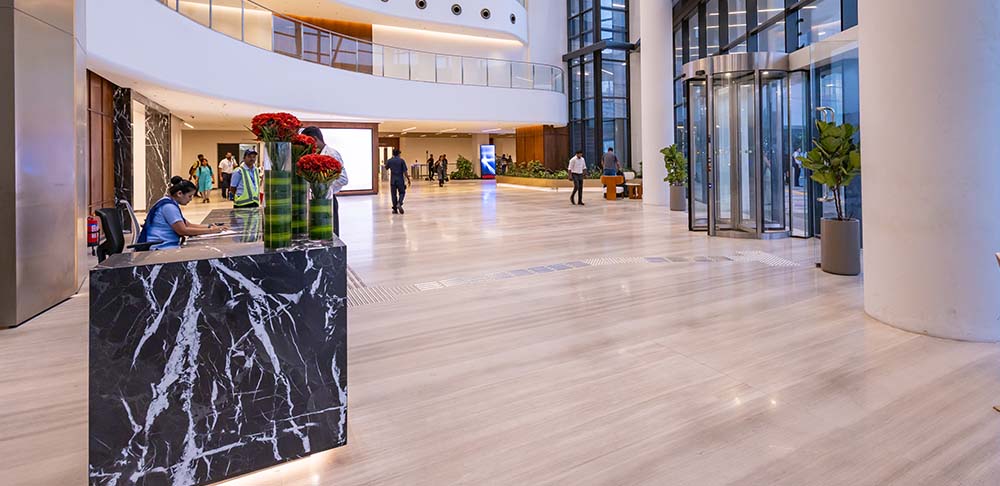
Most enterprises treat sustainability as a compliance obligation. They need LEED-certified space because corporate headquarters mandates it. They occupy green buildings because ESG reporting requires documented evidence of sustainability practices. The language of sustainability reporting is reactive: buildings are certified, companies report, and stakeholders approve. But this framing misses what LEED-certified offices actually deliver operationally. A LEED Certified Office Near Tharamani is not simply a building that meets environmental standards. It is infrastructure that reduces operational costs, supports employee health and retention, positions organisations competitively on talent recruitment, and provides measurable performance data that most offices cannot offer.
The enterprises that understand this distinction make different leasing decisions than those approaching sustainability as checkbox compliance.
Why LEED Certification Changes Office Economics
LEED Platinum certification requires independent verification of energy performance, water management, waste handling, and occupant health standards. The certification process itself (12 to 18 months of documentation and audit) means claims are measured rather than assumed. A building cannot claim LEED Platinum. It must earn and maintain the certification through continuous performance monitoring.
This verification changes building economics. An energy-efficient building operates at lower utility costs. A building with water recycling reduces municipal water dependency and metering costs. A building with waste diversion programmes (composting, recycling, reuse) reduces landfill disposal fees. An occupant-focused HVAC system (MERV-14 filtration and humidity control) reduces occupant illness rates, lowering absenteeism. These operational benefits compound over a lease term into meaningful cost reduction.
A building claiming to be "green" without certification may not deliver these benefits. Certification verifies that the benefits actually exist.
How LEED Performance Reduces Operating Costs
Grade A+ Office Space in Tharamani at DLF Downtown Taramani Chennai carries LEED Platinum certification for Phase I buildings (DT 1, 2, 3). Phase II buildings target LEED Platinum plus LEED Zero Water, Zero Waste, and Zero Energy certifications. This stacking means measurable performance across multiple cost dimensions.
- Energy efficiency: LEED Platinum buildings reduce energy consumption 20 to 35% below conventional buildings through efficient HVAC systems, high-performance lighting, building envelope optimisation, and renewable generation. Over a five-year lease, a 500-person operation in a 100,000-square-foot space can save 500,000 to 1 million kilowatt-hours annually. At typical Chennai electricity rates, that translates to annual savings of 50,000 to 100,000 rupees.
- Water efficiency: LEED requires water audits and fixture upgrades, reducing consumption 20 to 30% below baseline. LEED Zero Water certification means recycling treated wastewater for non-potable uses (landscaping, cooling tower makeup, toilet flushing). A 500-person office consuming 50 kilolitres daily (1.5 million litres monthly) can reduce municipal water demand by 30 to 50%. At Chennai water rates, that represents 15,000 to 30,000 rupees monthly.
- Waste diversion: LEED Platinum requires waste diversion programmes (composting, recycling, and material recovery) achieving 50% or higher diversion from landfills. LEED Zero Waste requires 90-plus percent diversion. A 500-person operation generating 50 kilograms of waste daily can divert 25+ kilograms from landfills through structured programmes. Landfill disposal avoided represents cost reduction and waste management liability reduction.
These savings are operational, not theoretical. An enterprise occupying Premium Office Space in Tharamani at a LEED-certified property realises these benefits measurably.
Occupant Health and Retention Impacts
LEED certification includes occupant health standards: non-toxic materials, controlled indoor air quality, access to natural light, temperature and humidity stability, and water quality monitoring. These standards address factors that conventional offices often overlook.
MERV-14 air filtration (standard in LEED and premium buildings) traps 95% of particles larger than 0.3 microns. Conventional HVAC systems (MERV-8) trap 20-35% of the same particles. Over an eight-hour workday, air quality differences compound into occupant health outcomes. Reduced respiratory symptoms, fewer sick days, improved focus and productivity. The health benefit is real and measurable.
Occupant retention improves when employees experience healthier work environments. Recruiting technical talent means competing on multiple factors: compensation, growth opportunity, and workplace quality. A workplace with documented occupant health standards (LEED and WELL ratings) signals investment in employee well-being. That signal affects recruitment and retention during talent market competition.
Enterprises occupying LEED-certified buildings report measurable improvements in employee satisfaction, reduced absenteeism, and improved retention. These outcomes affect payroll costs more substantially than facility leasing costs.
ESG Reporting and Corporate Accountability
ESG (environmental, social, governance) reporting obligations are reshaping enterprise procurement. Public companies face stakeholder demands for documented sustainability performance. Occupying LEED-certified buildings provides measurable inputs for sustainability disclosures:
- Energy consumption data (audited, benchmarked against LEED standards)
- Water usage tracking (recycled water percentages, conservation metrics)
- Waste diversion rates (landfill-avoided volumes, recycling rates)
- Occupant health certifications (LEED occupant health credits, WELL ratings)
- Carbon footprint documentation (energy sourcing, renewable percentages)
These metrics allow enterprises to demonstrate concrete sustainability performance rather than making general claims. An enterprise occupying Grade A+ Office Building Chennai with full LEED certifications can cite specific energy reductions, water conservation, and waste diversion in annual reports. The documentation is verifiable because it is externally certified.
For public companies and enterprises with ESG reporting requirements, LEED certification simplifies disclosure and strengthens sustainability narratives with documented evidence.
Competitive Differentiation in Talent Markets
Technology and financial services enterprises compete aggressively for talent. Workplace quality becomes a differentiator during recruitment conversations. A company can describe its sustainability commitment in general terms, or it can occupy a LEED Platinum-certified building and demonstrate commitment through the environment. The physical workspace communicates values more persuasively than rhetoric.
LEED Certified Office Near Tharamani at DLF Downtown Taramani Chennai signals to prospective employees that the organisation invests in sustainable operations, occupant health, and environmental responsibility. That signal affects candidate evaluation during recruitment. For organisations competing in tight talent markets, workplace quality is a competitive asset.
Long-Term Asset Value and Lease Economics
LEED-certified buildings often command premium occupancy costs (5 to 10% above conventional buildings). But when enterprises model the total cost of occupation across a lease term, including utility savings, water conservation, waste reduction, and health-related productivity improvements, the premium typically pays for itself within 24 to 36 months. After that payback period, occupants realise a net cost advantage over conventional office space.
An enterprise signing a seven-year lease for space in a LEED-certified building pays a premium for the first 2-3 years, then realises 4-5 years of cost advantage as operational savings accumulate. Over the full lease term, economics favour LEED-certified space.
Additionally, LEED-certified buildings retain value and leaseability. As ESG requirements increase across corporate procurement, demand for LEED-certified space will grow. Buildings meeting these standards will face stronger leasing demand and better renewal terms than conventional properties.
Location Advantages Combined with Sustainability
Premium Office Space in Tharamani combines location benefits (OMR corridor proximity, talent accessibility, and ecosystem density) with LEED sustainability standards. This combination is strategically valuable. An organisation gains location advantages that enable talent recruitment and operational efficiency, combined with sustainable building performance that supports corporate sustainability goals and reduces operational costs.
Most single-building offices in Chennai offer either location or sustainability, but not both comprehensively. A campus like DLF Downtown Taramani Chennai offering both is rare in the Chennai market.
Measuring Performance in LEED-Certified Buildings
LEED Platinum buildings are required to maintain certifications through ongoing performance verification. This means continuous monitoring and reporting of energy, water, waste, and occupant health metrics. An enterprise occupying such a building has visibility into actual performance rather than theoretical projections.
Real-time building management systems (present in Grade A+ buildings) provide occupants with consumption data, allowing them to understand and optimise their footprint. Occupancy sensors reveal space utilisation patterns. Energy management platforms show consumption by floor or zone. Occupants can see directly how their operations affect building performance.
This operational intelligence is unavailable in conventional office buildings. It provides enterprises with data supporting sustainability decisions and cost optimisation.
Sustainability as Strategic Advantage
Grade A+ Office Space in Tharamani treats sustainability not as a compliance obligation but as an operational advantage. LEED certification delivers measurable benefits: cost reduction through efficiency, occupant health and retention, ESG reporting capability, talent market differentiation, and long-term asset value preservation.
An enterprise occupying LEED-certified office space gains these benefits as structural attributes of the location and building. Sustainability becomes embedded in operations rather than requiring additional effort or cost.
Explore sustainable DLF Downtown Chennai office spaces where LEED Platinum certification (Phase I) and planned LEED Zero certifications (Phase II) deliver operational benefits, occupant health standards, and strategic alignment with corporate sustainability commitments.
FAQs
LEED Platinum requires independent third-party audits and verification. Green building claims are often unverified marketing. LEED Platinum means documented energy, water, waste, and occupant health performance meeting rigorous standards.
LEED Platinum typically costs a 5-10% premium upfront. Operational savings (energy, water, waste reduction) typically offset the premium within 24-36 months. A long-term cost advantage favours LEED-certified space.
Yes. LEED certification provides audited data on energy consumption, water usage, waste diversion, and occupant health standards. This documentation strengthens ESG disclosures with measurable evidence rather than general claims.
Occupant health standards and workplace quality communicated through LEED certification signal organisational commitment to employee wellbeing. This affects recruitment capability and retention during talent market competition.
MERV-14 air filtration, humidity control, non-toxic materials, natural light access, and temperature stability reduce respiratory symptoms, sick days, and occupant complaints. Health benefits translate to improved retention and reduced absenteeism.
