


-
 996
996 - Posted in September, 2026
Comparing Managed vs Self-Managed Office Workspaces
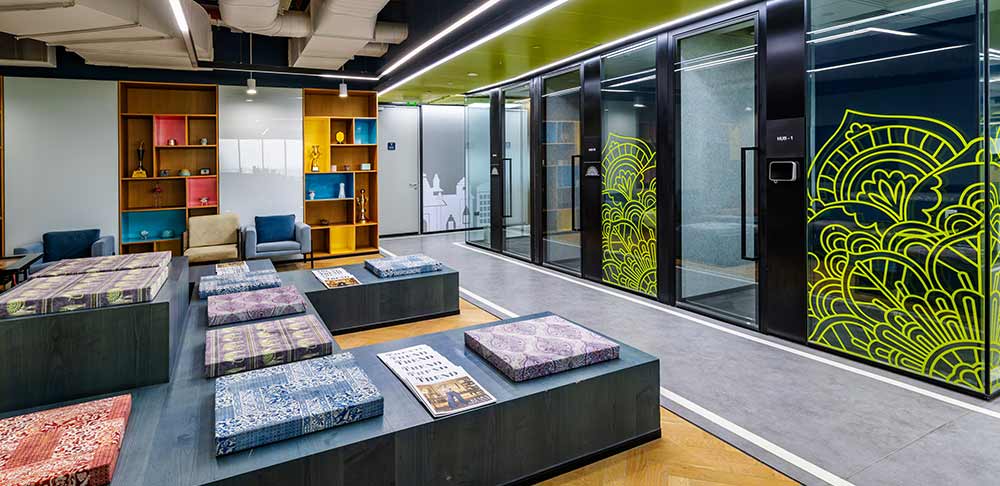
Choosing an office is no longer just about location, size, or cost. For businesses in 2026, the way an office is operated has become just as important as the space itself. One of the most significant decisions organisations face is whether to opt for a managed office or take a self-managed approach, as each model influences everything from operational efficiency and employee experience to scalability and long-term costs.
As workplace strategies continue to evolve in response to hybrid work, changing workforce expectations, and business growth objectives, both managed and self-managed office models have gained traction across the market. While one offers convenience and flexibility through outsourced workplace management, the other provides greater control and customisation. Understanding the differences between these office rental models is essential for businesses looking to align their workspace strategy with their operational and growth requirements.
Understanding Managed and Self-Managed Offices
The terminology is used loosely enough that the distinction is worth clarifying before anything else. A managed office is a fully equipped, privately occupied workspace where a single provider handles operational management from move-in to move-out. A self-managed office, also called a conventional or traditional lease, places every operational responsibility with the tenant: fit-out, furnishing, facilities staffing, utilities management, and technology infrastructure.
Both models can be deployed within the same building. Both can serve large enterprise teams. What differs is who carries the operational burden, and what that burden costs in time, capital, and management attention across the lease term.
Why Workspace Decisions Matter More in 2026
Approximately 55% of occupiers now use flexible office solutions, with 17% planning to increase their usage as hybrid work becomes embedded rather than experimental. At the same time, office vacancy rates are projected to rise significantly through 2026, forcing organisations to think more carefully about how every square foot of space justifies its cost.
The consequence is that workspace decisions carry more strategic weight than they did five years ago. An office that made sense for a fully in-person workforce may be oversized, poorly configured, or in the wrong location for a team operating on a hybrid model. The choice between managed and self-managed is, at its core, a question about how much operational flexibility a business needs and how much it is willing to pay for it.
What Is a Managed Office Workspace?
A managed office is a private workspace, occupied exclusively by one organisation, where a provider handles the day-to-day operational environment. It is not co-working. There are no shared open-plan areas with other companies, no hot desks next to strangers, no common reception that serves a dozen different tenants.
Key Features of Managed Offices
The distinguishing characteristics of the managed model:
- Dedicated private space occupied solely by the tenant's team, with no other organisations present.
- Custom layout, branding, furniture, and design configured to the occupier's specifications before move-in.
- Provider-managed operations covering maintenance, utilities, cleaning, facilities, and hospitality.
- All-inclusive pricing with furniture, fit-out, maintenance, and utilities bundled into a fixed monthly or quarterly fee.
- Shorter lease commitments, typically twelve months to three years, with some providers offering arrangements from six months.
Who Typically Chooses Managed Offices?
The managed model attracts a consistent profile of occupier: organisations that need to be operational quickly, that have meaningful uncertainty in their headcount trajectory, or that lack the in-house facilities management capability to run a conventional lease effectively.
- Startups and scaling businesses with 20 to 150 seats need flexibility without lock-in pressure.
- Tech companies require quick setup and predictable costs during rapid growth phases.
- Enterprises establishing multi-city India operations that want consistent infrastructure standards across locations.
- GCCs are setting up India delivery centres that need scalable infrastructure without a large upfront capital commitments.
What Is a Self-Managed Office Workspace?
A self-managed office is a conventional commercial lease in which the tenant takes responsibility for the entirety of the space: commissioning the fit-out, procuring furniture, hiring facilities staff, managing utilities contracts, and maintaining the building environment throughout the lease term.
How Self-Managed Offices Operate
The operational scope that falls to the tenant in a conventional lease is considerable and is frequently underestimated by organisations taking on this model for the first time:
- Interior design and fit-out procurement, typically requiring three to six months before occupation.
- Separate vendor contracts for cleaning, security, maintenance, and catering.
- Full IT network infrastructure design, installation, and ongoing management.
- Utility billing and energy management are handled independently.
- Lease terms typically run five to ten years, requiring long-term confidence in space requirements.
Businesses That Benefit Most
Self-managed offices suit a specific profile: organisations with stable headcount, experienced facilities teams, long planning horizons, and a genuine requirement for total operational control.
- Established enterprises of 300 seats or more with predictable growth projections over a long lease term.
- Regulated industries, such as financial services, require security protocols and access control to be fully self-controlled.
- Technology operations requiring custom infrastructure that standard managed office providers cannot accommodate.
- Businesses with strong in-house facilities management capability and no appetite to outsource that function.
Comparing Costs Beyond Rent
The per-square-foot comparison between managed and self-managed offices consistently misleads. The managed model looks expensive on a headline rent basis. The self-managed model looks cheaper. The more honest comparison is the total cost of occupancy over the full lease term, including fit-out capital, reinstatement obligations, utility variance, and facilities management headcount.
Upfront Investment Requirements
Managed offices require significantly lower upfront capital. The fit-out is included in the monthly fee structure. Security deposits are lower. The space is operational within days of commencement.
Self-managed offices require substantial capital before a single employee sits down: security deposits equivalent to three to six months' rent, fit-out costs that can run from several hundred to several thousand rupees per square foot, depending on specification, furniture procurement, and IT infrastructure setup.
Ongoing Operational Expenses
Managed office monthly costs are predictable by design. One invoice covers rent, utilities, maintenance, facilities, and services. Budget variance is minimal.
Self-managed offices carry separate billing across multiple vendors: rent, electricity, water, internet, maintenance contracts, cleaning services, and security. Each introduces variance. Each requires management attention. The aggregate administrative overhead is considerable for organisations without a dedicated facilities team.
Long-Term Cost Predictability
For stable organisations on long leases, the self-managed model typically becomes more cost-efficient from year three or four onwards as the upfront capital is amortised. For organisations on shorter commitments or with growth uncertainty, the managed model delivers better total economics by avoiding upfront capital and reinstatement risk at exit.
Research across enterprise leasing consistently indicates that managed office arrangements can deliver 15 to 45% savings against conventional leasing when total costs, including fit-out, reinstatement, and operational overhead, are properly compared.
Flexibility and Scalability Compared
Scalability is the managed model's clearest advantage and the self-managed model's most significant constraint. An organisation in a managed office can typically scale up or contract with relatively short notice, within the terms of the arrangement, without funding a new fit-out or renegotiating a lease.
Expanding Teams and Changing Requirements
A business that grows from 80 to 150 seats within two years of a conventional lease commencement faces a constrained set of options: sublet surplus space if growth was overestimated, renegotiate for additional space if it was underestimated, or accept operational crowding. None of these is straightforward.
The same business in a managed arrangement can typically trigger an expansion clause, move to adjacent space within the campus, or renegotiate with the provider from a position that does not require a full lease of renegotiation.
Managing Business Growth
DLF's commercial campus environments across India are particularly well-suited to this kind of staged growth. An organisation entering DLF Cyber City Gurugram or DLF Cyber City Hyderabad in Gachibowli at a modest initial footprint can expand within the same campus as headcount grows, maintaining address continuity, consistent building standards, and proximity to an established talent ecosystem throughout.
Workplace Control and Customisation
The managed model offers customisation within a provider's framework. The self-managed model offers complete control. The distinction matters most to organisations with specific technical requirements, strong brand environment standards, or regulatory constraints that demand full control over the physical environment.
- Design Flexibility: Both models support branded, customised environments. The difference is in depth and constraint. A managed provider can deliver a layout, branding scheme, and furniture specification to an occupier's brief. What it typically cannot deliver is a fully bespoke technical infrastructure, proprietary security systems, or the kind of deep customisation that a built-to-suit conventional fit-out provides.
- Branding and Occupier Experience: For organisations where the physical environment is a direct expression of culture and brand identity, the self-managed model provides greater freedom. Full control over signage, lobby design, materials, and spatial configuration is available without requiring provider approval. The trade-off is that delivering this level of environment requires significant upfront investment and ongoing facilities management capability.
Enterprise Workspace Management Responsibilities
The facilities management dimension of this comparison is where many organisations discover the true cost of the self-managed model after the fact. Running a large commercial office is an operational business in itself. It requires vendor management, compliance oversight, energy management, maintenance scheduling, and staff management.
Facility Management
In a managed office, the provider handles all of this. Maintenance, cleaning, security, and utilities management are included in the monthly fee and delivered by the provider's operational team.
In a self-managed office, the tenant hires and manages each function separately. For organisations without an experienced facilities director and an established vendor network, this operational overhead is consistently underestimated at the leasing stage.
Technology and Infrastructure
Managed offices include base connectivity, network infrastructure, and basic IT support. For technology-intensive operations, the provider's standard offering may not be sufficient.
Self-managed offices provide complete technology freedom: custom network architecture, choice of connectivity provider, and full control over server and data infrastructure. Buildings with WiredScore Platinum-certified passive infrastructure, such as those in DLF's portfolio across Gurugram, Hyderabad, and Chennai, provides the fibre entry diversity and riser capacity that supports both managed and self-managed technology deployments at enterprise scale.
Vendor and Service Coordination
A managed office consolidates all vendor relationships through a single provider. One agreement covers everything. A self-managed office requires the tenant to negotiate, manage, and coordinate multiple separate contracts, each with its own billing cycle, renewal date, and performance standard. For organisations with dedicated procurement and facilities teams, this is manageable. For those without, it becomes a significant distraction.
Employee Experience Across Both Models
The employee experience comparison has shifted in importance as hybrid working has made voluntary attendance a metric that leadership teams actually track. A workspace that reduces friction and provides genuine amenities earns consistent use. One that creates daily irritations does not.
Amenities and Workplace Services
Managed offices within Grade A campus developments typically provide fully equipped workstations, meeting rooms with video conferencing capability, kitchen facilities, and on-site support from move-in day. DLF Office's 5S framework, covering Sustainability, Safety, Social Infrastructure, Scale, and Space Solutions, embeds social infrastructure as a deliberate design priority across its campuses, including DLF Downtown in Tharamani Chennai, DLF Cyber City in Manapakkam Chennai, and DLF Techpark Noida.
Self-managed offices provide complete control over the amenity environment, which is a genuine advantage for organisations with clear views about what their workplace should feel like and the resources to execute on it.
Hybrid Work Support
Managed offices increasingly include hybrid-ready features as standard: flexible floor configurations, VC-ready meeting rooms, desk booking systems, and layouts designed for varied work patterns rather than fixed assigned seating. Self-managed offices can be designed for hybrid work from the ground up, but this requires a deliberate brief and fit-out investment that many conventional lease tenants underallocate.
Managed Offices vs Co-Working Spaces
These two formats serve different needs, and the distinction is worth making clearly. A managed office is exclusively for one organisation. The environment, the culture, and the physical space belong to that team. A co-working space is shared with multiple companies and individuals, offering maximum flexibility and minimum commitment at the cost of privacy and control.
For enterprises and GCCs, the co-working comparison is generally relevant only for satellite locations, market entry arrangements, or overflow capacity during headcount transitions. For a primary operating base, the managed office provides what co-working cannot: a private, branded environment that operates as the organisation's own workplace.
Which Model Is Better for Large Enterprises and GCCs?
For GCCs establishing or expanding India operations, the managed model addresses the most common early-stage constraints: speed of setup, avoidance of large upfront capital, and the ability to scale without renegotiating from a position of weakness. DLF Techpark Chandigarh and DLF Cyberpark in Udyog Vihar Gurgaon serve organisations in this position, providing Grade A infrastructure with LEED-certified buildings and WiredScore Platinum-certified connectivity within managed arrangements that allow operational focus rather than facilities management focus.
For large enterprises with stable operations, long planning horizons, and experienced in-house facilities teams, the self-managed conventional lease delivers better long-term economics and greater operational control. The right answer depends entirely on which set of priorities applies.
Making the Right Workspace Decision for Long-Term Growth
The most useful reframe for this decision is to stop asking which model is better and start asking which model fits the organisation at its current stage and at the stage it expects to reach before the lease expires. A managed arrangement entered with a clear view of what would trigger a transition to a conventional lease is considerably more strategically coherent than one that treats the initial choice as permanent.
The buildings that accommodate both models within the same developer portfolio and the same physical campus make this transition significantly less disruptive. DLF's footprint across India's major commercial markets provides exactly this: consistent grade infrastructure standards, whether the occupier is in a managed configuration or on a direct conventional lease, with the campus amenity, talent ecosystem, and expansion optionality remaining available throughout.
Explore AI-driven office selection across DLF's India portfolio to find the workspace model that fits your organisation's stage and scale.
FAQs
Managed offices are fully equipped, provider-operated workspaces where maintenance, utilities, and facilities are handled externally. Self-managed offices require tenants to control all operations independently, from interior fit-out and furnishing to hiring support staff and managing utility contracts.
Managed offices are more cost-effective for growing businesses due to lower upfront costs and predictable fees. Self-managed offices deliver better long-term economics for stable enterprises on leases of five or more years with experienced in-house facilities management capability.
Yes. Managed offices work well for large enterprises focused on multi-city expansion, dynamic growth, or avoiding facilities management overhead. Stable enterprises prioritising long-term cost efficiency and full operational control may find conventional self-managed leases more appropriate.
Managed offices typically include hybrid-ready layouts, flexible collaboration zones, VC-enabled meeting rooms, and desk booking systems. These features are delivered from move-in day without requiring the occupier to fund and commission a separate hybrid-focused fit-out.
Self-managed offices provide long-term cost efficiency, full control over design, branding, and operations, custom technical and security infrastructure, and complete freedom to build a workplace environment that precisely matches organisational requirements without provider constraints.
Managed offices are exclusively private, occupied by one organisation with full branding and layout customisation. Co-working spaces are shared environments with multiple companies present. Managed offices typically run on one-to-three-year terms; co-working arrangements are often month-to-month.
Key factors include headcount size and growth trajectory, budget for upfront capital, lease term flexibility requirements, in-house facilities management capability, customisation and security needs, and whether multi-city consistency is a priority.
