


-
 116
- Posted in October, 2026
What MNCs and GCCs Should Look for in a Large Office Campus in Chennai
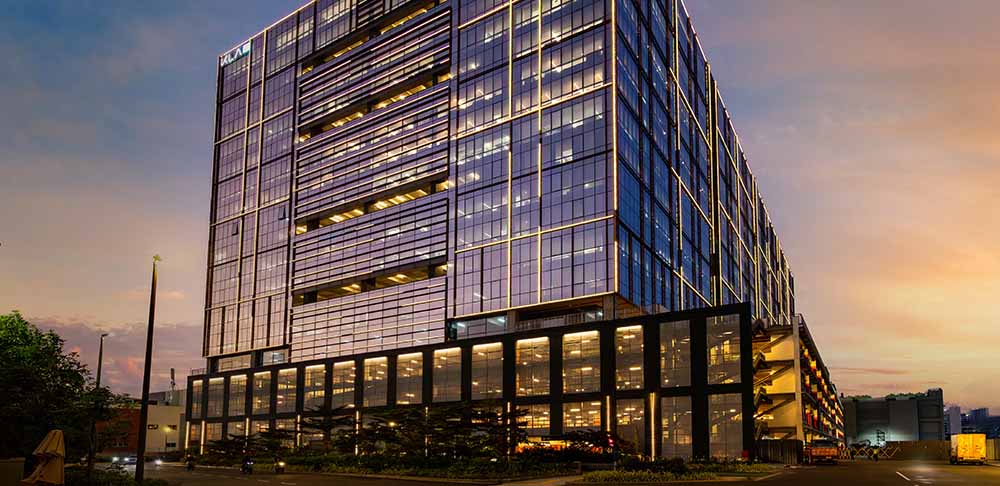
A multinational considering MNC Office Space Chennai faces a decision fundamentally different from selecting a conventional office building. The choice is not between individual structures. It is between standalone buildings and integrated campuses. This distinction determines whether a multinational can operate effectively at the scale and complexity that GCC operations require.
Most multinationals recognise this distinction too late. They lease a single building because it offers immediate availability and competitive rent per square foot. Within two years, the limitations become apparent: expansion space is unavailable, clients have nowhere to meet beyond a conference room, operational functions are scattered across the city, talent commute times create attrition pressure, and the organisation operates from a position of constraint rather than capability.
An integrated business campus in Chennai addresses each of these constraints structurally. A campus is not simply multiple buildings. It is coordinated infrastructure where connectivity, scalability, security, operations, and services are designed as a system. That systematic design enables MNC and GCC operations at scale and complexities that standalone buildings cannot support.
Understanding what differentiates a campus from a collection of buildings is the first step in making location decisions that enable long-term organisational success.
Why Large Office Campuses Are Essential for MNC Operations
Multinational corporations operate at an organisational complexity that most local enterprises do not. A multinational presence in Chennai might span multiple functions: engineering centres, operations hubs, financial services functions, customer service centres, manufacturing support offices. These functions do not operate independently. They coordinate across locations, time zones, and organisational structures.
That coordination requires infrastructure that standalone buildings do not provide. A customer service centre needs access to data centres. An engineering function needs to host clients and partner consultants. An operations hub needs to coordinate with multiple departments simultaneously. Financial services functions need secure, segregated space. Manufacturing support needs to maintain confidentiality from competitors occupying adjacent buildings. Integrated campuses address these requirements through:
- Multi-building infrastructure allowing functional separation without geographic dislocation
- Unified security protocols enabling confidentiality across multiple operations
- Interconnected spaces supporting cross-functional coordination
- Scalable amenity ecosystems accommodating growth
- Professional client hosting facilities supporting business development
Standalone buildings cannot replicate this infrastructure. A campus is not an option for multinationals operating at complexity. It is a requirement.
Scale and Headcount Accommodation
Office Space for GCC in Chennai requires accommodation for growth trajectories that single buildings cannot support. A GCC typically launches at 200-to-500 headcount and scales to 1,200-to-2,000 over a five-to-seven-year lifecycle. This growth must happen within the same location to preserve operational continuity and team cohesion.
A 100,000-square-foot building accommodates roughly 500 people at standard densities. A 200,000-square-foot building accommodates 1,000 people. A 2,000-person operation requires 400,000+ square feet. A single 100,000-square-foot building imposes an expansion ceiling that forces external relocation when the operation exceeds 500 people.
Integrated campuses provide multiple towers and phased expansion. An operation can occupy one tower initially, expand to adjacent towers as headcount grows, then move to additional phases when mature scale is reached. The entire growth trajectory happens within campus boundaries, preserving organisational coherence.
DLF Downtown Taramani Chennai spans 28 acres, with Phase I providing 3.4 million square feet across three towers and Phase II providing 3.6 million square feet across four additional towers. This scale accommodates GCC growth from launch through maturity without requiring relocation.
Security and Confidentiality Infrastructure
Multinational corporations handle sensitive operations: proprietary research, client confidential data, financial functions, and manufacturing intelligence. These functions require security protocols that prevent cross-contamination between operations and between occupant organisations.
Standalone buildings share entry points and security zones. Multiple occupants (competitors or service providers) share the same infrastructure. Confidentiality is compromised by default. An engineering firm occupying the same building as a competitor cannot operate effectively. Integrated campuses provide:
- Segregated security zones for different functions
- Dedicated access points for sensitive operations
- Unified surveillance and access control across campus
- Trained security operations managing multiple zones
- Clear separation of occupant organisations across buildings or zones
DLF Downtown Taramani Chennai operates with unified 24x7 security management, advanced access control systems, trained security operations, and compartmentalised zones. A multinational can isolate sensitive functions from public areas and from other occupants without requiring standalone facilities.
Amenity Ecosystem and Operational Support
Large operations generate demand for services that standalone buildings cannot accommodate. A 1,500-person operation requires multiple food options, fitness facilities, medical services, banking, retail, and professional services. Single-building developers cannot economically support this amenity density. Integrated campuses make it viable.
DLF Downtown Taramani Chennai operates 200,000 square feet of integrated amenities: multiple food courts, fine dining restaurants, a medical centre, a wellness facility (Thrive, 45,000 square feet), a business centre (Guild, 30,000 square feet), a crèche, retail, a salon, and convenience stores. This amenity scale is designed into a 28-acre master plan.
The impact is operational. A 1,500-person operation without on-campus amenities loses productivity daily: employees leaving campus for food, fitness, banking, and retail services. Daily friction accumulates into measurable dissatisfaction. With integrated amenities, employees remain on campus, operations flow seamlessly, and retention improves.
Connectivity and Transportation Infrastructure
Large operations generate traffic that requires dedicated transportation planning. Multinationals with 1,000-to-2,000 employees create commute demand that impacts city infrastructure. A campus must provide transit access that accommodates this volume without overwhelming roads or creating unacceptable commute times.
Large Office Space Near OMR IT corridor benefits from corridor infrastructure designed to accommodate high-density employment. The OMR corridor has evolved to support hundreds of companies and thousands of commuters. Transit infrastructure (MRTS, bus networks, dedicated lanes) exists at scale.
DLF Downtown Taramani Chennai sits adjacent to MRTS Taramani Station on the operating Beach-Velachery line. Planned metro connectivity (Madhavaram-Sipcot corridor, opening 2027) adds 300 metres away. This dual transit access means a 1,500-person operation can accommodate commute demand without overwhelming roads or requiring premium parking.
Operational Resilience and Business Continuity
Multinational corporations require infrastructure resilience that accommodates disruptions. Power failures, data centre outages, transit disruptions, or security incidents should not disable operations. Resilience requires redundancy at multiple levels: power, connectivity, access, and security.
Standalone buildings provide limited redundancy. A power failure affects one building. A fire requires evacuation. A security incident can lock down the entire facility. Integrated campuses distribute operations across multiple buildings, enabling continuity when individual buildings experience disruption.
Grade A+ Office Building Chennai campuses provide the following:
- 100% backup power across all buildings (redundant generators)
- Distributed data centre connectivity (no single point of failure)
- Multiple access corridors and evacuation routes
- Segregated security zones allowing partial operation during incidents
- Real-time building management monitoring all systems
This infrastructure resilience is essential for multinationals operating 24x7 or supporting global clients across time zones.
Digital Infrastructure and Technology Integration
Modern multinationals require digital infrastructure that supports data-intensive operations, global connectivity, and real-time analytics. Corporate Office Space Chennai India at large campuses provides the following:
- WiredScore Platinum-rated digital infrastructure (high-capacity fibre, redundant systems)
- Building-wide Wi-Fi resilience (no dead zones)
- Real-time space utilisation analytics (occupancy sensors, desk booking)
- Advanced access control and visitor management systems
- Building performance monitoring (energy, comfort, security)
- Standalone buildings typically provide basic connectivity. Campus infrastructure provides enterprise-grade digital systems supporting multinational operations.
Sustainability and ESG Credentials
Multinational corporations increasingly face ESG reporting obligations requiring documented sustainability performance. A campus with LEED Platinum certification and Zero certifications (Water, Waste, Energy) provides the documented performance data needed for ESG reporting.
DLF Downtown Taramani Chennai Phase I carries LEED Platinum certifications. Phase II targets LEED Platinum plus LEED Zero Water, Zero Waste, and Zero Energy certifications. This stacking provides multinational enterprises with comprehensive sustainability credentials supporting corporate ESG disclosures.
Standalone buildings rarely carry advanced sustainability certifications. Campus-scale operations make certification economically viable and strategically valuable.
Strategic Campus Selection for Multinational Success
MNC Office Space Chennai decisions should prioritise campus-scale facilities addressing headcount growth, security, amenities, connectivity, resilience, digital infrastructure, and sustainability. These dimensions combined enable multinational operations at complexity and scale that standalone buildings cannot support.
An integrated business campus in Chennai is not a luxury amenity. It is operational infrastructure. A multinational choosing between a standalone building and a campus is choosing between constraint and capability.
Explore a large integrated office campus in Chennai where multinational operations find the infrastructure, scalability, security, and ecosystem support necessary for enterprise success.
FAQs
GCCs grow from 300-500 initial headcount to 1,200-1,800 within five years. Single 100,000-sqft buildings accommodate 500 people. Growth beyond this requires external space or relocation, both expensive and disruptive.
Campuses segregate occupants across buildings, isolate sensitive functions, maintain unified monitoring, and operate trained security teams managing multiple zones. Single buildings share entry points with competitors and service providers, compromising confidentiality.
On-campus amenities eliminate daily friction (food, fitness, banking, retail). Employees experience higher satisfaction and stay longer. Standalone offices require employees to leave campus, creating daily dissatisfaction and attrition pressure.
Yes, but limitations emerge within 18-24 months. Expansion requires relocation. Clients have no meeting facilities. Amenity access is external. Security is compromised. Temporary solutions become permanent constraints quickly.
Redundant power across buildings, distributed connectivity, segregated security zones, and real-time monitoring enable partial operations during individual building disruptions. Single buildings fail entirely when critical systems fail.
