


-
 649
649 - Posted in September, 2026
Office Space in Chennai: 2026 Guide for IT, GCC and Enterprise Teams
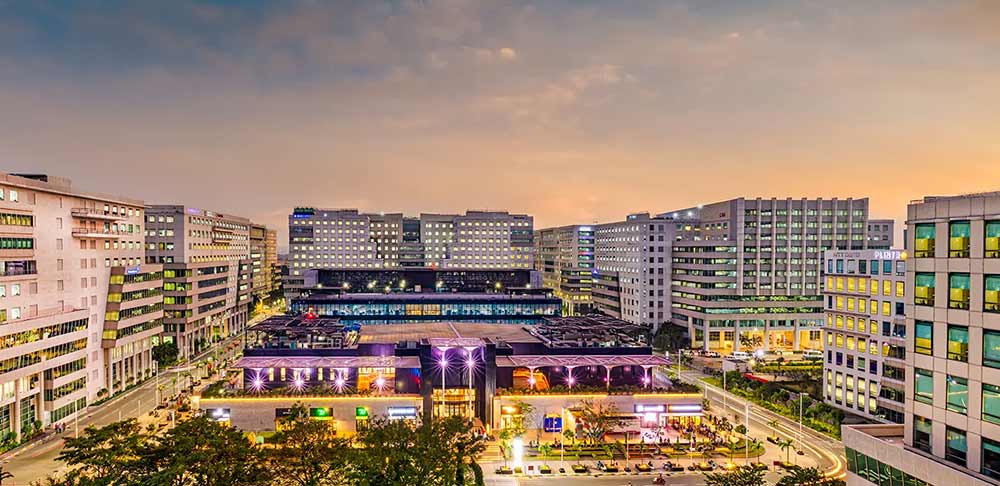
Chennai tends to be underestimated in conversations about India's enterprise office markets. Bangalore attracts startup attention. Hyderabad has built a formidable GCC reputation. Gurugram dominates the North India discussion. Chennai, meanwhile, has been quietly developing one of the most stable, deep-rooted commercial office ecosystems in the country, and the enterprises that discovered this early have been rewarded with something that louder markets struggle to offer consistently: reliable talent, rational costs, and a workforce with genuine staying power.
What is driving the acceleration now, and which parts of the city actually deliver on what enterprise and IT occupiers need? That requires going below the city level into the micro-markets where the real differentiation happens.
Why Chennai Is Emerging as a Preferred Office Market
The word "emerging" slightly undersells it. Chennai has hosted serious enterprise and IT operations for decades. What has changed is the scale and the profile of the businesses now choosing it.
Global capability centres are a significant part of this shift. GCC operations require depth of talent at multiple levels simultaneously, from analysts and engineers to senior delivery leads, and Chennai's engineering and technology graduate pipeline has consistently produced that breadth. The city's universities and technical institutions have fed the commercial sector for long enough that mid-career professionals with eight to fifteen years of relevant experience exist here in meaningful numbers, which is the cohort that matters most to GCC operations trying to run sophisticated functions.
The other factor is workforce stability. Employee attrition in Chennai tends to run lower than in Bangalore or Hyderabad. That is not simply a cultural observation. It reflects a city where employees have established lives, social networks, and family roots, and where the sheer number of competing employers has not yet reached the level of churn that characterises more saturated markets. For businesses where continuity of team knowledge matters operationally, that stability is worth a great deal.
Why enterprise interest in Chennai office space continues to grow:
- A deep and stable IT and engineering talent pool developed over several decades
- Lower attrition relative to other major South Indian commercial markets
- Increasingly competitive Grade A office infrastructure meeting global standards
- A cost base that remains rational compared to Bangalore and Hyderabad
- Government policy that has been consistently supportive of IT and enterprise investment
The Growing Demand from IT and GCC Occupiers
IT companies were the original anchor tenants of Chennai's commercial office market, and they remain central to it. But the GCC wave has added a different quality of demand, one that requires larger floor plates, higher building specifications, and more integrated campus environments than the earlier generation of IT parks was designed to deliver.
A GCC operation is not simply a large IT team. It is a strategic extension of a global business, often running finance, analytics, legal, or technology functions that the parent company treats as core rather than peripheral. The people working in that environment expect a workplace that reflects the organisation's global standards, not a compromise version of it. That expectation has pulled Chennai's Grade A commercial market toward a higher specification tier than it occupied even five years ago. The demand characteristics from GCC and enterprise occupiers specifically include:
- Large, contiguous floor plates that accommodate several hundred seats within a single level
- Building certifications that support the parent company's ESG and sustainability reporting
- Digital infrastructure quality that sustains constant high-bandwidth connectivity with overseas teams
- Amenities and workplace environments competitive enough to attract the senior talent GCC operations need
Key Business Districts for Office Space in Chennai
Chennai's commercial geography rewards some familiarity before any leasing conversation begins. The city's enterprise office market is not distributed evenly, and the micro-market you choose has consequences that play out over the lease term.
Taramani and the Rise of Modern Workspaces
Tharamani has undergone a transformation that not everyone has updated their mental model of. What was once a secondary commercial zone has evolved into one of Chennai's most significant IT and enterprise corridors, with substantial infrastructure investment that has raised the quality of space available here to Grade A standards.
DLF Downtown Chennai in Taramani represents the kind of large-format integrated development that characterises the best of what the area now offers. The development is designed for enterprise and GCC occupiers that require scale, with the campus environment and amenities that support a workforce of several hundred or more operating productively across a full working day. The Tharamani location places it within reasonable distance of the southern residential corridors where a significant proportion of Chennai's IT workforce lives, which matters considerably when thinking about daily commute experience.
Manapakkam as a Strategic Commercial Hub
Manapakkam occupies a different position in Chennai's commercial geography. It sits on the western corridor with strong access to Old Mahabalipuram Road and the broader suburban residential zones that house a large portion of Chennai's professional workforce.
DLF Cyber City Chennai in Manapakkam brings institutional-quality commercial space to a location that has genuine strategic logic for enterprises managing large teams or requiring easy road connectivity from multiple residential catchments. The development's positioning within Manapakkam suits businesses that value operational accessibility as much as address visibility.
What Enterprises Should Look for in Office Space
Arriving in Chennai's leasing market without a clear specification framework is how businesses end up in spaces that made sense at signing and created friction within a year. The framework for enterprise occupiers should be more specific than "Grade A".
Building certifications are the most reliable independent guide to quality. LEED Platinum certification, the international benchmark for sustainable building performance, covers energy efficiency, water management, material quality, and indoor environmental standards, including MERV-14 air filtration. MERV-14 is a concrete specification: it defines the filtration efficiency of ventilated air within the building and is verifiable rather than descriptive. For large teams spending ten-hour days in an office environment, indoor air quality is not peripheral.
WiredScore Platinum certification independently assesses digital connectivity infrastructure. For enterprises running GCC operations or maintaining continuous video connectivity with global teams, the building's underlying connectivity architecture matters as much as the headline bandwidth figure. WiredScore Platinum certification means that the architecture has been independently evaluated.
Beyond certifications, enterprise occupiers should assess:
- Total leasable area within the development and available capacity for expansion
- Floor plate sizes and whether they support the team configurations the business operates in
- Building management quality and a documented operational track record
- Transport access from the residential corridors where target employees live
- Availability of amenities within or immediately adjacent to the development
Connectivity and Talent Access Advantages
Chennai's transport infrastructure is more relevant to the office leasing decision than it sometimes appears in property marketing materials. The city's road network has improved considerably, but the real advantage lies in understanding which micro-markets provide genuinely manageable commutes for the workforce profile you need to attract.
Tharamani benefits from proximity to the Chennai Metro network and reasonable connectivity to the southern residential corridors, including Velachery, Sholinganallur, and Pallikaranai, areas with high concentrations of IT and engineering professionals. For a GCC operation recruiting from this talent pool, the commute geometry matters as much as the building quality.
Manapakkam's western location gives it strong road connectivity but positions it differently in terms of the residential zones it draws from. Businesses recruiting from Porur, Guindy, and the western suburbs will find Manapakkam a more natural location match than Tharamani.
The practical implication: matching your micro-market to where your target workforce lives, rather than simply choosing the most prestigious commercial zone, meaningfully affects both recruitment success and daily attendance patterns.
Grade A Office Space and Workplace Quality
The distinction between Grade A labelling and Grade A performance is real in Chennai, as it is across Indian commercial markets. Buildings developed under the 5S framework, covering Sustainability, Safety, Social Infrastructure, Scale, and Space Solutions, approach workplace quality as an integrated system rather than a specification list. The result is a working environment where individual elements work together rather than coexisting without coherence.
For enterprises benchmarking Chennai office quality against their global portfolio, the buildings that perform consistently are those with documented certifications rather than developer assurances. LEED Platinum and WiredScore Platinum provide the independent verification that makes those comparisons credible.
The modern enterprise workforce, particularly at the senior levels that GCC operations need, has high expectations for the physical working environment. The quality of air, light, acoustics, breakout spaces, and amenities collectively shapes both daily satisfaction and long-term retention in ways that are harder to quantify but very much felt.
Managed, Furnished and Traditional Office Options
For enterprises entering Chennai for the first time or expanding into the city from another location, the choice between managed and traditional leased space deserves careful consideration.
Traditional commercial leases in Chennai typically run three to five years with a lock-in period, involve security deposits of six to ten months of rent, and include rent escalation clauses of around 15% every three years. The economic logic of a direct lease is compelling at scale and over a stable horizon. The challenge is the upfront fit-out capital requirement and the facility management overhead, both of which demand local presence and attention during the setup phase.
Furnished office space in Chennai, or managed office space under an operator, removes most of that burden. The trade-off is a higher per-seat cost and reduced control over the physical environment. For enterprises at early stages of Chennai operations, or those requiring rapid operational readiness, managed space within a Grade A development is a legitimate entry point that does not compromise on building quality.
Many businesses follow a phased approach: begin in a managed space to establish the team and understand the market, then transition to a direct lease in the same or an adjacent building once headcount and operational requirements are clear.
Scalability for Growing Teams and GCCs
Scalability is one of the most underweighted factors in commercial office decisions and one of the most expensive to get wrong. A GCC that sets up for a hundred and fifty people and grows to four hundred within three years faces a disruptive and costly relocation if the initial building cannot accommodate that trajectory.
When evaluating commercial office space in Chennai, enterprise occupiers should establish:
- The total developable or leasable area within the project beyond the initial space committed
- Whether expansion rights or right-of-first-refusal on adjacent floors can be secured at the time of initial lease signing
- Whether the managed office provider has capacity to scale within the same building or development
- The physical configuration of the floor plates, and whether they can support larger team arrangements without compromising on operational efficiency
DLF Downtown and DLF Cyber City in Chennai are developed at a scale that accommodates enterprise growth trajectories. That scale is not incidental. It reflects a deliberate design choice for the occupier profile; these developments are built to serve.
Choosing the Right Office Space in Chennai for Long-Term Growth
The commercial office decision in Chennai is not simply about where to sit for the next three years. For GCC operations and enterprises making substantive India commitments, it is a foundational infrastructure choice that affects talent strategy, operational resilience, and the experience of the workforce the business depends on.
Chennai's position in the enterprise office market has strengthened precisely because it offers what more volatile markets sometimes trade away in pursuit of growth: workforce stability, cost rationality, and a commercial real estate environment that has been improving consistently without the supply and demand distortions that periodically affect other cities.
The businesses that have planted themselves firmly in Chennai's best-specified buildings, in Tharamani and Manapakkam, and committed to the infrastructure quality that attracts and retains serious talent are the ones that tend to look back on the location decision with relief rather than regret.
Explore DLF office spaces in Chennai at DLF Downtown in Tharamani and DLF Cyber City in Manapakkam, with institutional-quality space built for the enterprise and GCC occupiers shaping the city's commercial future.
FAQs
Tharamani and Manapakkam are the primary Grade A office corridors for IT and GCC occupiers in Chennai. Both offer institutional-quality developments with strong talent access, and they serve different residential catchments, making location choice dependent on your specific workforce profile.
Chennai generally offers a more stable and competitive cost base than Bangalore and is broadly comparable to Hyderabad in the Grade A segment. The relative advantage varies by micro-market and specification, but Chennai has historically maintained rational pricing without the volatility seen in some other markets.
LEED Platinum certification for sustainable building performance, including MERV-14 air filtration for indoor air quality, and WiredScore Platinum certification for digital connectivity infrastructure. Both are independently verified and provide reliable benchmarks for comparing buildings across the market.
Chennai has a deep engineering and IT talent base developed over several decades, with notably lower attrition than Bangalore. The city's mid-career talent pool, professionals with eight to fifteen years of experience, is particularly strong, which matters considerably for GCC operations running complex, high-value functions.
Most Grade A commercial leases run three to five years with a lock-in clause. Security deposits are typically equivalent to six to ten months of rent and are negotiated. Rent escalation of approximately 15% every three years is standard across the Chennai Grade A market.
