


-
 594
594 - Posted in September, 2026
Office Space in India for NRI Businesses: Setup Guide for 2026
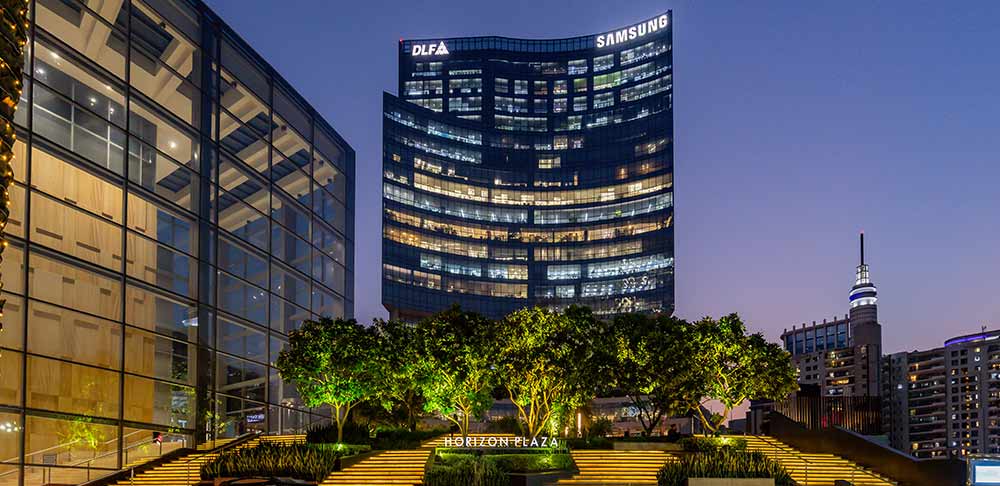
Most NRI entrepreneurs who establish a presence in India will tell you the hardest decision was not the business model or the capital. It was choosing where to sit. Sounds trivial until you realise that the wrong city, the wrong building, or the wrong lease structure can quietly undermine everything you built from abroad. Office space in India for NRI business is not simply a real estate transaction. It is a strategic decision that shapes hiring, credibility, compliance, and growth.
India's commercial real estate market has matured significantly. The era of compromising on infrastructure because "that's just how India is" is largely over, at least in the markets that matter to international-standard businesses. What NRIs returning to build or expand need is a clear framework for making the right call, not just a list of cities.
Why NRIs Are Expanding Businesses to India
The pull factors are well understood at this point: a large, skilled workforce, relatively lower operational costs compared to Western markets, a growing domestic consumer base, and a government that has been actively streamlining foreign investment rules. But the push factors are equally relevant. Many NRI-led businesses, particularly those operating global capability centres (GCCs) or technology and consulting firms, are finding that their international clients expect India operations as a sign of scale and commitment.
The demand for commercial office space for NRI businesses has risen consistently, driven by:
- Growth in GCC setups, where multinational firms establish India-based teams for tech, finance, and operations support
- NRI-owned startups scaling from a domestic base while maintaining overseas client relationships
- Professional services firms requiring credible office addresses in Tier 1 Indian cities
- Family businesses with international operations are formalising their India presence
What has changed most in recent years is the quality expectation. NRIs accustomed to Grade A offices in the US, UK, or Singapore will not accept anything less in India, and in the right buildings, they do not have to.
Choosing the Right City for Your Office
This is where most NRI business owners either get it right instinctively or get it expensively wrong after the fact. Each major commercial city in India has a distinct character, talent profile, and infrastructure reality.
- Gurugram remains the preferred destination for businesses that need proximity to Delhi-NCR's corporate ecosystem, government access, and a dense pool of senior talent. Areas like Cyber City and DLF Phase V have long been synonymous with premium Grade A space. DLF Cyber City in Gurugram hosts many of India's most recognised multinational occupiers, and the infrastructure around it, from transport links to hospitality, reflects that. DLF Cyberpark in Udyog Vihar and Atrium Place in DLF Phase V offer strong alternatives for businesses that want Gurugram credentials without being in the densest part of Cyber City.
- Hyderabad has emerged as a serious competitor over the past decade. The government's consistent pro-business posture and Gachibowli's transformation into a tech corridor have made it a favoured destination for GCC setups. DLF Cyber City Hyderabad, located in Gachibowli, caters to exactly this profile.
- Chennai carries a different kind of appeal: strong engineering talent, a more stable cost base, and growing visibility as a GCC hub. DLF Downtown Chennai in Tharamani and DLF Cyber City Chennai in Manapakkam serve businesses looking to establish operations in South India with institutional-quality space.
- Noida is increasingly relevant for NRI businesses linked to Delhi operations or those seeking strong value relative to Gurugram. DLF Techpark Noida provides a credible Grade A option here. For businesses with interests in North India's growing industrial and administrative belt, DLF Techpark Chandigarh rounds out the portfolio.
The point is not to rank these cities against each other. Each serves a different operational purpose. The right question is: where does your business need to recruit, operate, and be seen?
Understanding Office Leasing in India
For NRIs, one of the early friction points is unfamiliarity with how Indian commercial leasing works. It is not identical to leasing in Western markets, and the differences matter.
Commercial leases in India typically operate on a lock-in period basis, where both landlord and tenant commit to a minimum term, usually three to five years, before termination rights kick in. Security deposits tend to be higher than Western equivalents, often equivalent to six to twelve months of rent, and these are negotiated rather than fixed. Rent escalation clauses are standard, typically in the range of 15% every three years, though this varies. Key aspects NRI business owners should understand before signing:
- Fit-out responsibility: Bare shell spaces require significant investment in fit-out. Warm shell spaces reduce that burden. Fully fitted or managed offices eliminate it almost entirely.
- Stamp duty and registration: Commercial leases require stamp duty payment and registration, with costs and processes varying by state.
- CAM charges: Common area maintenance charges are typically billed separately from rent and can represent a meaningful additional cost.
- RERA applicability: While primarily a residential regulation, NRIs should take legal counsel on any commercial property transactions to understand applicable frameworks.
Working with an experienced tenant representative or legal advisor is not optional for NRIs unfamiliar with local leasing norms. Skipping that step is where costly commitments get made.
Managed Offices vs Traditional Office Space
The managed office model has grown dramatically in Indian commercial real estate, and for NRI businesses specifically, it solves a problem that traditional leasing simply cannot: the absence of on-ground presence during setup.
A traditional lease puts the fit-out, furnishing, IT infrastructure, housekeeping, and facility management squarely on the tenant. For an NRI business owner operating from the US or Europe while trying to get an India office functional, managing each of those workstreams remotely is genuinely difficult. Managed office space in India for NRI businesses offers a fundamentally different proposition:
- Ready-to-use or quickly ready spaces with furniture, IT, and amenities in place
- Facilities managed by the building operator, removing the need for local management overhead
- Flexible terms, in some cases, allow businesses to right-size as they grow
- Professional environments with reception, meeting rooms, and shared infrastructure included
- Credible addresses in recognised commercial buildings without the capital outlay of a traditional fit-out
The tradeoff is typically per-seat cost, which runs higher than an equivalent raw lease. For businesses at early or mid stages of India operations, that premium is usually justified. For larger teams with stable headcount, transitioning to a direct lease often makes financial sense over time.
Key Factors to Evaluate Before Leasing
Beyond location and lease structure, the building itself warrants serious scrutiny. Not all Grade A is the same, and NRI businesses with global operational standards should look for certifications and infrastructure benchmarks that align with what they are accustomed to. Buildings worth evaluating should ideally meet:
- LEED Platinum certification: The internationally recognised green building standard. LEED-certified buildings, particularly those with MERV-14 air filtration systems, offer occupants better air quality, energy efficiency, and reduced environmental footprint, which matters both for employee wellbeing and for ESG reporting requirements increasingly common in global businesses.
- WiredScore Platinum certification: The global standard for digital connectivity in commercial buildings. For businesses handling client data, running tech operations, or requiring redundant connectivity, WiredScore Platinum is a meaningful indicator of infrastructure quality.
- 5S framework: Buildings developed with a focus on Sustainability, Safety, Social Infrastructure, Scale, and Space Solutions tend to offer a more complete operational environment, not just square footage.
DLF's portfolio across Gurugram, Hyderabad, Chennai, Noida, and Chandigarh includes buildings meeting these benchmarks, which is part of why its properties continue to attract both global occupiers and GCC operations looking for institutional-quality environments.
Finding Office Space from Overseas
The practical challenge of viewing and committing to office space while based abroad has become significantly more manageable. Most reputable developers now offer virtual tours, detailed floor plan documentation, and remote transaction support. The gap between what can be assessed remotely and what requires an in-person visit has narrowed. That said, there are elements that still benefit from local engagement:
- Neighbourhood infrastructure assessment (transport links, food options, hotel proximity for visiting teams)
- Understanding the micro-market dynamics within a city
- Reviewing fit-out quality and building management standards firsthand
For NRIs, engaging a trusted local advisor, whether a real estate consultant or a business setup firm, before signing anything remains prudent. The DLF Offices team, given the breadth of the portfolio across major Indian cities, can provide direct guidance on available spaces matched to business profile and scale.
Scalability for Future Business Growth
One of the more underappreciated aspects of office space in India for NRI businesses is scalability. Many NRI entrepreneurs enter India with a team of twenty and find themselves at a hundred within three years. Building infrastructure around a conservative headcount estimate without accounting for that trajectory creates expensive disruptions. When evaluating any space, consider:
- Whether the building has additional floors or adjacent space that could be accessed under a right-of-first-refusal arrangement
- Whether the managed office provider can accommodate expansion without a complete relocation
- Whether the lease structure allows for phased expansion
- The building's total leasable area relative to your likely growth needs
Large-format developments like DLF Downtown Gurugram and DLF Downtown Chennai are designed with exactly this kind of scale in mind. They accommodate both the GCC setting up its first hundred-seat operation and the established enterprise occupying multiple floors, often within the same development.
Technology and Infrastructure Requirements
Tech infrastructure expectations for NRI businesses tend to run high, and rightly so. Operations that interface with international clients or run backend technology for global firms cannot tolerate connectivity inconsistency. Before finalising any space, validate:
- Internet and data connectivity options (redundancy matters more than headline speeds)
- Generator backup capacity and uptime guarantees
- Building management system quality, including access control and security
- Data centre or server room availability if required
- Video conferencing infrastructure in meeting rooms
WiredScore Platinum-certified buildings address most of these concerns structurally. For NRI businesses running GCC operations or handling sensitive client data, this certification is not a marketing badge but a meaningful operational assurance.
Sustainability and Global Workplace Standards
This aspect tends to be underweighted by first-time India office seekers but is increasingly relevant. NRI-led businesses with international parent companies, overseas investors, or global clients face growing ESG scrutiny. The sustainability credentials of your office building in India can directly affect how the business is perceived by stakeholders abroad. LEED Platinum certified buildings offer measurable advantages:
- Reduced energy consumption, which contributes to scope 3 emissions reporting
- Better indoor environmental quality, including air quality via MERV-14 filtration
- Water efficiency measures relevant to Indian climatic conditions
- Alignment with global green building standards is recognised across markets
These are not abstract benefits. Businesses reporting against international sustainability frameworks increasingly need to account for their real estate footprint, and a LEED Platinum address in a WiredScore Platinum building positions that part of the compliance picture cleanly.
Common Mistakes NRI Businesses Should Avoid
Experience with how NRI businesses typically navigate India office setup reveals a few recurring errors worth flagging directly.
- Choosing location based on cost alone: Cheaper micro-markets often come with hidden costs in talent acquisition, commute burden on employees, and perception among clients.
- Underestimating setup time: Even in managed offices, getting a team fully operational takes longer than anticipated. Build a buffer into the timeline.
- Neglecting legal review of the lease: Indian commercial leases are not standardised documents. Independent legal review is essential.
- Ignoring the fit-out clause: Understanding what condition the space will be handed over in and who is responsible for what prevents expensive surprises.
- Overcommitting on space: Taking more space than current needs justify is a common overcorrection from businesses worried about future growth. Phased approaches exist.
- Choosing a building without infrastructure certifications: A Grade A address that cannot deliver reliable connectivity or meet basic workplace quality standards undermines operational credibility.
Building a Long-Term Presence in India
Office space is, ultimately, a signal. For NRI businesses, the India office communicates something to talent, clients, partners, and regulators about the seriousness of the commitment. A well-chosen address in a certified, well-managed building says something that a cost-optimised compromise in a secondary market simply does not.
The businesses that have built sustainable India operations over the past decade share a common trait: they treated the office decision as a strategic foundation, not an administrative task. The quality of the space affected the calibre of talent they could attract, the confidence of clients visiting the office, and the operational consistency of their teams.
India's commercial real estate market now offers genuine alternatives to the Grade A standards NRI entrepreneurs are used to internationally. The question is not whether quality space exists. It is whether you have the right framework to choose it.
Choosing the Right Office Partner in India
The DLF Offices portfolio represents one of India's most comprehensive collections of Grade A commercial space, spanning Gurugram, Hyderabad, Chennai, Noida, and Chandigarh. The breadth of the portfolio means that whatever stage your India operations are at, and whatever city makes strategic sense, there is likely a relevant option within the same institutional framework.
For NRI businesses planning an India office setup in 2026, working with a developer of this scale offers advantages beyond the individual building: consistent infrastructure standards, established building management, and the ability to accommodate growth within a familiar operational environment.
Connect with DLF Offices for India business setup and get guidance matched to your specific requirements.
FAQs
Yes. NRIs can lease commercial office space in India. The process requires standard documentation and legal compliance, but there are no restrictions on NRIs entering commercial lease agreements in India.
Most commercial leases run for three to five years a with lock-in clause, after which exit terms apply. Managed and flexible office arrangements often offer shorter commitments depending on the provider and space type.
Managed offices are generally well-suited to NRI businesses setting up initially, as they eliminate the need for fit-out management and local facilities oversight, both of which are difficult to handle remotely.
Gurugram, Hyderabad, Chennai, and Noida are the primary Grade A markets for NRI businesses. The right city depends on the nature of the business, talent requirements, and operational priorities.
Look for LEED Platinum certification for sustainability and indoor quality standards, and WiredScore Platinum certification for digital connectivity assurance. Both are globally recognised and particularly relevant for businesses with international operational requirements.
