


-
 673
673 - Posted in September, 2026
Office Space with Amenities: What Modern Employees Expect in 2026
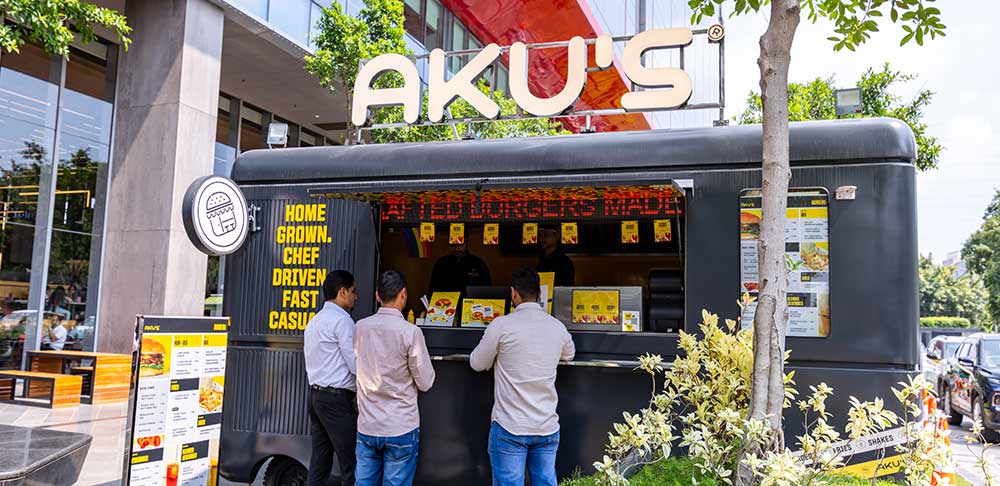
Ask most people what they want from an office, and the answers come quickly: good coffee, fast internet, a desk that doesn't wobble. Ask them what would make them genuinely prefer coming in over working from home, and the list gets considerably more interesting. It also gets more specific. The distance between those two conversations is where a lot of workplace strategy goes wrong.
The amenities question in 2026 is not really about perks. It is about what an office environment needs to offer in order to make the commute feel like a reasonable proposition on a Tuesday morning when the alternative involves no commute at all. That recalibration has changed what employees notice, what they mention to colleagues, and increasingly, what they factor into decisions about where they want to work.
Why Amenities Have Become a Workplace Essential
The framing of amenities as luxuries belongs to an earlier period. Before hybrid working became standard across professional services, technology, and enterprise sectors, the office was a default. You went because that was where work happened, not because the environment was designed to earn your presence.
That default is no longer operative in most knowledge-economy organisations. The return-to-office conversation has taken different shapes in different companies, but the underlying dynamic is consistent: employees now have a reference point for what their working day looks like without the commute, the open-plan floor, and the limited food options. When the office needs to compete with that reference point, what it offers beyond a desk and a connection becomes the deciding variable.
Amenities in this context function as operational infrastructure, not decoration. A cafeteria that offers genuinely good food at reasonable prices is not a perk; it is a friction-reducer that keeps people on campus and productive during a full working day. A fitness facility that is usable during a lunch hour rather than just available in theory is a retention signal and a wellness investment simultaneously.
What this shift means in practice:
- Amenities that once differentiated premium campuses are increasingly baseline expectations for Grade A office space
- The quality gap between a well-amenitised campus and a bare office floor is now visible to employees and factored into workplace satisfaction surveys
- Organisations that underinvest in campus environment are finding the gap in their talent conversations, particularly at the senior specialist level
- For GCCs and multinationals, the amenity standard of the India campus is increasingly visible to global leadership through internal reporting on employee experience
The Shift from Office Space to Employee Experience
The distinction is worth pausing on. Office space is a physical container. Employee experience is what happens inside it across a full working day, including the arrival, the meals, the informal interactions, the moments of decompression between focused work, and the departure. Organisations that think only about the container consistently underestimate how much the surrounding experience shapes engagement.
Campus developers who understand this have moved from providing amenities as add-ons to embedding them as structural features of how the campus functions. The difference is legible when you compare a campus where the food court is an afterthought tucked at one end of a building with one where dining options, outdoor seating, and retail conveniences are distributed throughout the development and integrated into the natural movement of the working day.
Food and Dining Amenities Employees Value
Food is the amenity that generates the most consistent feedback, positive and negative, in employee satisfaction data. It is also the one that has the most direct effect on how much of the working day people actually spend on campus, rather than leaving to find alternatives.
Office space with a cafeteria that offers variety, quality, and reasonable pricing at scale is genuinely different in character from one that does not. The operational complexity of running good food at volume is significant, which is why campus-level food management, where a single experienced facility operator oversees multiple outlets across a large development, tends to deliver better outcomes than building-by-building arrangements.
What employees consistently rate highly in campus dining:
- Multiple format options within a single campus: sit-down, quick-service, café, grab-and-go
- Dietary diversity that reflects the actual demographic composition of the workforce
- Outdoor or semi-outdoor seating that provides a change of environment rather than simply a change of room
- Pricing that makes on-campus dining the obvious default rather than a considered expense
- Quality and freshness standards that survive comparison with off-campus alternatives
Wellness and Fitness Facilities at Work
Gym access has appeared on office amenity lists for long enough that it risks sounding formulaic. What has changed is the standard employees now apply when evaluating whether the facility is genuinely useful.
A fitness centre that closes at six, requires a separate membership negotiation, and is located in a basement that nobody naturally passes through, is technically present but functionally marginal. A facility that is spacious, properly equipped, open across a working-day range of hours, and visible within the campus layout is a different proposition entirely. The same logic applies to wellness rooms, meditation spaces, and health consultation services, each of which has moved from aspirational to expected within premium office campuses catering to enterprise occupiers.
MERV-14 air filtration, which is standard in LEED Platinum certified buildings, is a wellness amenity that most employees are not aware of by name but experience through the quality of the air they breathe for eight to ten hours a day. Its presence or absence has measurable consequences for respiratory health, cognitive function, and the frequency of days lost to illness across a large workforce.
Flexible Collaboration and Social Spaces
The pandemic-era observation that offices should focus on collaboration rather than individual work has been refined by experience. Collaboration happens in specific ways, and the physical environment either supports those ways or it does not.
Formal meeting rooms are necessary but rarely sufficient. The interactions that produce the most creative and productive outcomes tend to happen in informal settings: around a coffee point, in a lounge area between two teams' floors, at a table outside that happens to be in the shade at the right time of day. Campus design that creates these incidental spaces is doing something that a conventional office building typically cannot.
For GCCs running cross-functional product development, the importance of spaces that allow spontaneous interaction between engineering, design, and product teams is directly connected to velocity and quality of output. The physical environment is not separate from the collaboration strategy; it is part of its execution.
Collaborative space features that make a functional difference:
- Informal lounge and breakout areas are distributed across floors rather than concentrated in one common zone
- Outdoor or semi-outdoor spaces that provide a genuine change of environment during the working day
- Acoustic variety: zones designed for quiet individual focus alongside areas where discussion is natural
- Technology integration in informal spaces, including screen sharing and charging infrastructure, without requiring a formal booking
- Social spaces that encourage cross-team interaction rather than reinforcing floor-by-floor siloing
Smart Building Features That Improve Daily Work
Smart building technology has moved from novelty to operational expectation in the category of office space that serious enterprise occupiers consider. The relevant question is no longer whether a building has smart systems but whether those systems improve the actual experience of working in the building on a routine day.
WiredScore Platinum-certified buildings provide independently verified connectivity infrastructure, which is the baseline smart building requirement for any technology-intensive operation. Beyond connectivity, building management systems that control temperature, air quality, and lighting in response to real-time occupancy data remove a category of friction that accumulates significantly over time: floors that are too cold because the system hasn't registered that everyone arrived early, meeting rooms that are stuffy because ventilation hasn't responded to occupancy, and corridors that are overlit at seven in the evening.
Smart features that translate into daily experience improvements:
- Automated visitor management and access control that reduces queue time at building entry
- App-based room booking integrated with the building's real-time occupancy data
- Temperature and lighting controls that respond to actual occupancy rather than scheduled assumptions
- EV charging infrastructure that is sufficient in number and reliable in function
- Digital display systems that provide real-time information on space availability, shuttle schedules, and campus events
Commute Convenience and Accessibility
The commute is the frame around the working day, and its quality substantially affects how employees experience what comes inside it. Office campuses that treat transport connectivity as a secondary consideration consistently underperform on employee satisfaction relative to their amenity investment elsewhere.
Shuttle services that run on reliable schedules from multiple residential catchments, proximity to metro infrastructure, and adequate parking with EV charging provisions all address different segments of the workforce commute. Each matters to a different group, and the combination determines how accessible the campus feels across the full employee demographic.
For large campuses like DLF Cyber City in Gurugram, DLF Cyber City Hyderabad in Gachibowli, or DLF Downtown Chennai in Tharamani, where thousands of employees converge across morning hours, commute infrastructure is not a background feature. It is one of the most operationally significant aspects of the campus experience.
Safety, Security and Workplace Comfort
Security is an amenity in the sense that its absence is acutely noticed while its presence is simply assumed. Multi-layer access control, CCTV coverage across the campus, trained security personnel, and emergency response protocols are features that employees rarely articulate as preferences until something goes wrong. Well-managed campuses treat security as a continuous operational commitment rather than a deployment of visible personnel.
Physical comfort, which includes temperature consistency across floors, adequate natural light, functional and well-maintained washrooms, and quiet spaces for private calls or decompression, is the category where the gap between a well-managed campus and a poorly maintained building becomes most visible over time.
Sustainability Features Employees Notice
Not all sustainability features are equally visible to the people inside the building. Some have high legibility: solar panels on the roof, EV charging bays in the car park, green terraces integrated into the campus landscape. Others operate invisibly but have direct experiential consequences.
LEED-certified buildings, and LEED Platinum-certified campuses in particular, incorporate sustainability features across energy, water, air quality, and materials that shape the daily experience of the workspace without employees necessarily connecting cause and effect. The quality of the air, the consistency of natural light, and the temperature management: these are outcomes of sustainability design decisions that employees feel without necessarily naming.
The ‘5S’ framework that informs the best campus developments, covering Sustainability, Safety, Social Infrastructure, Scale, and Space Solutions, treats environmental performance and human experience as integrated rather than separate concerns. That integration is what distinguishes a campus that performs as a sustainable environment from one that merely claims the label.
Amenities That Support Hybrid Working
Hybrid working has created a specific amenity requirement that didn't exist at scale five years ago: the infrastructure for seamless participation in meetings by people who are not in the room. Every formal meeting room, and ideally a significant proportion of informal spaces, needs a camera, a microphone, and display technology that works reliably and requires no technical troubleshooting at the start of a call.
Lockers and hot-desking infrastructure for employees who are not in every day, quiet zones for video calls that don't require booking a meeting room, and app-based systems for reserving spaces in advance: these are the practical amenities of hybrid working that employees notice the absence of immediately.
How Amenities Influence Talent Attraction and Retention
The relationship between campus amenities and talent outcomes is most visible at the margins: the candidate who mentions the campus during a final-stage conversation, or the employee whose decision to stay or leave is influenced, among other factors, by the quality of their daily working environment.
At scale, across a GCC of several thousand people, these marginal effects compound. A campus that consistently ranks well on employee experience surveys retains people at higher rates than one that doesn't. It attracts candidates who have choices. It generates the informal endorsements in professional networks that are more credible than any employer branding campaign.
Choosing Office Space with the Right Amenities in 2026
The amenity standard that employees expect in 2026 is higher than it was three years ago, and the bar continues to move. Organisations evaluating campus options should approach the amenity question not as a wishlist negotiation but as a structured assessment of which features directly affect the working day experience their employees will describe to colleagues and candidates.
Campuses like DLF Cyber City Gurugram, DLF Downtown Gurugram, DLF Cyberpark in Udyog Vihar, Atrium Place in DLF Phase V, DLF Cyber City Hyderabad, DLF Techpark Noida, and DLF Techpark Chandigarh are developed with exactly this logic in mind, providing the depth of amenity infrastructure that enterprise occupiers need to make the campus a compelling daily destination rather than simply a compliant leasing choice.
The organisations that will find talent attraction and retention easiest in the coming years are likely to be those that understood, earlier than their peers, that the office space with amenities question was never really about amenities. It was always about what kind of environment makes someone feel that their employer has thought seriously about how they spend their day.
Discover amenity-rich DLF office campuses to explore what integrated, experience-led workplace environments look like at enterprise scale.
FAQs
Modern office space should include quality food and dining options, fitness facilities, flexible collaboration zones, smart building systems with WiredScore-certified connectivity, reliable commute support such as shuttle services and EV charging, wellness infrastructure, and hybrid-working technology in all meeting spaces.
On-campus dining quality directly influences whether employees stay on site throughout the working day. Good food at reasonable prices reduces off-campus dependency, encourages informal social interaction between colleagues, and signals that the organisation has invested meaningfully in the daily employee experience.
Smart building features reduce daily friction through automated access control, app-based room booking, occupancy-responsive temperature and lighting management, and real-time space availability information. WiredScore Platinum certification provides verified assurance of connectivity standards that underpin all technology-dependent working patterns.
LEED Platinum-certified buildings incorporate MERV-14 air filtration, active indoor air quality monitoring, optimised natural light access, and thermal comfort systems. These features produce measurably better air quality and environmental conditions that affect cognitive performance, respiratory health, and sustained daily comfort.
Integrated campuses embed amenities as structural features of the working environment rather than afterthoughts. Food, wellness, retail, outdoor spaces, and commute infrastructure are distributed across the campus and designed to support the full working day, something a single standalone building cannot replicate at meaningful depth or quality.
