


-
 109
- Posted in October, 2026
Offshore Development Centre vs GCC: How Office Requirements Differ in Chennai
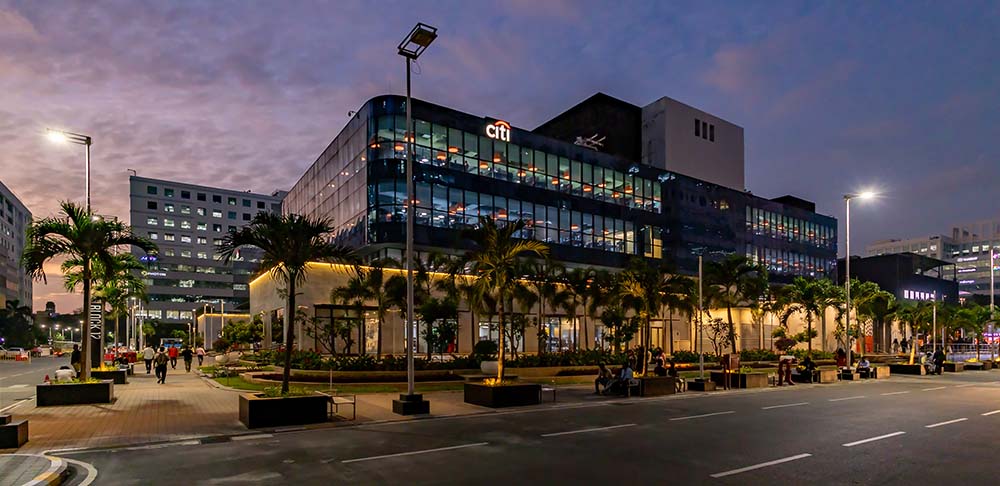
Multinationals establishing development operations in India face an initial strategic choice that shapes everything that follows. Should the operation be structured as an Offshore Development Centre (ODC) or as a Global Capability Centre (GCC)? The question appears to be organisational taxonomy. But the distinction determines office requirements, scalability constraints, infrastructure needs, and long-term cost structure. An organisation choosing the wrong model discovers within months that its office space does not support the operational model. The lease is signed, and restructuring is expensive or impossible.
The distinction matters because ODCs and GCCs have fundamentally different characteristics. An Offshore Development Centre is typically project-focused, serving specific client contracts, with fluctuating headcount tied to project cycles. A Global Capability Centre is strategic infrastructure, building organisational capability, with planned headcount growth, supporting multiple clients and internal functions simultaneously. The office requirements that work for one model create constraints for the other.
Understanding these differences before leasing decisions is essential. Most organisations discover them after occupancy.
Structural Differences Between ODCs and GCCs
An Offshore Development Centre operates as a cost-efficient delivery engine for specific client projects. ODC teams typically work on fixed-duration contracts (12-to-36 months). Headcount scales up and down based on project demand. The operation is client-facing but not client-embedded. Intellectual property remains with the client. Organisational investment is minimal because the ODC is transitional.
A Global Capability Centre operates as strategic infrastructure, building long-term organisational capability. GCCs typically have open-ended client relationships. Headcount grows steadily as the organisation expands scope and capability. The operation serves multiple internal functions, multiple clients, and research initiatives simultaneously. Organisational investment is substantial because the GCC is permanent infrastructure.
This structural distinction reshapes office requirements:
- Headcount Stability: ODCs experience volatile headcount (project-dependent scaling). GCCs experience planned growth (steady headcount escalation).
- Tenure Certainty: ODCs have contract-defined tenure (typically 2-to-3 years). GCCs have open-ended tenure (5-to-10+ years planned).
- Capability Building: ODCs are delivery-focused. GCCs build institutional knowledge and specialised capabilities.
- Client Relationships: ODCs serve fixed projects. GCCs serve multiple ongoing relationships requiring scalable infrastructure.
- Organisational Embedding: ODCs are peripheral. GCCs are central to parent organisation strategy.
These differences determine whether a location and building enable success or constrain operations.
Space and Scalability Requirements
The distinction between volatile and planned headcount determines space leasing strategy fundamentally.
An ODC serving a three-year project with 200-to-400 expected headcount should lease space accommodating this range: 40,000-to-80,000 square feet. As projects end, headcount decreases. As new projects launch, headcount scales up. The facility must accommodate cyclical variation without paying for excess space during low-demand periods.
A GCC launching at 300-to-500 headcount but growing to 1,500-to-2,000 over five years requires a different leasing strategy. Leasing space sized to initial headcount forces relocation when growth exceeds building capacity. Leasing space sized to mature headcount wastes money during the build-up phase. The solution is campus-based leasing with phased expansion: initial tower occupation, then expansion to adjacent towers as growth occurs.
Chennai Office Space for an offshore development centre requires flexibility (lease structures accommodating headcount reduction). Office space for GCC in Chennai requires scalability (campus infrastructure enabling expansion without relocation).
These requirements are incompatible in single-building facilities. An integrated campus supporting both models requires specific infrastructure.
Infrastructure and 24x7 Operations
ODCs typically operate during standard business hours overlapping with client headquarters time zones. A North American company with an ODC in Chennai might operate 9 AM to 6 PM Chennai time (overlapping 9 PM to 6 AM Eastern time). Infrastructure requirements are conventional: standard HVAC, standard power systems, standard security.
GCCs often operate 24x7 because they support global clients across time zones and internal functions requiring continuous operations. An engineering GCC might operate development workstreams 24x7. A financial services GCC might operate transaction processing and client support 24x7.
24x7 operations require infrastructure ODCs do not need:
- 100% backup power capacity (grid failure cannot disable operations)
- MERV-14 air filtration (24x7 occupancy demands superior air quality)
- Real-time building management (immediate response to any system failure)
- Redundant connectivity (no single points of failure for digital infrastructure)
- Security protocols for continuous operations (staff arriving/departing at all hours)
An office space designed for ODC operations (standard HVAC, conventional power backup) creates operational friction when GCC needs emerge. Retrofitting is expensive and disruptive.
Scalable office space in Chennai serving GCC operations requires infrastructure specifications that exceed ODC needs.
Client Hosting and Confidentiality Requirements
ODCs serve specific clients on defined projects. Client meetings often happen at client headquarters or via video conference. On-site client hosting is occasional rather than routine.
GCCs serve multiple clients simultaneously and often host client teams on-site. An engineering GCC might have permanent client resident teams. A financial services GCC might host client executives regularly for project reviews and strategic meetings. The facility must accommodate client hosting at scale.
This distinction determines space allocation. An ODC with 300 people might need one small client meeting room. A GCC with 300 people might need five to ten meeting spaces, client-dedicated workspace, and confidential client areas.
Equally important is security and confidentiality. ODCs typically work on one client project per facility. Confidentiality separation is manageable. GCCs work on multiple concurrent projects for competing clients (in different industries). Confidentiality separation requires segregated floors, separate entrances, and and restricted access zones.
Integrated campuses like DLF Downtown Taramani Chennai provide infrastructure supporting multi-client confidentiality through multiple buildings, dedicated access points, and advanced access control systems. Single buildings cannot replicate this infrastructure.
Cost Structure and Financial Model
ODC economics are based on per-person delivery costs and project margins. A 300-person ODC scaling to 150 people during project conclusion should reduce occupancy costs proportionally. Long lease terms with fixed rent create financial drag during low-demand periods.
GCC economics are based on organisational capability and long-term value creation. A 300-person GCC growing to 1,500 people builds organisational capability worth far more than the occupancy cost. Long lease terms with planned expansion enable financial modelling justifying the investment.
This distinction determines lease strategy:
- ODCs should negotiate flexible lease terms: short initial commitments, expansion rights, reduction rights, exit provisions
- GCCs should negotiate long-term leases with renewal rights and planned expansion options
A single landlord and lease cannot typically accommodate both models. ODC-optimised leases create financial burden for growing GCCs. GCC-optimised leases prevent cost reduction when ODC projects wind down.
Amenity Ecosystem and Retention Strategy
ODC teams are typically project-focused and mission-driven. Retention depends on project quality, compensation, and career development within the project. On-campus amenities are secondary.
GCC teams build organisational capability over years. Retention depends on career trajectory within the organisation, organisational culture, and workplace quality. On-campus amenities directly affect retention at extended tenure.
A facility with minimal amenities creates friction for ODCs during low engagement periods but does not significantly affect retention because tenure is short. The same facility creates retention challenges for GCCs because employees experience daily dissatisfaction over multi-year tenures.
DLF Offices operates DLF Downtown Taramani Chennai with 200,000 square feet of integrated amenities: food courts, fine dining, a medical centre, a wellness facility (Thrive, 45,000 square feet), a business centre (Guild, 30,000 square feet), a crèche, retail, and a salon. This amenity ecosystem is designed for GCC-scale operations, supporting 1,500+ person teams and multi-year tenures. ODCs do not require this infrastructure density.
Growth Trajectory and Long-Term Planning
ODC organisations should plan for project churn: wins, completions, and losses. Headcount is volatile. The facility should accommodate this volatility through flexible leasing and modular space (expansion and reduction without disruption).
GCC organisations should plan for steady growth: capability building, new client acquisition, and internal function expansion. Headcount is planned and directional. The facility should accommodate this growth through multi-tower campus infrastructure, enabling expansion without relocation.
An ODC occupying a GCC-optimised campus (expensive, inflexible, oversized) pays for infrastructure it does not use. A GCC occupying an ODC-optimised facility (flexible, single-building, limited amenities) faces constraints and forced relocation.
Understanding which model aligns with organisational strategy determines which office infrastructure is appropriate.
Choosing Between ODC and GCC Structures in Chennai
For Chennai office space for global companies, it should first clarify organisational intent: Is this an Offshore Development Centre optimised for specific project delivery? Or a Global Capability Centre building long-term strategic capability? The answer determines office requirements, lease strategy, infrastructure needs, and long-term cost structure.
ODCs should prioritise flexibility, cost efficiency, and project-aligned space. Single buildings or smaller facilities with flexible lease terms work well.
GCCs should prioritise scalability, infrastructure resilience, amenity ecosystems, and long-term expansion options. Scalable office space in Chennai at integrated campuses enables GCC success.
DLF Offices provides infrastructure serving both models, but GCC operations gain more strategic advantage from the campus infrastructure. An organisation's clarity about its model determines whether a campus lease is appropriate.
Explore scalable office space for global teams at DLF Downtown Taramani Chennai where infrastructure aligns with GCC strategic positioning and long-term capability building.
FAQs
No. ODCs typically operate overlapping hours with client headquarters. Standard HVAC and conventional power suffice. GCCs operating 24x7 need redundant power, superior filtration, and continuous monitoring. Infrastructure requirements differ significantly.
Yes, but facility constraints emerge quickly. ODC-focused spaces lack amenity scale, client meeting infrastructure, and security segregation that mature GCCs require. Facility upgrade costs offset initial savings.
ODCs need flexibility: short initial terms, headcount reduction rights, exit provisions for project completion. GCCs need stability: long terms, planned expansion rights, and renewal certainty. Different lease structures serve different models.
Minimal on-site amenities suffice for ODCs. Food nearby, basic fitness access, and standard services work. GCCs need integrated amenities (food courts, wellness facilities, and medical centres) supporting multi-year tenures and 1,000+ person operations.
Some do, but facility constraints often force uncomfortable choices. Planning from the outset whether the operation is transactional (ODC) or strategic (GCC) enables appropriate infrastructure selection and prevents costly facility mismatches later.
