


-
 97
- Posted in October, 2026
Why Sustainable Grade A Offices Matter for GCC ESG Goals in Chennai
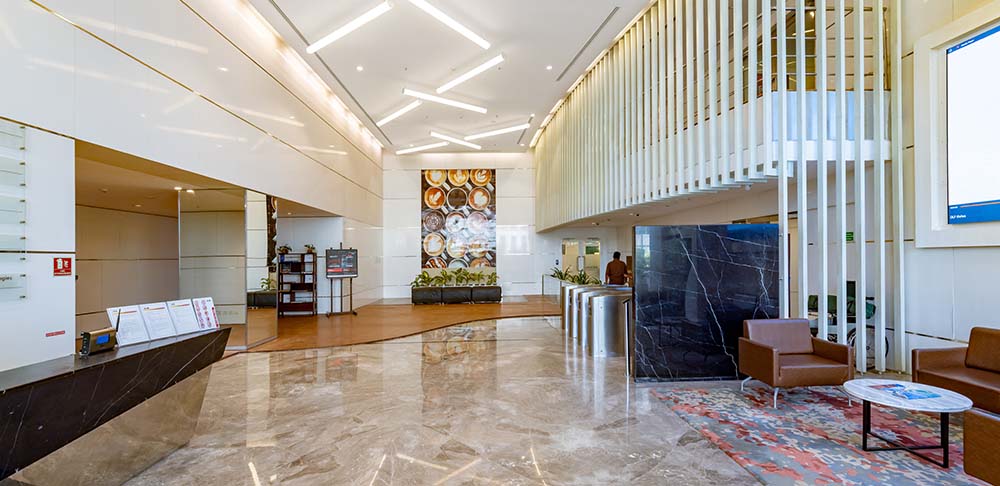
Global Capability Centres face escalating pressure to demonstrate environmental, social, and governance performance. Parent multinationals require documented ESG compliance across operations. Investors scrutinise corporate sustainability disclosures. Stakeholders demand proof that global operations are building capability sustainably, not simply extracting value. The GCC office location and building directly determine whether an organisation can meet these ESG commitments or defaults to making claims without supporting evidence.
Most GCCs approach office selection without explicitly considering ESG alignment. They evaluate buildings based on rent, location, and specifications without assessing whether the facility provides documented sustainability performance enabling ESG reporting. Six months into occupancy, when corporate headquarters requires ESG documentation, the organisation discovers that its office lacks the verified sustainability data needed for credible disclosures.
The solution is selecting Grade A+ Office Space Chennai with comprehensive sustainability credentials from the outset. A facility with LEED Platinum certification, verified energy performance, documented water management, waste diversion programmes, and occupant health standards provides the infrastructure and data enabling authentic ESG reporting.
Understanding ESG Requirements for GCC Operations
Environmental, Social, and Governance reporting obligations have shifted from voluntary to mandatory for many multinationals. Public companies face investor demands for documented ESG performance. Private companies with investor backing face similar scrutiny. Organisations competing for top talent increasingly use ESG performance as a recruitment and retention differentiator.
A GCC's ESG profile is partly shaped by operational decisions (energy consumption, waste generation, and hiring practices). It is equally shaped by the facility itself. A building with documented energy efficiency reduces GCC carbon footprint. A building with water recycling reduces resource consumption. A building with waste diversion programmes reduces landfill impact. A building with occupant health standards supports employee wellbeing data.
The facility is not separate from ESG performance. It is a primary determinant of whether ESG claims are credible or aspirational.
Energy Efficiency and Carbon Footprint Reduction
Energy consumption typically represents 40 to 50% of a commercial building's total environmental impact. LEED Certified Office Near Tharamani carrying LEED Platinum certification means the building has undergone a rigorous energy audit and meets documented efficiency standards.
LEED Platinum buildings typically achieve 20 to 35% energy reduction compared to conventional facilities through the following:
- High-efficiency HVAC systems: Variable flow systems, demand-controlled ventilation, optimised thermal mass
- High-performance lighting: LED systems with occupancy sensors and daylight harvesting
- Building envelope optimisation: Insulation, thermal mass, high-performance glazing reducing heating and cooling loads
- Renewable energy integration: On-site solar, green roofs, or purchasing renewable energy credits
- Real-time energy monitoring: Systems providing consumption visibility and enabling continuous optimisation
An organisation occupying a LEED Platinum building achieves measurable carbon footprint reduction without operational changes. The facility itself reduces consumption.
DLF Downtown Taramani Chennai Phase I carries LEED Platinum certification. Phase II targets LEED Platinum plus LEED Zero Energy certification, requiring net-zero energy performance. This progressive certification stacking means energy impact reduction strengthens as the campus matures.
Water Conservation and Recycled Water Systems
Water management represents 25 to 30% of commercial building environmental impact. Grade A+ office building chennai with water efficiency certifications means documented water reduction through efficient fixtures and recycling systems.
LEED water management strategies include the following:
- Low-flow fixtures: Faucets, toilets, and showers reducing potable water consumption by 20 to 30%
- Water recycling systems: Treated wastewater recycled for non-potable uses (landscaping, cooling towers, toilet flushing)
- Rainwater harvesting: Captured rainwater reducing municipal water dependency
- Landscape optimisation: Native plants, drip irrigation, and mulching reducing irrigation demand
A 1,000-person operation consuming 50 kilolitres daily can reduce municipal water demand 30 to 50% through efficient building systems. That reduction translates to measurable ESG impact and reduced operating costs.
DLF Downtown Taramani Chennai Phase II targets LEED Zero Water certification, requiring near-complete wastewater recycling. This advanced certification means the campus reduces municipal water dependency to minimal levels, supporting corporate water stewardship ESG goals.
Waste Diversion and Circular Economy Alignment
Waste management is increasingly central to ESG reporting. Organisations face pressure to demonstrate waste reduction and diversion from landfills. Premium office space chennai india with structured waste programmes achieves 50 to 90% waste diversion through composting, recycling, and material recovery.
LEED waste management programmes include the following:
- Waste stream segregation: Separate collection of compostable, recyclable, and landfill waste
- Organic waste composting: On-site or off-site composting of food waste and organic materials
- Material recycling: Paper, cardboard, plastic, and metal recovery programs
- Sustainable purchasing: Preference for materials with recycled content and minimal packaging
A 1,000-person operation generating 50 kilograms of waste daily can divert 25 to 45 kilograms from landfills through waste programmes. That diversion rate translates directly to ESG reporting as waste avoided and circular economy contribution.
DLF Downtown Taramani Chennai Phase II targets LEED Zero Waste certification, requiring 90+ % waste diversion. This advanced certification demonstrates organisational commitment to circular economy principles supporting corporate ESG narratives.
Occupant Health and Wellness Standards
Employee health and wellbeing are increasingly recognised as ESG priorities. WELL Health-Safety ratings and equivalent certifications verify that buildings meet occupant health standards:
- Indoor air quality: MERV-14 filtration, humidity control, CO? monitoring, volatile organic compound reduction
- Natural light access: Window placement and lighting design supporting circadian rhythms and occupant comfort
- Thermal comfort: Temperature stability, zone-based control, occupant comfort monitoring
- Water quality: Filtration, testing, and monitoring ensuring safe drinking water
- Occupant wellness programs: On-site fitness, mental health support, ergonomic workstations
A building with documented health standards enables organisations to report on occupant wellbeing metrics. Absenteeism reduction, occupant satisfaction scores, and health metric improvements become measurable ESG contributions.
ESG Reporting and Stakeholder Communication
The ultimate value of sustainable office infrastructure is enabling credible ESG reporting. An organisation occupying Grade A+ Office Space Chennai with LEED Platinum, Zero certifications, and WELL ratings can cite specific performance data:
- Energy: Kilowatt-hour consumption, carbon footprint per employee, renewable energy percentage
- Water: Kiloliter consumption, water recycled, municipal water avoided
- Waste: Kilograms landfilled, waste diversion rate, circular economy contribution
- Health: Occupant satisfaction scores, absenteeism rates, wellness engagement metrics
This documented performance enables ESG disclosures with specificity that aspirational claims cannot match. Stakeholders (investors, clients, employees, and regulators) recognise that sustainability is operationalised, not rhetorical.
Talent Recruitment and Retention Through ESG Alignment
Employees increasingly evaluate employers based on ESG commitment. A workplace demonstrating sustainability through concrete infrastructure (LEED certification, waste programmes, and health standards) communicates organisational values more persuasively than policy statements.
Organisations occupying sustainable office space in Chennai with documented certifications compete on ESG credentials during recruitment. Candidates increasingly weigh workplace sustainability as a selection factor. An office with LEED certification, verified water recycling, waste diversion programmes, and health standards signals serious organisational commitment.
This ESG positioning affects both recruitment capability and retention rates at scale.
Long-Term Cost Performance of Sustainable Infrastructure
Sustainable Grade A offices typically carry a 5 to 10% occupancy premium compared to conventional space. But operational cost savings (energy efficiency, water conservation, waste reduction) typically offset the premium within 24-to-36 months. Long-term occupancy cost favours sustainable facilities because operational benefits compound across the lease term.
A 1,000-person operation saving 100,000 kilowatt-hours annually (energy efficiency), 15 to 20 kilolitres monthly (water savings), and 10 to 15 kilograms of waste daily (waste diversion) realises a substantial annual cost reduction. Over a five-to-seven-year lease, these savings exceed the initial sustainability premium substantially.
Sustainable infrastructure is not cost-negative long-term. It is cost-neutral to positive while delivering measurable ESG performance and supporting corporate sustainability commitments.
Selecting Grade A Sustainable Offices for GCC ESG Strategy
Commercial Office Space Chennai selection for GCCs should explicitly evaluate sustainability credentials alongside conventional building specifications. LEED Platinum certification, LEED Zero certifications (Water, Waste, and Energy), WELL Health-Safety ratings, and the British Safety Council Sword of Honour designation distinguish genuine sustainable infrastructure from aspirational claims.
DLF Offices operates facilities with these credentials. DLF Downtown Taramani Chennai Phase I carries LEED Platinum and WiredScore Platinum certifications. Phase II targets LEED Platinum plus LEED Zero Water, Zero Waste, and Zero Energy certifications, plus WELL Health-Safety ratings and the Sword of Honour designation. This progressive certification stacking provides GCCs with infrastructure explicitly designed for ESG performance.
An organisation selecting sustainable Grade A offices from project inception ensures that ESG goals are operationalised in facility infrastructure, not implemented retroactively when reporting obligations emerge.
Explore sustainable office space at DLF Cyber City Chennai where Grade A infrastructure and comprehensive sustainability certifications enable authentic ESG performance and long-term workplace viability.
FAQs
Yes, typically a 5-10% premium upfront. Energy, water, and waste savings offset the premium within 24-36 months. Long-term occupancy cost favours sustainable facilities.
LEED Platinum (energy, water, waste, and health), LEED Zero certifications (advanced sustainability), WELL ratings (occupant health), and safety designations (British Sword of Honour) provide layered ESG documentation supporting credible reporting.
Partial retrofits are possible but expensive and disruptive. Energy efficiency upgrades, HVAC improvements, and waste programmes are feasible. Water recycling systems and advanced certifications typically require building-scale infrastructure.
Increasingly significant. Employees view the workplace's sustainability as an ESG commitment signal. LEED-certified offices with visible sustainability programmes (waste separation, water savings, and health standards) differentiate during recruitment.
Yes. LEED certification provides verified energy, water, waste, and health data. Organisations can cite kilowatt-hour reductions, water recycled, waste diverted, and occupant health improvements as documented ESG performance.
