


-
 120
- Posted in October, 2026
Why DLF Cyber City Chennai Works for GCC and MNC Teams
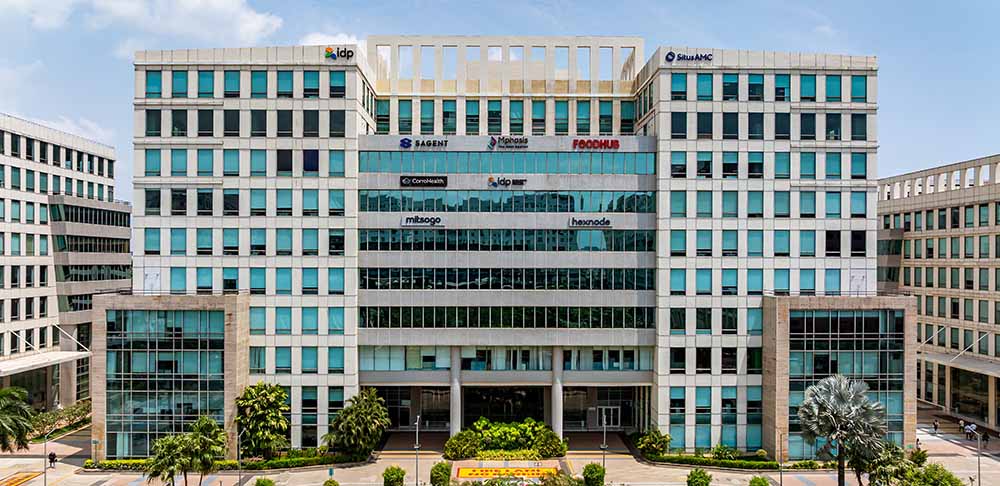
Global Capability Centres and multinational corporations evaluating DLF Cyber City Chennai for GCCs face a location decision that shapes operational efficiency for years. The choice is not simply between buildings. It is between infrastructure explicitly designed for GCC and MNC operations versus facilities optimised for general commercial occupancy. Most organisations discover the difference only after months of operation when infrastructure constraints become apparent. By then, the lease is signed, and relocation is expensive and/or impossible.
DLF Cyber City Chennai represents a deliberate positioning for GCC and MNC operations. Understanding why this location and campus work for these specific organisational types requires examining how infrastructure, connectivity, scalability, and ecosystem support align with GCC and MNC requirements that conventional offices cannot address.
The enterprises that recognise this alignment before leasing make better decisions than those that discover it afterwards.
Scalability Without Forced Relocation
DLF Cyber City Chennai for GCCs provides the infrastructure enabling headcount growth without mid-lease disruption. GCCs typically grow from a 300 to 500 initial headcount to 1,200 to 1,800 within five years. This growth must happen within the same location to preserve operational continuity and team cohesion. Single-building offices impose expansion ceilings, forcing external leasing or relocation when growth occurs. Multi-tower campus infrastructure at DLF Cyber City Chennai enables this growth trajectory:
- Phase-Based Expansion: Launch in initial tower, expand to adjacent towers as headcount scales, accommodate mature operations across multiple connected towers without relocation
- Integrated Operations: All towers function as a single operational entity with unified security, amenity access, and management rather than separate properties requiring external coordination
- Predictable Capacity: Master-planned campus explicitly designed for 500-to-2,000+ person operations ensures infrastructure accommodates growth without surprise constraints
- Consistent Standards: Expansion maintains infrastructure specifications, amenity ecosystem, and operational protocols across all phases, avoiding the quality inconsistency that bolted-on additions create
- Zero Relocation Cost: Growth happens within campus boundaries, eliminating 15-to-25 million rupee relocation expenses and 3-to-6 month operational disruption
An organisation growing from 500 to 1,500 people within the DLF Cyber City Chennai campus avoids the disruption that single-location constraints force on competitors. This operational continuity directly affects team capability, client relationships, and business outcomes.
24x7 Operations Infrastructure
MNC operations often require 24x7 support for global clients, continuous development cycles, or transaction processing. MNC Office Space Chennai must provide infrastructure supporting round-the-clock reliability that standard commercial offices cannot deliver.
DLF Cyber City Chennai addresses 24x7 requirements through the following:
- Redundant Power Systems: 100% backup power capacity ensuring zero downtime during grid outages and automatic switchover protecting critical operations
- Climate Control Resilience: MERV-14 air filtration and HVAC systems operating continuously, humidity control maintaining server room conditions 24 hours daily
- Real-Time Building Management: Continuous monitoring of all mechanical and electrical systems, enabling immediate response to any anomalies and preventive maintenance scheduling reducing unexpected failures
- Security Operations: Trained 24x7 security teams managing all-hour building access, emergency protocols, and incident response rather than automated systems relying on external contractor response
- Medical and Emergency Support: On-site medical facilities and emergency response procedures supporting employee and operational health across 24-hour operations
An organisation running 24x7 operations in a facility without these specifications experiences infrastructure disruptions that damage reliability, reputation and client confidence. MNC operations demanding 24x7 infrastructure require facilities explicitly designed for continuous operations.
Multi-Client Confidentiality and Security
MNC operations typically handle confidential information, proprietary technology, and client-sensitive data requiring segregation that single-building facilities cannot provide. Grade A+ Office Space Chennai serving MNC requirements demands physical infrastructure supporting confidentiality across multiple clients.
Multi-building campus architecture at DLF Cyber City Chennai, enables the following:
- Building-Level Segregation: Different clients occupy different towers with dedicated access points and restricted inter-building circulation, eliminating data proximity between competing organisations
- Distributed Security Zones: Access control systems preventing uncontrolled movement between secure areas, biometric entry systems tracking all personnel movement, surveillance infrastructure monitoring all common areas
- Encrypted Connectivity: Separate internet service provider circuits for different clients, internal network architecture preventing data cross-contamination, dedicated server room access restricted to authorised personnel
- Audit Trail Capability: Real-time logging of all access, movement, and facility usage enabling regulatory compliance verification and third-party audits
- Emergency Protocols: Isolated lockdown capability for individual towers during security incidents, preventing the cascade effect that single-building architecture cannot avoid
An MNC handling confidential client operations cannot operate effectively in single-building facilities sharing infrastructure with other occupants. Multi-tower campus architecture explicitly designed for segregation addresses this requirement directly.
Cost-Efficient Scalability for Multi-Year Commitments
GCC investment planning typically spans five-to-seven-year timelines with planned headcount growth and capability expansion. Office Space for GCC in Chennai cost structure determines whether the investment remains profitable across the entire timeline or becomes financially stressed by escalating occupancy costs.
DLF Cyber City Chennai provides cost-efficient positioning:
Cost advantage relative to established locations like Tharamani (20 to 30% lower occupancy cost) enables capital allocation to operations rather than real estate premiums. Organisations can fund additional hiring, training programmes, and infrastructure investment during the GCC build-up phase. This capital efficiency creates an operational advantage that premium-cost locations cannot afford. By the time the location matures and costs increase, organisations built at DLF Cyber City Chennai have already established teams, client relationships, and operational scale.
Maintenance charges are structured to remain competitive as campus utilisation grows, avoiding the cost escalation that single-building occupants experience when facility demands increase. Predictable charge escalation enables financial modelling certainty across the GCC lifecycle. An organisation can forecast occupancy cost with confidence rather than facing surprise escalations during growth periods.
Long-term value positioning creates an additional advantage: as the location matures and the surrounding ecosystem develops, the campus appreciation benefits early occupants. Organisations positioning themselves during the emerging phase enjoy a cost advantage throughout their tenure while the location matures around them.
Ecosystem Proximity and Service Access
MNC operations require access to specialised services, consulting expertise, and vendor networks that isolated locations cannot provide. Corporate Office Space Chennai India positioned within established ecosystem clusters, gains immediate access to support services. DLF Cyber City Chennai in Manapakkam sits within the emerging technology employment cluster with a growing concentration of companies, service providers, and specialised expertise.
Access to engineering consultants, recruitment specialists, compliance experts, training providers, and technology vendors directly within proximity reduces external service costs and improves service quality. An MNC needing specialised expertise can source locally rather than importing from Bangalore or other metros. This ecosystem access compounds over time as the cluster matures and service provider concentration increases.
Connectivity and Future Accessibility
GCC office space at DLF Cyber City Chennai benefits from infrastructure planning addressing current and future accessibility. Current transit includes multi-route bus coverage and road access to main corridors providing immediate connectivity. Planned metro expansion (2027-2030 timeframe) will position the campus within direct metro access, dramatically enhancing future accessibility.
An organisation committing to DLF Cyber City Chennai during the pre-metro development phase benefits from accessibility improvement during the GCC lifecycle. As employees relocate and talent clusters develop around the location, commute accessibility improves rather than deteriorates. This forward-looking positioning differs fundamentally from locations that peak early and decline.
Integrated Amenity Ecosystem Supporting Large Operations
GCC operations at scale (1,500+ employees) require integrated amenity infrastructure, reducing daily workplace friction and supporting retention. Bolted-on amenities or external services create dissatisfaction during high-occupancy periods. DLF Cyber City Chennai integrates on-campus food services (food courts, fine dining, and casual restaurants), wellness facilities (fitness centres, health monitoring), business support (meeting facilities and business centre services), retail services (convenience stores and salons), and healthcare (medical centre), supporting large operations.
This amenity ecosystem is designed into the campus master plan, not added retroactively. It scales seamlessly as organisational occupancy increases. Employees access services without leaving campus, reducing daily friction during the multi-year GCC build-up and scaling phase. This amenity integration directly affects retention rates at extended tenure scales.
Strategic Infrastructure Positioning for GCC and MNC Success
DLF Cyber City Chennai represents deliberate positioning for GCC and MNC operational requirements. It is not a compromise location. It is infrastructure explicitly designed for organisations requiring scalability without relocation; 24x7 operations reliability; multi-client confidentiality; cost efficiency enabling long-term investment; ecosystem access supporting service requirements; and integrated amenity support for large-scale teams.
DLF Offices operates this campus, understanding that GCC and MNC success depend on infrastructure aligning with operational complexity. Organisations evaluating DLF Cyber City Chennai for GCCs and MNC operations should assess whether campus infrastructure addresses their specific requirements or whether single-building alternatives will create operational constraints.
An organisation selecting infrastructure based on comprehensive alignment with GCC and MNC requirements makes better long-term decisions than those optimising cost or convenience without accounting for operational demands.
Explore GCC-ready office space at DLF Cyber City Chennai where infrastructure explicitly supports scalability, 24x7 operations, multi-client confidentiality, cost efficiency, and ecosystem access, enabling strategic GCC and MNC success.
FAQs
GCCs grow 300-500 to 1,200-1,800 over five years. Single buildings force relocation (expensive, disruptive). Campus expansion within campus boundaries preserves team cohesion and client relationships while avoiding relocation costs.
MNCs handle confidential client data and proprietary technology requiring physical segregation from competitors. Multi-tower campus architecture enables building-level separation, access control, and confidentiality that single buildings cannot provide.
Yes. 100% backup power, MERV-14 filtration, real-time building management, 24x7 security, and medical facilities support continuous operations. Standard buildings lack this specification.
20-30% cost advantage over established zones enables capital allocation to operations during the build-up phase. Organisations build teams and scale capability during cost-efficient periods, then benefit from ecosystem maturation.
On-campus food services, wellness facilities, business centres, retail, and medical support 500-2,000 person operations. Integrated ecosystem reduces daily friction and improves retention during extended tenure.
