


-
 774
774 - Posted in August, 2026
Why India Is Becoming a Preferred Office Location for Global Capability Centres
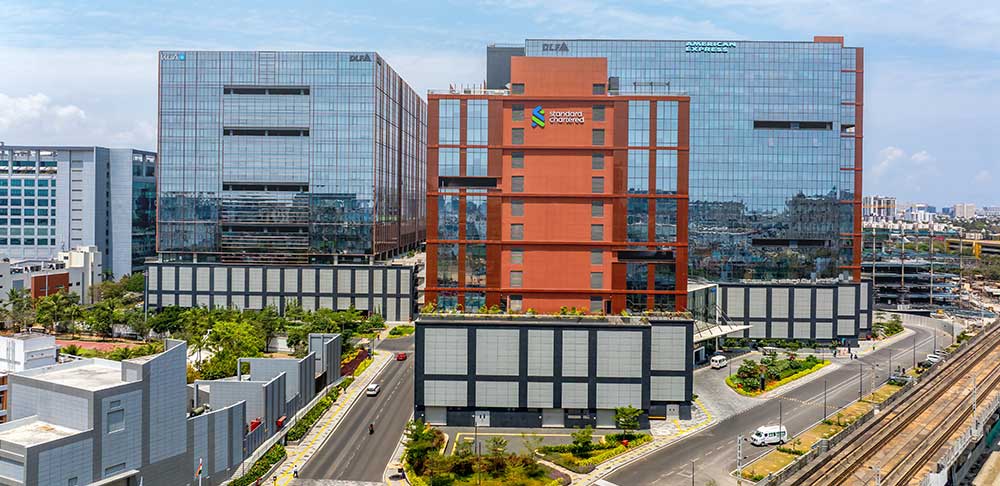
Something shifted in how global organisations think about their India operations. What began, for many companies, as a cost arbitrage exercise has quietly become something more strategic. The engineers and analysts sitting in offices in Gurugram, Hyderabad, and Chennai are no longer processing tasks handed down from headquarters. They are building products, leading research, managing global functions, and in some cases, driving decisions that affect the entire enterprise.
This transformation did not happen by accident. It reflects a deliberate recalibration of what India offers and, critically, what global capability centres are designed to do. The question worth examining is not simply why India has become a preferred destination. It is why organisations that moved here a decade ago have deepened their commitment rather than diversifying elsewhere, and why new entrants continue to arrive at a rate that shows no sign of slowing.
The Talent Reality That Headquarters Cannot Replicate Elsewhere
There is a version of the India story that focuses almost entirely on cost. It is not wrong, exactly, but it is increasingly incomplete. Salary arbitrage still exists, and it still matters to finance teams building a business case. What has changed is the depth and quality of the talent pool available, particularly in technology, data science, engineering, finance, and legal functions.
India graduates approximately 1.5 million engineers annually. That number alone would be significant. What amplifies it is the concentration of experienced mid-career professionals who have spent years working within multinational environments. GCC leaders do not just find people to hire. They find people who already understand how global organisations operate, who have navigated complex stakeholder environments, and who can move into senior roles without the extended onboarding that a completely new market would require.
For US companies in particular, GCC office space in India for US companies has shifted from a support function to a core operational strategy. The time zone overlap between India and the US East Coast business hours, while not perfect, is workable. The overlap with European hours is wider. Teams in India have become genuinely capable of owning functions end-to-end, rather than being subordinate to a principal office.
Key reasons the talent argument holds:
- Depth of technical specialisations, including software development, AI/ML, cybersecurity, and data engineering
- A large, growing cohort of professionals with multinational work experience
- Competitive but still advantageous cost structures relative to equivalent roles in the US or UK
- Strong English-language fluency at the professional level
- Familiarity with global compliance and regulatory frameworks among senior talent
What "Preferred Location" Actually Means in Practice
Preference is expressed through decisions, not surveys. The clearest evidence of India's standing as a GCC destination is the consistency of the commitment: established centres expanding, new entrants choosing India over other emerging markets, and the calibre of functions being located here rising over time.
The global capability centre office space landscape in India has developed accordingly. The commercial real estate market in cities like Gurugram, Hyderabad, and Chennai has responded to GCC demand with purpose-built campuses, Grade A infrastructure, and the kind of workplace environment that large multinationals require. This is not a market of repurposed buildings and improvised facilities. The leading office districts have matured into genuine enterprise destinations.
DLF Cyber City in Gurugram is one of the clearest examples of this maturation. It has developed into a concentrated GCC corridor, where the density of global occupiers creates its own ecosystem: talent familiarity with the work culture, supply chains that understand multinational requirements, and hospitality and retail infrastructure calibrated to the professional community. DLF Cyber City Hyderabad in Gachibowli replicates this model in a city that has become one of India's most active GCC destinations. The Gachibowli corridor specifically draws deep from Hyderabad's technology and engineering talent base.
Chennai's Tharamani corridor, anchored by DLF Downtown Chennai, tells a similar story. The micromarket has developed into a credible enterprise address, with access to a talent pool that includes professionals from the city's long-established IT industry. For organisations evaluating India office setup for global teams across multiple cities, the pattern across these locations is consistent: concentrated development, quality infrastructure, and a surrounding ecosystem that has grown up around the corporate occupier base.
The Office Environment as a Strategic Asset
There is a habit, in discussions about GCC location strategy, of treating office space as a secondary consideration. The more consequential decisions, so the thinking goes, are about entity structure, transfer pricing, regulatory compliance, and talent acquisition. The building itself is almost incidental.
This reasoning underestimates what the physical environment contributes to GCC performance. India's senior technical talent is not short of options. The professionals that GCC leaders most need to hire and retain are choosing between multiple offers from organisations competing for the same limited pool. In that context, the quality of the workplace environment enters the equation not as a luxury but as a retention and recruitment factor with measurable consequences.
Global capability centre office space in India has, at the premium end of the market, responded to this reality. LEED Platinum-certified buildings, WiredScore Platinum-certified connectivity infrastructure, and MERV-14 air filtration systems are features that address both operational requirements and the day-to-day working experience. These are not abstract certifications. They affect power reliability, air quality, digital connectivity resilience, and ultimately the productivity and comfort of the people working in the building every day.
DLF's portfolio takes a structured approach to this through what it describes as the 5'S' framework: Sustainability, Safety, Social Infrastructure, Scale, and Space Solutions. For GCC occupiers, each dimension carries operational weight. Sustainability credentials matter for global ESG reporting. Safety infrastructure matters for employee wellbeing and risk management. Social infrastructure, including food and beverage, fitness facilities, and retail amenities, matters for the employee experience that directly affects retention. Scale matters because successful GCCs grow, and the ability to expand within an established campus reduces disruption. Space solutions matter because GCC work is not uniform; it requires environments that can accommodate focused individual work, large collaborative sessions, secure functional zones, and client-facing areas within the same footprint.
What the physical environment must deliver for enterprise office space in India:
- LEED-certified buildings that align with global ESG and sustainability reporting requirements
- WiredScore Platinum certification ensures enterprise-grade digital connectivity
- MERV-14 air filtration systems for air quality standards consistent with global occupier expectations
- Reliable power infrastructure with backup systems that meet operational continuity requirements
- Amenity-rich campuses that contribute to the employee experience and employer brand
- Floor plates and campus configurations that can accommodate phased expansion
Location Specificity: Where the Market Has Concentrated
India's GCC market is not evenly distributed. Activity concentrates in specific micromarkets within a small number of cities, and the selection of that micromarket carries long-term consequences for the centre's performance.
Gurugram's commercial districts along the Cyber City corridor and Golf Course Road have become among the most active GCC addresses in the country. DLF Atrium Place on Golf Course Road in DLF Phase V and DLF Downtown Gurugram on NH-48 at Ambience Island serve occupiers who need the prestige and infrastructure of Gurugram's most established business addresses. DLF Cyberpark in Udyog Vihar adds a further option within the city, suited to organisations prioritising a campus environment with significant scale capacity.
Outside Gurugram, the breadth of DLF's portfolio reflects where Indian GCC activity has genuinely concentrated. DLF Techpark Noida on Sector 143A of the Noida Expressway, positions organisations within one of Delhi NCR's fastest-developing enterprise corridors. DLF Cyber City Chennai in Manapakkam adds a second Chennai address alongside DLF Downtown Chennai, giving organisations operating in the city access to different talent catchments and micromarket characteristics. DLF Techpark Chandigarh in IT Park extends this reach into a smaller but growing technology market with a distinct talent base.
The pattern across all these locations reflects a deliberate match between where GCC demand exists and where quality office infrastructure has been developed to serve it.
Scaling Without Disruption
One of the more underappreciated challenges in GCC operations is managing growth. A centre that begins with 300 employees and expands to 900 over three years is not simply a bigger version of the original. It requires more space, reconfigured workflows, updated infrastructure, and in many cases, a complete rethinking of how the facility operates. If that growth forces a relocation, the disruption compounds: productivity loss, the risk of talent attrition during the transition, and the logistical burden of establishing a new workplace culture in an unfamiliar building.
Enterprise office space in India that genuinely supports GCC growth plans addresses this challenge through campus scale and expansion provisions built into the original lease structure. A developer with a large portfolio in the relevant city can offer incremental expansion within the same address, reducing the risk of the centre outgrowing its environment before it has fully matured.
This is one of the practical arguments for engaging a developer with genuine depth across India's primary GCC markets. The relationship extends beyond the initial transaction into a long-term partnership where the developer understands the centre's growth trajectory and can accommodate it.
The Longer View
What India offers global capability centres is not static. The talent pool continues to deepen as more professionals gain experience in multinational environments. The commercial real estate market continues to raise its quality standards in response to occupier expectations. The regulatory environment, while complex, has become more familiar to global legal and compliance teams who have navigated it multiple times across different entities.
The organisations that have built the most effective GCCs in India are not simply those that moved here earliest. They are those who treated the decisions about location, building quality, and workplace environment as seriously as the decisions about entity structure and talent strategy. The office is not incidental to GCC performance. In a market where experienced professionals have a genuine choice, it is part of the value proposition that determines whether the centre attracts and keeps the people it needs. That is a shift in perspective worth carrying into any new GCC evaluation.
Explore DLF Offices for scalable GCC-ready locations.
FAQS
India offers a large, experienced technology and business talent pool, competitive operating costs, strong English-language fluency, and an established commercial real estate market with enterprise-grade infrastructure across major cities including Gurugram, Hyderabad, Chennai, and Noida.
Priority factors include LEED-certified buildings, WiredScore Platinum connectivity, reliable power infrastructure, campus amenities that support employee experience, scalable floor plates, and a developer with experience serving multinational occupiers across multiple locations.
Gurugram, Hyderabad, Bengaluru, Chennai, Pune, and Noida lead GCC activity. Within those cities, specific micromarkets such as Cyber City in Gurugram, Gachibowli in Hyderabad, and Tharamani in Chennai have developed the deepest infrastructure and talent ecosystems for GCC operations.
Senior technical and business professionals in India's GCC market have multiple employment options. LEED Platinum certified facilities with strong amenity infrastructure, air quality systems, and campus environments contribute meaningfully to employer attractiveness and daily employee experience.
DLF's 5'S' framework covers Sustainability, Safety, Social Infrastructure, Scale, and Space Solutions. For GCC occupiers, it provides a useful evaluation lens covering ESG compliance, operational safety, workplace amenity, expansion capacity, and flexible space configurations within a single campus.
US companies should evaluate entity structure; lease terms aligned with US accounting standards, buildings with international certification benchmarks (LEED, WiredScore); and developers experienced in multinational transactions. Choosing established GCC micromarkets reduces talent acquisition risk and accelerates operational setup.
LEED Platinum certification, WiredScore Platinum certification, and MERV-14 air filtration are the primary benchmarks. These reflect building-wide standards for sustainability, digital connectivity resilience, and air quality, all of which directly affect operational performance and global compliance reporting.
