


-
 194
- Posted in October, 2026
Why Tharamani Is a Strategic Office Location for GCCs
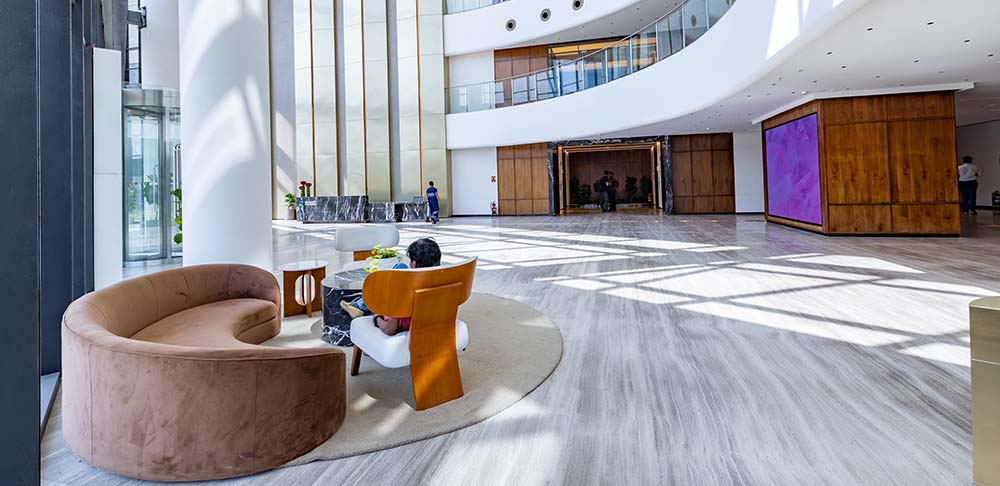
Global Capability Centres face a different location calculus than most enterprises. A GCC is not simply an office branch. It is a hub built to access specialised talent, serve global clients across time zones, and operate with the infrastructure density that multinational organisations demand. The location decision determines whether a GCC attracts top-tier talent, maintains operational continuity across geographies, and justifies multi-year capital investment. Most GCCs approach location selection by comparing rents and headline metrics. But the real question is whether a location provides the ecosystem effects, talent accessibility, and infrastructure readiness that allow a GCC to function as a genuinely strategic asset rather than a cost centre.
Taramani has emerged as a location where these elements align. It is not the only option in India, but it is increasingly the deliberate choice for GCCs that understand what location actually delivers.
Why GCCs are Transforming Taramani as a Strategic Hub
The IT corridor in Chennai has operated for nearly two decades as a functional geography for technology companies and smaller GCC operations. Taramani specifically sits at the intersection of three urban systems: the OMR corridor (the technology job magnet), central Chennai (access to services and older residential clusters), and southern suburbs (newer residential areas with younger demographics). This positioning is not accidental. It is why major GCCs increasingly choose Taramani over other Chennai locations.
GCCs selecting locations evaluate factors that traditional office locations ignore. A technology-focused GCC needs access to talent with specific skill sets, proximity to other technology companies (for ecosystem effects and talent density), and the ability to expand rapidly if client demand accelerates. A financial services GCC needs time zone overlap with operations centres elsewhere, international-quality infrastructure, and security protocols that match corporate standards. An engineering or product GCC needs access to hardware, manufacturing partners, and specialised technical talent. Generic "office space" does not address these needs. A strategic location does.
Taramani's emergence as a GCC destination reflects this logic. It is not that rent is cheapest. It is that the location provides what GCCs actually need: talent, connectivity, ecosystem density, and infrastructure that scales.
The IT Corridor Advantage for GCC Operations
The OMR corridor has concentrated technical employment for nearly two decades. This concentration creates what economists call ecosystem effects: talent gravitates toward zones with high employment density because opportunities are greater, expertise is deeper, and career movement is faster. Companies gravitate toward the same zones because talent is there. Service providers, training centres, and specialised vendors follow companies and talent. The result is a self-reinforcing cycle where the zone becomes more valuable as it grows.
GCC Office Space Taramani benefits directly from this dynamic. The OMR corridor currently hosts hundreds of technology companies, ranging from multinational product companies to specialised software shops. The density creates talent accessibility that isolated locations cannot replicate. When a GCC needs to hire specialised engineers, architects, or domain experts, the OMR corridor provides access to talent with existing experience in relevant technology stacks. That access reduces recruitment timelines and improves quality of hire.
The ecosystem effect extends beyond recruitment. A GCC operating in the OMR corridor has immediate access to the following:
- Specialized training and certification providers offering continuous skill development
- Technology consultants and implementation partners supporting client delivery
- Hardware vendors and component suppliers for engineering GCCs
- Financial services networks for banking and operations GCCs
- Academic institutions (IIT Madras, other engineering colleges) providing entry-level and specialized talent pipelines
- Established technology conferences and networking events creating professional development opportunities
- Peer companies creating knowledge-sharing communities and collaboration opportunities
This ecosystem exists because density created it. A GCC in a lower-density location would need to build or source these resources externally, at higher cost and with longer timelines.
Talent Accessibility and Recruitment Economics
Talent is the primary constraint for GCC expansion. A GCC cannot grow headcount faster than it can recruit qualified people. The quality of available talent determines whether a GCC competes effectively for global client engagements.
Taramani's position within the talent geography of Chennai shapes recruitment fundamentally. The technical talent pool concentrates in three zones: Velachery (historically the earliest IT employment hub), the OMR corridor (Taramani, Nungambakkam, Kandanchavadi), and Perungudi (emerging technical hub). Taramani sits within the largest current employment cluster. Professionals already working in the area face minimal commute if they change employers within Taramani. New talent relocating to Chennai often choose residential clusters within commuting distance of the OMR corridor. Premium Office Space in Taramani offers immediate access to this talent dynamic.
The commute accessibility matters operationally. When a GCC recruits talent from across the region but is located in an inaccessible area, attrition accelerates as employees face daily commute friction. GCCs in Taramani benefit from the fact that 60 to 70 percent of technical talent in Chennai already lives within 25 minutes of the area. Recruitment becomes faster because candidates compare offers based on the total package (compensation, growth, location accessibility). A location with poor accessibility requires compensation premiums to offset commute friction. An accessible location competes on capability and growth rather than having to pay for location disadvantage.
Infrastructure Readiness for GCC Scale
GCCs operate differently than conventional offices. They require infrastructure that scales as headcount grows, supports 24x7 operations across timezones, and maintains security protocols that meet multinational standards. A GCC occupying a building designed for 500 people that grows to 1,500 people needs expansion options within the same location or campus. Moving mid-cycle is disruptive and expensive.
Office Space for Lease in Taramani at DLF Downtown Taramani Chennai provides GCC-specific infrastructure:
- 100% backup power capacity ensuring 24x7 operations during grid disruption
- LEED Platinum certifications (Phase I) and planned certifications (Phase II) meeting corporate ESG reporting requirements
- WiredScore Platinum ratings verifying high-capacity fibre connectivity for global operations
- Integrated business centre (Guild, 30,000 square feet) supporting client hosting, corporate events and private hostings
- Wellness facilities (Thrive, 45,000 square feet) including sports zones supporting employee retention at operational scales
- 28-acre campus providing expansion headroom without relocation
- Multiple office towers (Phase I: 3 buildings; Phase II: 4 additional buildings) enabling team scaling across adjacent towers
- Structured amenity ecosystem (food courts, medical centres, convenience services) supporting 24x7 operations
- Centralized security and emergency management supporting multinational corporate protocols
This infrastructure is not generic office space. It is purpose-built for the operational demands of GCCs that scale and operate globally.
Cost-Performance Profile Versus Other Indian Cities
GCCs comparing Indian locations evaluate cost per unit of quality and capability, not simply rent per square foot. Bengaluru and Hyderabad offer mature GCC ecosystems with deeper technical talent pools. But they also carry higher real estate costs, tighter space availability, and commute distances that rival or exceed Taramani. Mumbai offers access to financial services talent but at premium costs and with limited growth space.
Chennai positioning in this comparison is distinct. Taramani specifically offers moderate occupancy costs, growing talent availability, established GCC presence (Standard Chartered, American Express, Bank of America, and JP Morgan all operate significant operations in the area), and availability of modern Grade A space. A GCC can establish operations in Taramani at 15 to 25% lower occupancy cost than Bengaluru while accessing talent quality that rivals Hyderabad. That cost-performance difference compounds over a five-year GCC lifecycle into significant capital availability for client delivery and team expansion.
OMR Corridor Ecosystem and Connectivity Effects
The OMR (Old Mahabalipuram Road) corridor functions as the spine of technical employment in Chennai. It provides direct connectivity from the IT parks toward the airport, enables efficient client access from central Chennai, and connects residential clusters across the southern suburbs. Taramani sits at the heart of this corridor with multiple entry and exit points, direct OMR access, and planned metro connectivity.
For GCCs, OMR connectivity matters operationally. Clients visiting from headquarters need airport access for approximately 35 minutes. Talent commuting from Velachery, Perungudi, or Tambaram needs reasonable transit times (20 to 35 minutes via MRTS or road). The location enables client hosting, executive visits, and talent retention without requiring exceptional commute tolerance.
The corridor effect extends beyond individual connectivity. Taramani's position within the OMR ecosystem means proximity to peer companies, service providers, and specialised vendors. A GCC can partner with neighbouring technology companies for knowledge sharing, access implementation partners for client delivery, and source specialised services without external searches.
Why DLF Downtown Taramani Chennai Works for GCCs
GCCs selecting office locations prioritise quality, scalability, ecosystem access, and cost-performance alignment. DLF Downtown Taramani Chennai satisfies all four dimensions.
Quality: LEED Platinum certifications, WiredScore Platinum ratings, 100% backup power, MERV-14 air filtration, real-time building management, and British Safety Council Sword of Honour designation verify infrastructure performance. A GCC knows the building will support operations reliably over a five-to-seven-year lease.
Scalability: The 28-acre campus with 7 million square feet (Phase I and II combined) provides expansion headroom. A GCC growing from 500 to 2,000 people can accommodate growth across towers within the same location, campus, and ecosystem. Relocation becomes unnecessary.
Ecosystem access: The OMR corridor location, proximity to talent clusters, established GCC presence (American Express, Standard Chartered, Bank of America operations), and integrated amenity ecosystem provide operational advantages that standalone buildings cannot replicate.
Cost-performance: Taramani occupancy costs remain significantly lower than Bengaluru while providing comparable Grade A infrastructure and stronger talent accessibility than many Hyderabad options. A GCC can operate cost-effectively while accessing capabilities matching premium metros.
GCC office space in Tharamani at DLF Downtown Taramani Chennai combines these dimensions intentionally. It is not the only location option for GCCs in India. But it is increasingly the strategic choice for GCCs that understand what location actually delivers beyond square footage.
Making the Location Strategic for GCC Growth
The GCCs that scale successfully understand that location is not just infrastructure. It is a strategic asset that shapes recruitment capability, operational resilience, and long-term growth trajectory. A location that provides talent access, ecosystem effects, scalability, and cost-performance alignment becomes a competitive differentiator.
Taramani has emerged as such a location. It is not because rent is the cheapest. It is because the location provides what GCCs actually need. Office Space in Chennai Taramani at DLF Downtown Taramani Chennai delivers GCC-ready infrastructure, positioned within the talent ecosystem that drives capability development and positioned within the cost envelope that justifies long-term investment.
Explore GCC-ready office space in Taramani where location strategy aligns with operational capability and talent accessibility.
FAQs
GCC recruitment and talent retention depend on ecosystem density. High-concentration talent zones reduce recruitment timelines and improve hire quality. A low-cost but isolated location requires compensation premiums to offset commute friction, offsetting cost savings within 12 months.
Taramani sits at the intersection of the OMR talent corridor, MRTS connectivity, and residential cluster proximity. Other Chennai areas lack either talent density or commute accessibility that Taramani provides.
GCCs growing from 500 to 1,500+ employees need expansion options without relocation. Multi-tower campuses allow growth across adjacent buildings while preserving team cohesion and avoiding the productivity loss that relocation creates.
Yes. Taramani occupancy costs run 15-25% lower than Bengaluru Grade A space while providing comparable infrastructure. Talent accessibility rivals Hyderabad at significantly lower cost.
LEED Platinum (energy, water, waste standards), WiredScore Platinum (digital infrastructure), and British Safety Council Sword of Honour (safety protocols) verify infrastructure performance at multinational standards.
