.jpg)
City life rarely feels aggressive; it simply feels constant. Days move forward quickly, routines compress, and even moments of rest are often planned rather than experienced. Over time, the desire that emerges is not necessarily to leave the city, but to live within it at a pace that feels more sustainable. The one that allows space for reflection, familiarity, and ease.
Homes today are therefore expected to do more than offer comfort or convenience. They are expected to support how life unfolds every day: how mornings begin, how afternoons transition, how evenings settle, and how rest feels at night. A well-designed residential community does not demand this adjustment from its residents. Instead, it quietly shapes the environment so that slowing down becomes a natural response rather than a conscious effort.
The day begins without urgency. Light enters the home softly, filtered rather than harsh, allowing mornings to arrive gradually rather than abruptly. Stepping outside does not feel like leaving a private space; it feels like extending it. Pathways are calm and proportioned for walking, not hurrying, encouraging movement that feels unforced and unmeasured.
Familiar faces appear along the way, not because interaction is planned, but because the scale of the community allows recognition to form over time. A brief nod, a shared silence, or a passing greeting becomes part of the morning rhythm. There is no pressure to optimise this time. A walk happens because it fits naturally into the flow of the day, not because it has been scheduled.
Green pockets along these paths slow the pace without demanding attention. They work quietly in the background, shaping how the body responds to space. This is where green living in Delhi becomes experiential rather than conceptual. It's present not as an idea, but as a physical sense of ease.
The city remains close and fully accessible. Workplaces, schools, hospitals, and commercial centres are within easy reach, supported by surrounding roads and metro connectivity. Daily movement remains efficient, and the advantages of urban living are never compromised.
Yet the return home marks a clear shift. The transition is immediate and perceptible. Noise recedes, visual clutter softens, and the intensity of the city does not follow residents inside. The community absorbs the city’s energy rather than amplifying it, creating a rare sense of containment in dense urban environments.
Shared spaces remain active during the day without ever being overwhelming. People use them naturally, without performance or display. Some pause briefly, others move through without stopping. The planning allows for both participation and withdrawal, without explanation or self-consciousness. This balance between engagement and privacy is what distinguishes thoughtful urban communities from those that simply offer amenities.
As the day progresses, the community continues to function as an extension of the home. Internal walkways connect residences to shared areas in continuous loops, making movement intuitive and predictable. There is no need to navigate complex routes or isolated zones. Everything feels close enough to access easily, yet spaced enough to avoid congestion.
This clarity of movement reduces mental effort. Residents spend less time navigating and more time simply being present. Over time, this predictability becomes comforting. The environment feels familiar, legible, and reliable. These are the qualities that contribute quietly but significantly to everyday well-being.
Evening: Belonging Without Obligation
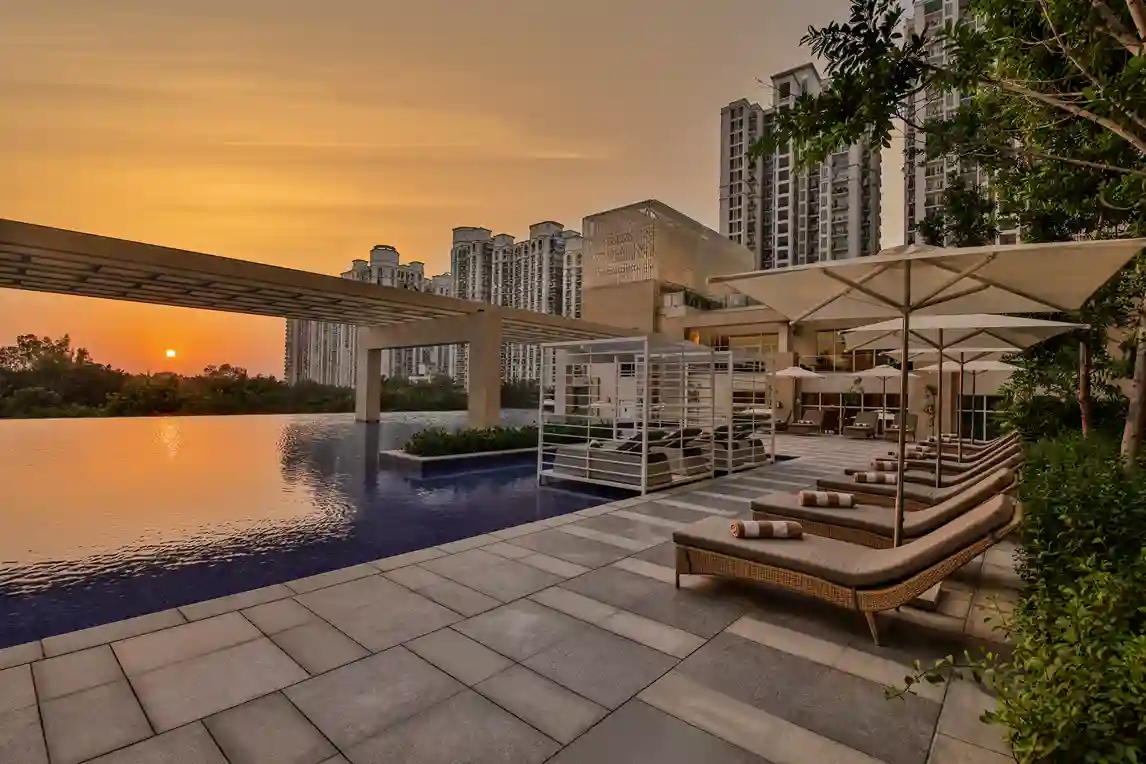
As the day softens, the community becomes gently social. The shade garden and multi-level clubhouse naturally draw people out, not through programming, but through habit. Children move freely within visible, safe zones. Adults slow down near seating areas surrounded by the garden pavilions, sometimes pausing alone, sometimes exchanging a few words.
There is comfort in this familiarity and ease in the absence of expectation. Conversations are optional. Silence is respected. The feeling is not of being surrounded, but of being supported by a planned approach that understands how people actually unwind at the end of the day.
This is urban neighbourhood culture, reintroduced at a human scale.
Recognition replaces anonymity, and connection exists without obligation.
Night: Luxury That Feels Personal
At night, the home feels insulated from the city without being disconnected from it. Sounds are softened rather than eliminated. The silence is balanced, allowing rest while still maintaining a sense of life beyond the walls.
This is where quiet luxury becomes most tangible. Not through materials alone, but through emotional clarity. Through the absence of friction. Through the sense that the space is working with you, not against you. Nothing demands attention. Everything feels considered.
Design That Works Quietly in the Background
Much of what allows this rhythm to exist remains intentionally understated. Walkways are positioned where daily movement already occurs. Shared spaces sit along natural paths rather than being treated as destinations. Green views and open sightlines soften transitions between private and communal areas.
Over time, these choices reveal their value. The community begins to feel predictable in the best possible way. Residents know where they are going, how long it will take, and what they might encounter along the way. This familiarity reduces friction and allows life to settle into a rhythm that feels sustainable over years, not just impressive at first glance.
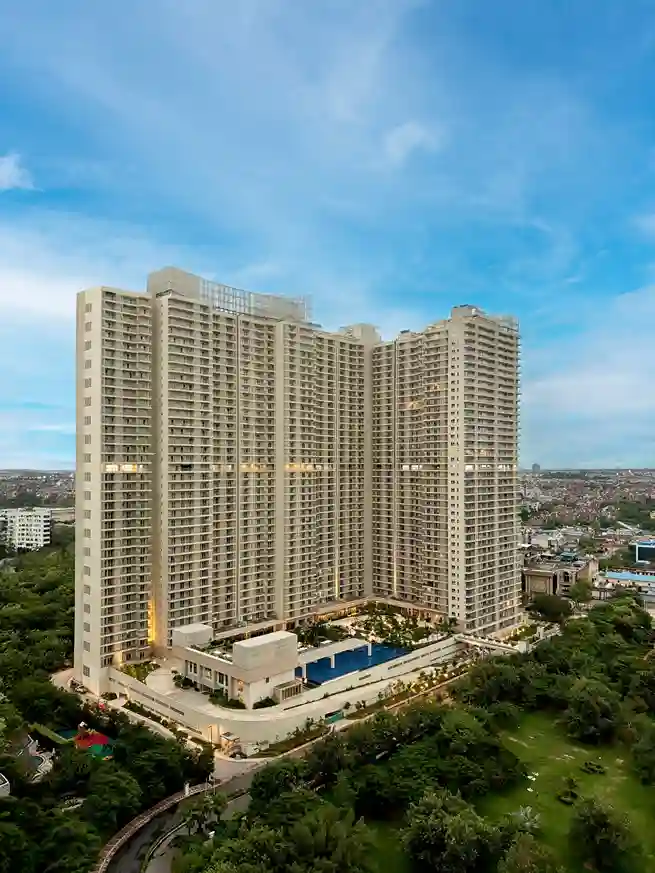
At ONE Midtown, this approach reflects a broader philosophy of urban living, one that prioritises flow, proportion, and everyday usability over visual excess.
Modern luxury, here, is expressed through restraint and long-term livability rather than spectacle.
A community that helps residents slow down does not instruct them to change their lives. It removes friction through thoughtful planning, manageable distances, and environments that feel intuitive rather than imposing. As a result, both body and mind begin to move at a natural pace.
Choosing such a home is not about stepping away from the city. It is about choosing to live within it more consciously. When homes are designed at a human scale, well-being becomes part of daily routine rather than something to be pursued separately. Slowing down, in this context, is not an aspiration; it is simply how life unfolds.
Disclaimer
This blog is for educational purposes only. Details may change over time. Please verify current information through official documents and authorised representatives.