A home used to end at the front door. Now, for many premium buyers, it begins again in the spaces just outside it.
Across cities, the appeal of social living atmospheres is growing. People still want privacy, silence, and a place that feels fully theirs. Yet they also want the option to step out and feel a gentle sense of community, without planning a night out or fighting traffic.
This is where lifestyle enrichment in residential communities becomes real, not as an abstract promise, but as a daily rhythm shaped by shared places.
In a busy city, convenience matters. What changes the feel of a development, though, is culture.
The best curated residential experiences do not feel like staged events. They feel like natural moments that happen because the setting makes them easy. A familiar face at the coffee counter. A quick “how was your day?” in the lift lobby. A slow weekend lunch where kids wander safely and adults linger a little longer.
These are social amenities in housing at their best. They reduce friction, but they also create the soft, human glue of belonging.
Food carries a special kind of ease. It gives people a reason to pause, sit, and share space without effort.
Well-run community dining spaces turn private routines into light social moments. The shift is subtle. You still have your own home, your own schedule, your own life. Yet you also have places where connection can happen without a formal invite.
That is why café culture in gated communities matters. An in-house café becomes more than a caffeine stop. It becomes a small daily landmark, a place for a quiet hour of work, a brief greeting with a neighbour, or a weekday coffee before the commute.
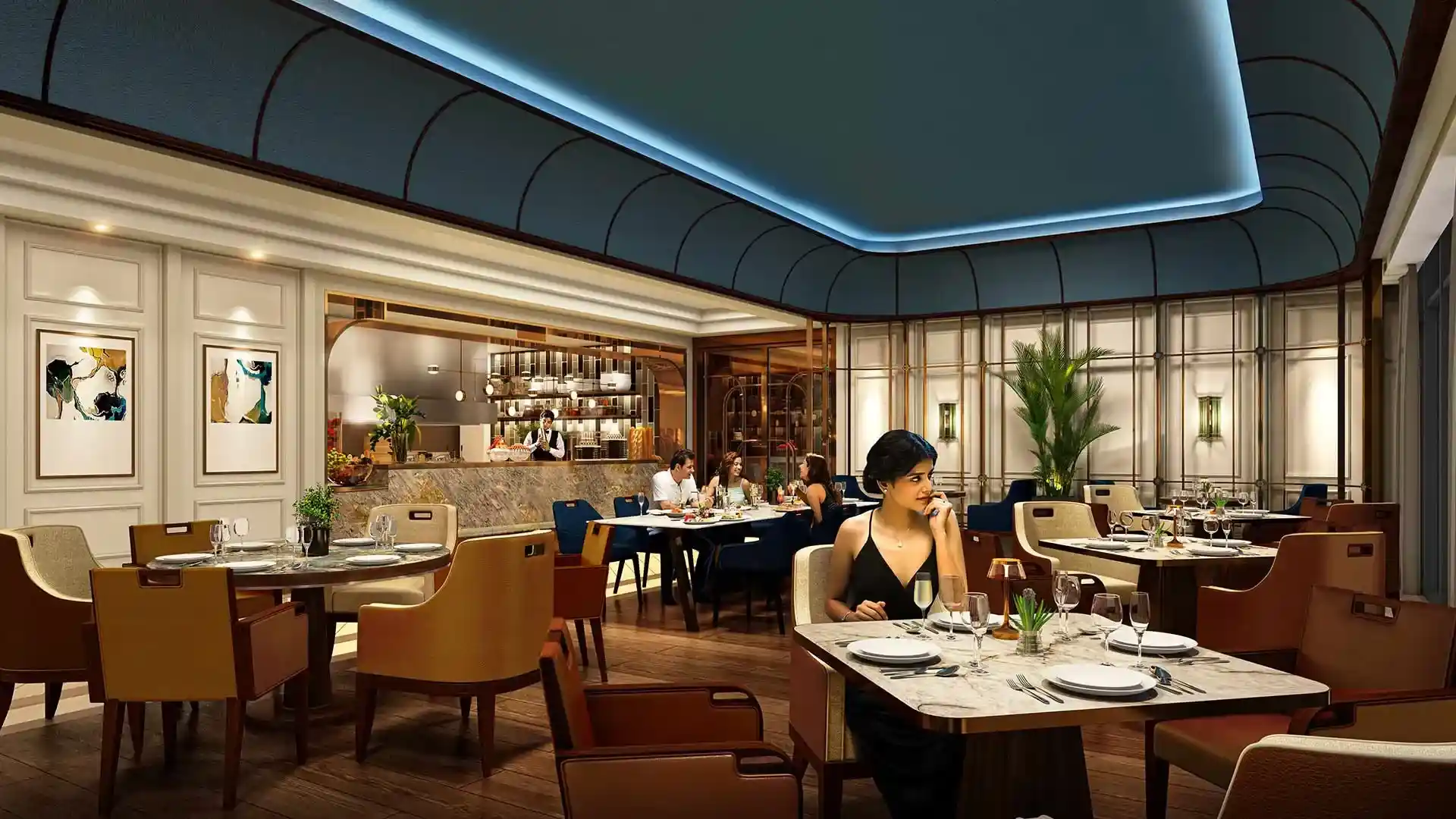
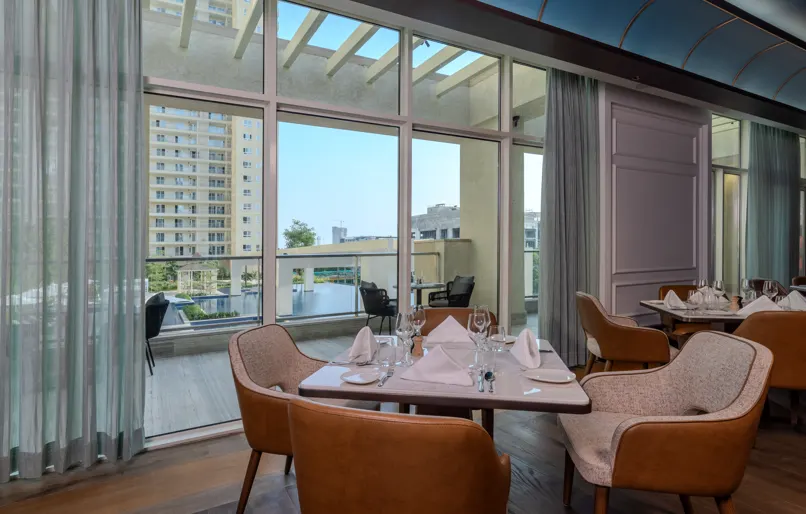
A community restaurant can do the same in the evenings. It saves the drive, the parking stress, the waiting. Yet it only works when operations stay consistent. Reservation flow, kitchen quality, and service standards decide whether the space becomes loved, or ignored.
Not every connection happens over a meal. Some happen in the in-between hours.
Good shared lounges in apartments feel like an extension of home, not a hotel lobby. The best ones support different moods at once: a quiet corner for reading, a table for a casual chat, a comfortable seat where someone can simply sit without being “on.”
This is where community interaction spaces start to matter. People do not always want events. Often, they want low-pressure closeness: the gentle hum of life nearby, without the demand to participate.
Design plays a big role here. Acoustic planning, varied seating, and clear zones make these spaces usable, not just pretty.
When shared life moves outdoors, the city feels less sharp.
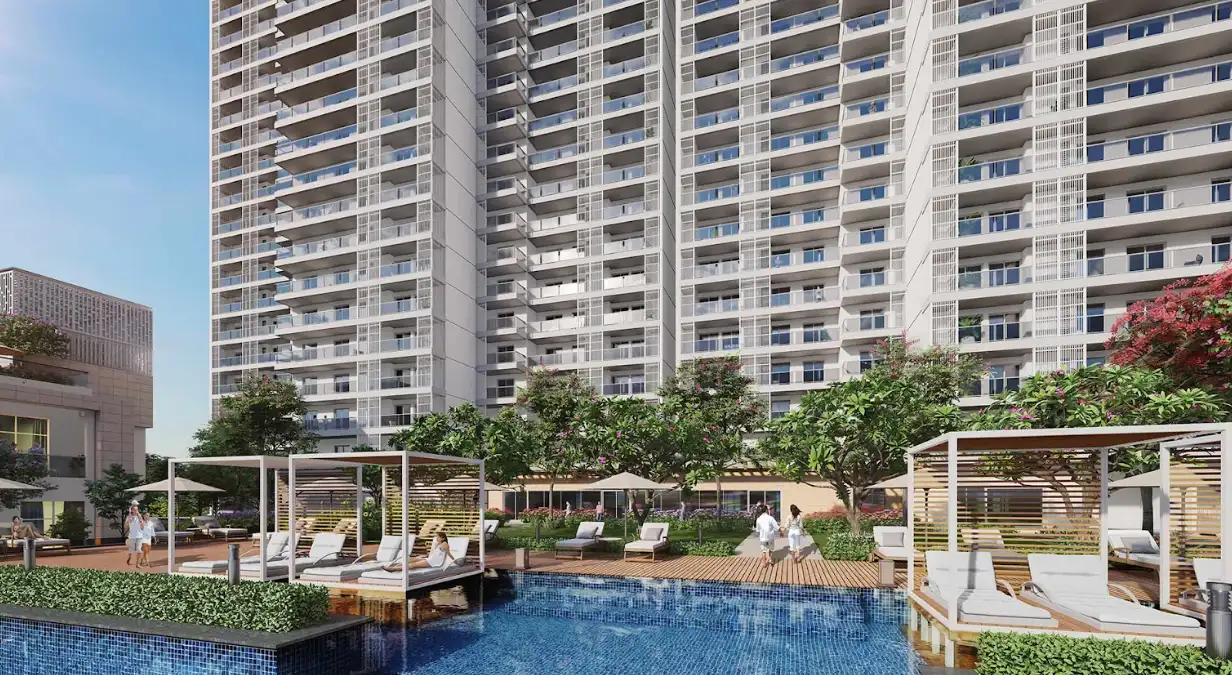
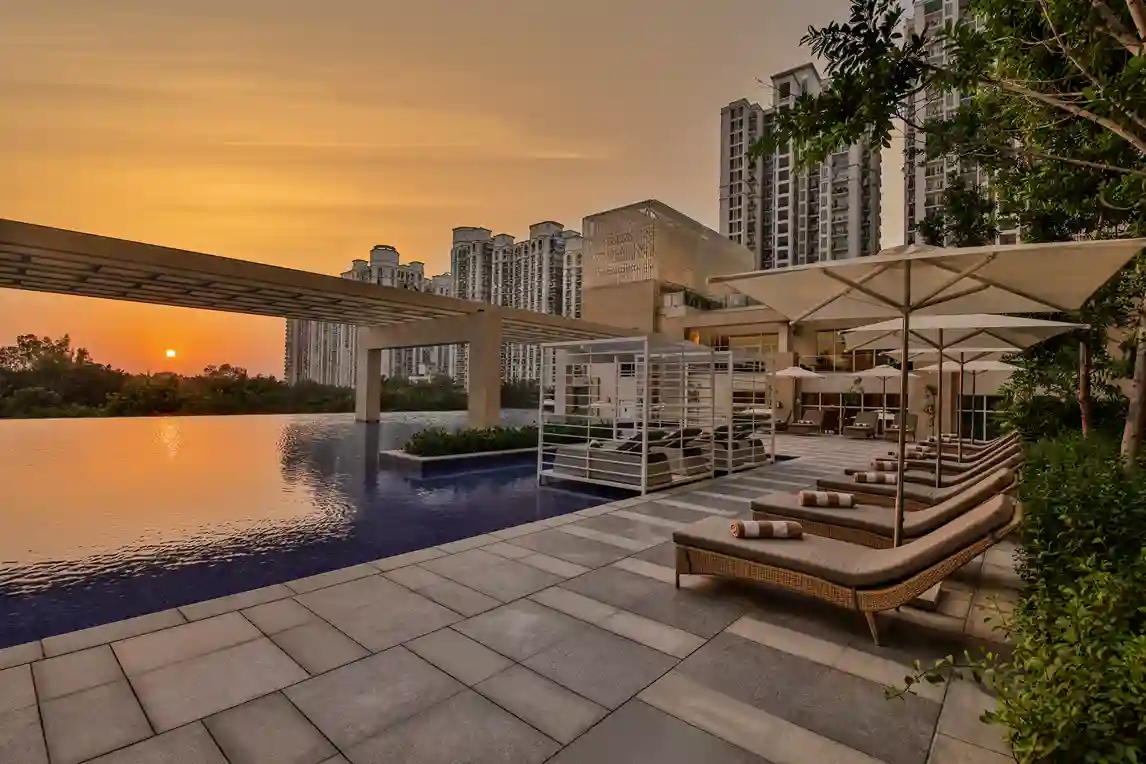
Alfresco dining in residential communities creates a different kind of leisure: slower, calmer, more breathable. Under open sky, beside green and open living spaces, people linger longer. A relaxed Sunday lunch. An early evening meet-up. A quiet conversation that stretches without anyone checking the time.
These outdoor settings can feel like the most meaningful luxury residential social spaces, because they combine comfort with openness.
Still, the best developments protect the balance. These spaces only work long-term when noise rules are enforced, operating hours are sensible, and staffing remains stable. Buyers should confirm those basics, because the daily reality of shared life is shaped by management as much as design.
Some newer developments are planning these social connectors with more intention than older tower models.
ONE Midtown by DLF offers one clear example of this approach. For many exploring luxury homes in Delhi, the idea of modern luxury living increasingly includes what happens beyond the apartment itself.
Within ONE Midtown West Delhi, the development integrates dining and social spaces into its plan so residents have everyday options inside the gates. For those considering living at ONE Midtown, the experience is designed around a multi-level clubhouse that supports daily routines as much as weekend plans. It includes an in-house café, restaurant, and bar within the ONE Midtown gated community, shaping a more connected pace of life inside a premium setting.
As with any premium project, the real test is not the amenity list. It is how these spaces are run, maintained, and governed over time.
A premium development can offer privacy and still support connection. It can hold quiet and community in the same place.
When dining areas, lounges, and outdoor decks are designed well and managed consistently, they encourage small daily moments that build familiarity. Over time, those moments create the culture people remember.
That is what turns residential spaces into something more than a set of apartments. It becomes a neighbourhood that feels easy to belong to, where luxury living with comfort is shared as much as it is owned.
Disclaimer: This article is for educational purposes only. Details may change over time. Please verify current information through official documents and authorised representatives.
_11zon.webp)