A home does not begin at the front door.
It begins earlier, in the slow unwinding that happens before the key even turns. In Delhi, that matters. The city asks a great deal before evening has even properly arrived. Roads tighten, calls continue, and the mind keeps moving long after the workday should have ended. By the time one returns home, the body is often still carrying the speed of the outside world.
That is why the finest homes do more than offer beautiful interiors. They change the day in stages.
They do it through sequence. Through the drop-off, the lobby, the lift, the corridor, and finally the threshold. Each space takes a little of the city away. Each one helps the resident arrive not just physically, but inwardly.
Luxury is often discussed in terms of scale, finish, or amenities. Yet one of its clearest expressions lies in something more subtle. It lies in how a building receives you.
A true luxury arrival experience does not need drama. It needs control. The transition should feel measured from the first step inside. The volume should open enough to ease the body, yet never so much that it turns arrival into spectacle. Materials should calm rather than compete. Light should guide rather than glare. The space should say, with complete confidence, that the pace outside no longer applies here.
That is the first service a well-planned home provides. It does not wait for the apartment to begin offering relief. It starts at the building itself.
The lobby is the first act of separation.
When handled poorly, it feels transactional. One is still in the city, only indoors. When handled well, it creates distance at once. The scale loosens the chest. The acoustics soften. The visual field clears. One begins, almost without noticing, to move differently. That is why the lobby matters so much in composed urban homes in Delhi. It is the first room that tells the resident whether this building understands release.
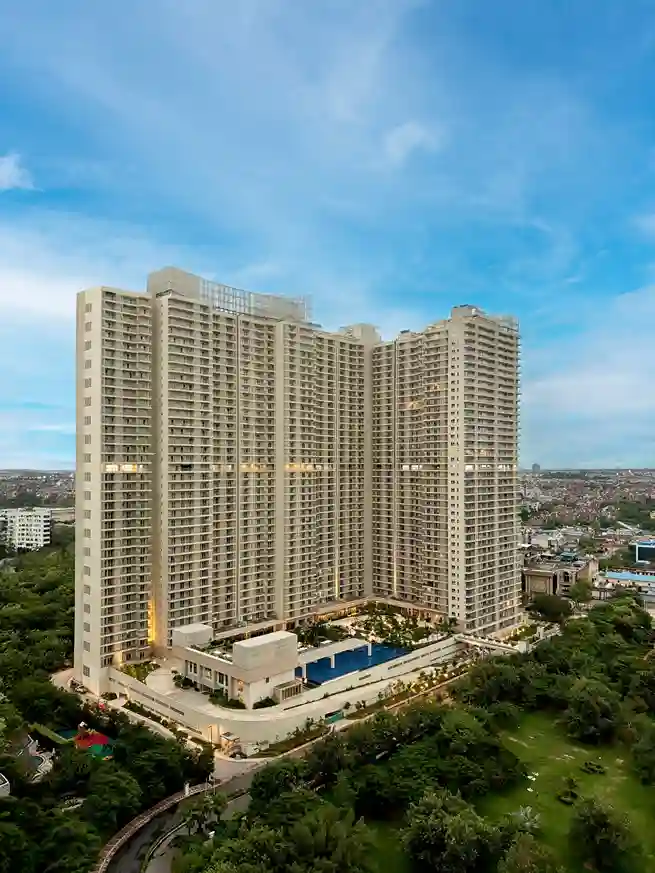
At ONE Midtown by DLF, that understanding is built directly into the architecture. Arrival is defined by an air-conditioned, double-height lobby, manned round the clock by trained service staff. With interiors crafted by Smallwood SRSS, a design consultancy known for its work with Waldorf Astoria, Four Seasons, Langham, and Hilton, the space roots the idea of calm in something tangible: scale, cooling, service, and hospitality-grade design.
The lift is easy to overlook because it lasts only a moment. In reality, it carries surprising psychological weight.
It is the point where the day stops moving sideways and begins to rise away from itself. Street noise has already fallen behind. The residence still lies ahead. For a few seconds, there is only enclosure, movement, and pause. In a building that understands arrival, that small journey feels composed rather than hurried.
At ONE Midtown, the vertical transition is treated as architecture rather than leftover circulation. High-speed elevators place fluidity, ease, and continuity at the centre of the journey, ensuring the route home feels composed rather than rushed. The lift lobby continues that mood, holding the pause between the public world below and the private life above.
Corridors are where many residential buildings lose their discipline.
They are often treated as functional residue. Long, anonymous passages that connect the lift to the door and nothing more. Yet this final stretch matters. By the time one reaches it, the mind is already halfway home. The corridor should complete that shift. It should feel held, calm, and proportioned. It should prepare the resident for privacy. This is what makes the best transition spaces so powerful. They do not ask for attention, yet they shape mood all the same.
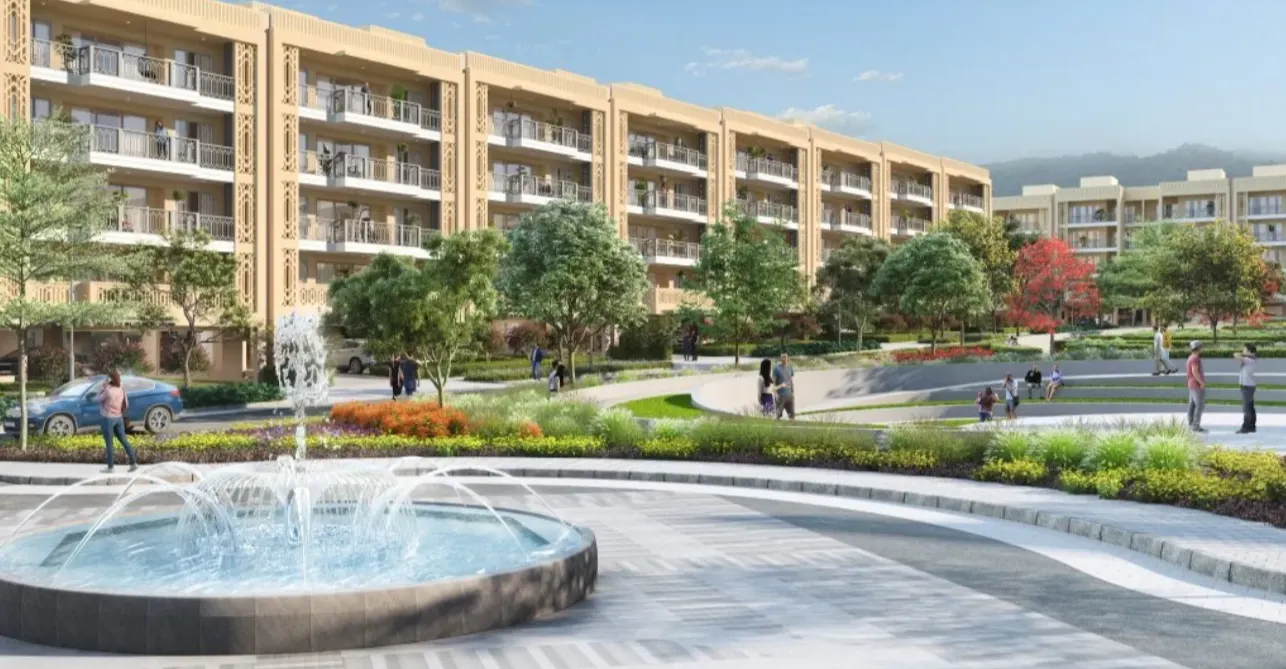
Here too, ONE Midtown treats the pathway and shared circulation as definitive architectural moments. The movement through common spaces feels intentional. Composure gathers in stages. By the time one reaches the main door, the building has already done much of the work.
Delhi is a city of intensity. That is part of its force, and part of its fatigue.
Which is why the home has to do more than look elegant. It has to break momentum. It has to create a psychological boundary strong enough to be felt after a commute, after meetings, after the long abrasion of a crowded day. A residence that cannot change the mood before the door closes leaves the resident to do all that work alone.
The best developments understand the opposite. They choreograph return. They make the body slow down before the mind even asks for it.
This is where ONE Midtown feels especially assured.
Located in Moti Nagar, with arterial roads and four metro lines within a 500-metre radius, the ready-to-move-in address possesses formidable connectivity. Those practical advantages sharpen the need for a well-managed transition. A home that sits this close to the city’s movement must know how to soften that movement at the threshold.
ONE Midtown answers that demand with precision. The drop-off, the double-height air-conditioned lobby, the lift lobby, the pathway, and finally the residence itself work together as a sequence of release. The promise of calm is carried through space, scale, service, and flow.
A person does not arrive all at once. The building understands that. It receives the day in layers and releases it in layers. By the time the front door opens, something has already shifted.
That is the real art of transition.
And in a city like Delhi, it may be one of the most valuable luxuries a home can offer.
Disclaimer: This blog has been written exclusively for educational purposes. The information mentioned are only examples and not recommendations. It is based on several secondary sources on the internet and is subject to changes. Please consult an expert before making related decisions.