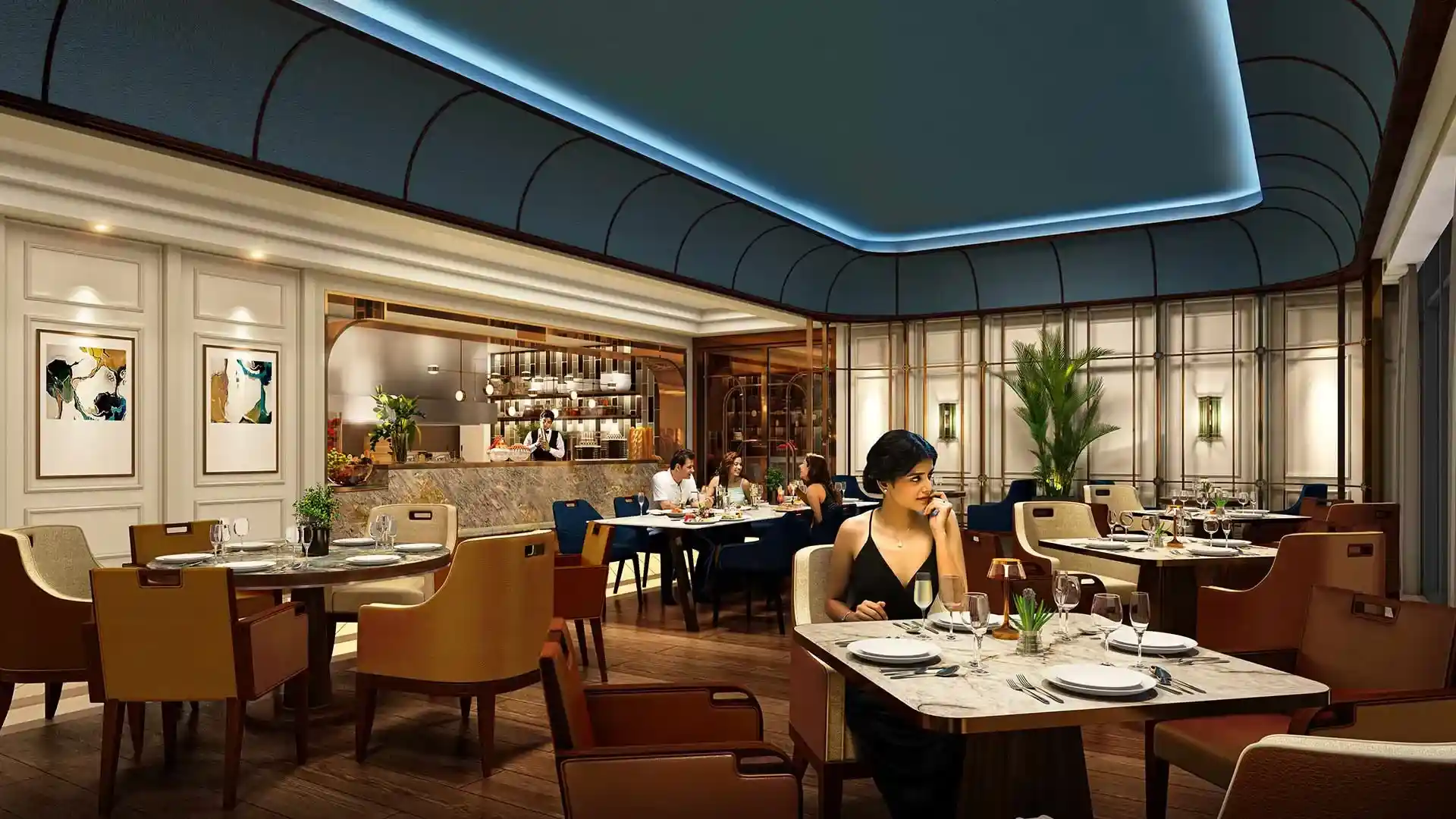
A home can make a strong first impression through scale, materials, light and the pleasure of seeing everything for the first time, but its more meaningful test begins once ordinary life has settled in and the residence has to support the same people through changing routines, habits and stages of life.
Breakfasts, guests, work calls, family conversations and evenings spent doing very little gradually reveal whether the planning continues to feel considered. Homes that age well usually have a clear underlying structure, enough spatial definition for different activities to coexist, and enough ease in the way rooms relate to one another for everyday life to keep working as the household changes.
At ONE Midtown by DLF, that long-term relevance begins with a residence planned around the different ways family life, hosting and more private routines occupy the same home.
The first weeks in a residence are shaped by discovery, but ordinary use soon becomes the better measure of how well the home works. Routes through the interiors become instinctive, certain spaces gather family life more naturally, and the distinction between areas for coming together and those that offer greater separation starts to matter in practical ways.
At ONE Midtown by DLF, living and dining areas support family life and hosting, while bedrooms provide greater separation for more private routines. Conversation, work, study, rest and hosting can therefore occupy different parts of the same day while the residence retains a clear sense of organisation.
The strength of that planning appears in ordinary situations, when guests can gather in shared areas, personal routines continue elsewhere and the home remains coherent even when several activities are happening at once.
Households rarely remain exactly as they were when a home was first chosen. Work patterns shift, children grow older, family members may spend more or less time at home, and the balance between hosting, privacy and shared time changes with them.
A residence with a clear underlying organisation is better placed to accommodate those shifts because shared areas can continue to support family life and gatherings while more personal spaces retain their usefulness as individual routines evolve. The value lies in a structure that remains understandable and usable even when the way the household occupies it changes.
That continued usefulness is what allows the home to remain relevant as the household changes. The residence keeps serving everyday life because its planning gives residents enough room to adjust their routines without constantly having to work around the home itself.
a may gradually become associated with birthdays, long conversations or ordinary Sunday lunches, while an outdoor space can become part of the household's morning or evening routine.
Spacious decks form part of the residences at ONE Midtown by DLF, extending everyday living beyond the interiors and giving residents another way to use the home through different parts of the day. ONE Midtown by DLF also sits alongside 100+ acres of greenery, bringing changing daylight, seasonal colour and a broader green outlook into the residential experience.
The decks and greenery therefore contribute in different ways. One creates another place to spend time at home, while the other gives the outlook a changing visual character through the year. As both become part of regular life, they move beyond first impressions and begin to carry associations of their own, which is how architecture gradually becomes personal.
The experience of a home is also shaped by how naturally the surrounding neighbourhood fits into daily life. Roads become easier to navigate, useful places become known, errands require less thought and the wider area gradually starts to feel like part of the resident's normal routine.
ONE Midtown by DLF sits within an established West Delhi environment where the surrounding urban fabric is already active and part of everyday life. Residents therefore settle into a neighbourhood whose roads, services and everyday destinations already form part of a functioning part of the city.
Over time, that context becomes increasingly instinctive to use. Location stops being understood only through a map and becomes part of how the household actually moves through the week.
The lasting test of a home is whether everyday life continues to feel coherent after the excitement of arrival has passed and the household has changed around it. Routines will shift, rooms will gather associations, familiar places will take on greater meaning, and the residence will gradually become less something that is being assessed and more simply where life happens.
That is where long-term value begins to separate itself from first impressions. A home that continues to support ordinary life with clarity and ease earns its place through use, because the qualities that mattered on the first day continue to matter years later in more personal ways.
A home earns timelessness slowly, through the years in which it keeps feeling right.
1. What helps a home remain useful as household needs change?
Ans: A home tends to remain useful when its planning gives shared activities and more private routines clear places while leaving residents enough room to adjust how those spaces are used as household needs evolve.
2. How do shared and private spaces support long-term living?
Ans: Living and dining areas can support family life, hosting and shared routines, while bedrooms provide greater separation for more personal parts of the day. This clearer organisation helps different activities coexist as the household's needs change.
3. Do the residences at ONE Midtown by DLF include outdoor space?
Ans: Yes. The residences include spacious decks that extend everyday living beyond the interiors and give households another way to spend time at home through different parts of the day.
4. How does greenery contribute to the residential experience?
Ans: ONE Midtown by DLF sits alongside 100+ acres of greenery, bringing changing daylight, seasonal colour and a broader green outlook into the everyday experience of the residence.
5. Why does an established neighbourhood matter over the years?
Ans: An established neighbourhood becomes easier to navigate as roads, services and everyday destinations become familiar through regular use, allowing the wider setting around home to fit more naturally into daily routines.
Disclaimer: This blog has been written exclusively for educational purposes. The information mentioned are only examples and not recommendations. It is based on several secondary sources on the internet and is subject to changes. Please consult an expert before making related decisions..
_11zon.webp)