People move through their days differently. Some start before the city is awake. Others find quiet only late at night. A home functions best when it makes room for these variations without making residents keep adjusting.
Homes designed for today’s schedules increasingly respond to this reality. They are shaped around everyday use rather than fixed ideas of how time should be divided. The goal is not to direct routines, but to accommodate them.
In well-planned communities such as ONE Midtown by DLF, it shows up outside the door too. Shared areas sit in the path of daily life, so that stepping out for a short loop walk, pausing near water or greenery, or moving through open corridors feels incidental. Breaks happen without preparation. Movement stays part of the day rather than becoming an event. Everyday facilities are close enough to use for 15 minutes, not two hours.
Most days shift between focused work, brief pauses, rest, and time with others. When homes do not support these transitions, people adapt in subtle but draining ways. Dining tables become workstations. Bedrooms remain active longer than they should. Quiet is postponed.
When a home supports these shifts, the day feels more contained. Work has clearer edges. Rest begins earlier.
Early morning often reveals this best.
One person is up before sunrise, moving through the kitchen with the lights kept low. A door closes softly. Coffee is poured without conversation. The rest of the home continues to sleep.
A short workout that fits between tasks, a quick swim that replaces a longer outing, or an evening spent on the club terrace supports the rhythm of the day rather than interrupting it. Shared spaces that are easy to enter and leave help activity remain optional rather than something that needs to be scheduled
Design That Adjusts to Changing Use
Rooms are rarely used for a single purpose. A space that supports concentration during the day should feel settled by evening without needing to be reset. Small details determine this. Where light falls. How sound travels. Whether movement cuts across or flows alongside other activity.
In shared homes, overlapping schedules make this especially important.
Mid-afternoon, a work call carries on at the dining table. Just down the passage, someone is resting with the door partly closed. Neither routine overtakes the other. The home holds both without negotiation.
Amenities at ONE Midtown follow the same practical thinking. The infinity pool, gym, games room, and café are easy to use for a quick visit or a longer pause. They fit into the day rather than requiring you to plan around them.
People use their homes according to preference, not labels. Some enjoy hosting. Others value long stretches of privacy. Some weekends are spent indoors. Others involve frequent movement outside.
Homes that support this range rely on simple decisions:
For families, this may mean play areas positioned so sound does not travel far, allowing activity without overtaking the home. For others, it may be a quiet visit to a salon or spa within the community, fitting naturally into the day rather than becoming a planned occasion.
These details allow habits to form without drawing attention to the space itself.
In well-planned communities, comfort is shaped less by scale and more by consistency. Clear layouts reduce unnecessary movement. Good light supports long hours indoors. Cafes, restaurants and clubhouses are used more often when they sit close enough to become part of a normal route.
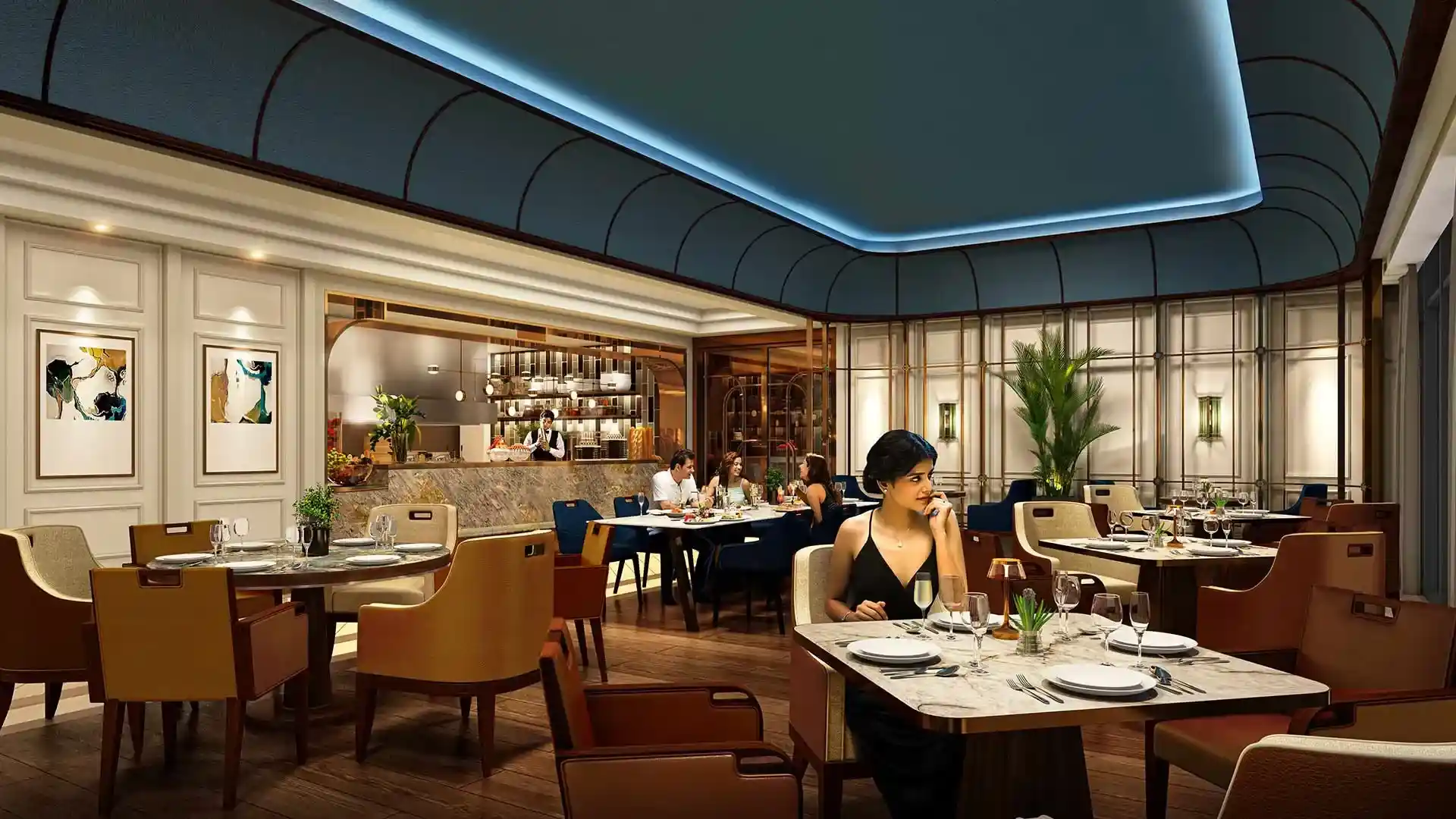
Places to eat or have coffee within the community extend this ease. Background sounds, the occasional scent of food, the low hum of activity add life without demanding engagement. Time with others becomes incidental rather than arranged.
Evenings often settle this idea quietly.
A quick walk downstairs after work. A brief pause near the water. A slow loop under open sky. Then back home without needing to plan the outing.
Quality is measured not by how a space performs occasionally, but by how reliably it supports ordinary days.
When a home aligns with how people live, routines feel simpler. Work stays contained. Rest remains uninterrupted. Time with others happens naturally.
At the end of the week, this alignment matters most. At ONE Midtown by DLF, comfort emerges through repetition rather than excess, through spaces that support daily life quietly and consistently.
The sign is subtle: a day unfolds with fewer adjustments. Morning begins without disturbance. Afternoon holds its focus. Evening slows on its own. And the home asks for very little in return.
Disclaimer: This article is for educational purposes only. Details may change over time. Please verify current information through official documents and authorised representatives.
_11zon.webp)