For a long time, the commute was treated as the price of ambition.
It was simply part of the day. Something to be endured before work could begin and after work could end. The meaning of home has changed. For many people, the most valuable residences are no longer only the ones that offer comfort after work. They are the ones that make work itself easier to hold.
That is where the idea of commute begins to change.
The most meaningful commute is no longer across the city; it is the short, intuitive distance between focused professional attention and private life. This immediate transition changes more than convenience. It changes the very cadence of a day.
A home today is expected to do more than shelter private life.
It must also support concentration, privacy, routine, and the small transitions that make work feel sustainable rather than invasive. The question is no longer only whether one can work from home. The deeper question is whether the home helps that work happen well.
That is what makes the architecture of the modern residence a far more serious category now.
The strongest homes do not simply provide extra room. They provide a better rhythm. They make it easier to begin the day without immediate rush, easier to hold focus during working hours, and easier to step out of work without the whole day collapsing into one long blur.
There is a meaningful difference between a home where work happens and a home that is prepared for it.
A work-friendly residence understands separation. One part of the home can support concentration. Another can hold domestic life without competing with it. Movement feels natural. Calls do not have to invade every corner. The home allows one to be present where needed, without making everything feel mixed, noisy, or unresolved.
This is where deliberate design matters far more than raw volume.
A well-planned home does not force the resident to improvise a workday out of dining chairs, cluttered edges, and borrowed corners. It makes working from home feel less makeshift and more fully integrated into the way life is actually lived now.
Most people think of saved time in terms of distance.
Some of the most important savings happen inside the home itself.
A better layout reduces friction. The route between one task and the next feels intuitive. Shared spaces and private spaces do not constantly overlap. The day does not need to be reorganised every time a meeting begins. Work can happen without displacing the rest of life, and life can resume without the home feeling like an office that forgot to shut down.
That is the real value of an intuitive floorplan.
It does not only save minutes. It protects attention.
And over time, that becomes one of the most useful luxuries a residence can offer.
A residence can support the workday. The wider setting can make it feel more complete.
When coffee, a short break, a meeting point, a walk, or an evening transition remain close to home, the workday stops feeling boxed in. The residence is no longer carrying every function on its own. The ecosystem around it begins to support the day as well.
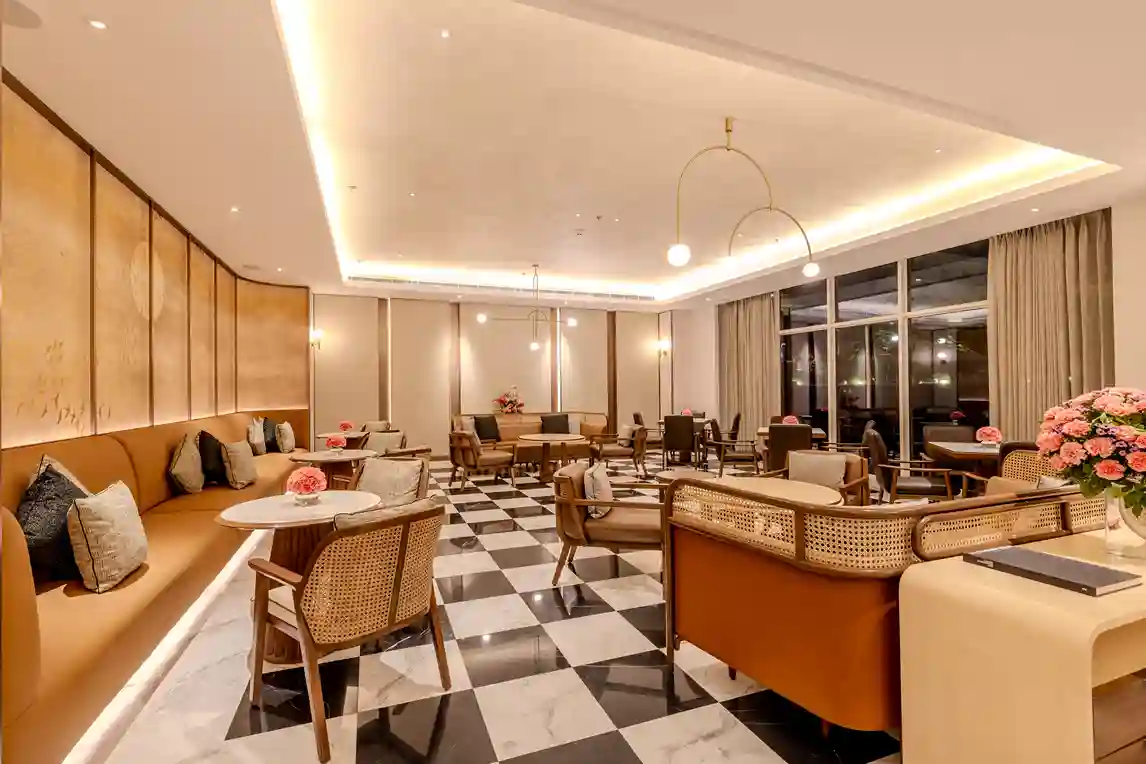
At ONE Midtown by DLF, that is where the larger value begins to show. The residences are ready to move in, and the environment around them is shaped to keep different parts of daily life within immediate reach. The resident-exclusive clubhouse and The Midtown Plaza crea[LS1.1][an1.2]te a setting where work, pause, movement, and after-hours life remain connected rather than scattered across the city.
That changes the meaning of convenience.
It is no longer only about reaching work.
It is about shaping a better day around it.
People often frame the end of the workday as a matter of willpower.
Very often, it is a matter of setting.
A home that supports balance does not make every transition feel effortful. It does not ask the resident to constantly redraw the line between professional and personal time. It gives the day clearer edges. Work has its place. Breaks have their place. Evenings can begin without the whole household having to recover from the architecture first.
That is why a seamlessly integrated setting matters so much now. It reduces the drag around ordinary routines. It makes the workday feel more contained. It allows the later hours to arrive with more ease and less residue.
Disclaimer: This blog has been written exclusively for educational purposes. The information mentioned are only examples and not recommendations. It is based on several secondary sources on the internet and is subject to changes. Please consult an expert before making related decision.