Buying a premium home in Mumbai requires rigorous evaluation beyond the headline apartment price. For high-value residential purchases, the true acquisition cost encompasses statutory payments, tax obligations, professional fees, and project-linked outgoings that require structured planning before the agreement is signed.
Mumbai home buying costs carry significant weight because the city’s premium residential market involves large-ticket capital deployment. A small percentage variation can translate into a substantial financial commitment. A buyer who models these costs early approaches the transaction with stronger financial clarity and disciplined capital planning.
Stamp duty represents the largest statutory outflow in a Mumbai home purchase. Paid directly to the state government, this levy legally validates the property transaction. In Mumbai, the duty is calculated as a percentage of the property value, with the applicable rate determined by the buyer’s gender, property location, and prevailing state regulations.
or residential purchases in Mumbai, the standard assessment is commonly 6% for male buyers and 5% for female buyers, with both rates generally including the applicable 1% Metro Cess (Source: Department of Registration and Stamps, Government of Maharashtra, igrmaharashtra.gov.in). The assessment is calculated on the higher of the agreed transaction value or the government’s Ready Reckoner rate, ensuring the duty reflects the applicable benchmark value.
Stamp duty planning demands early attention as it directly dictates the liquid funds required at the agreement stage.
Registration grants legal record to the transaction. Once stamp duty is cleared and the agreement executed, the document must be registered with the appropriate authority to create an official public record of the buyer’s ownership interest.
In Maharashtra, registration charges for residential property are calculated at 1% of the property value, but are capped at ₹30,000 for properties priced above ₹30 lakh. (Source: Department of Registration and Stamps, Government of Maharashtra, igrmaharashtra.gov.in). For premium apartments in Mumbai, this cap makes the registration fee relatively small compared to the stamp duty. Regardless of the amount, registration serves as the procedural anchor of the transaction, securing the buyer’s legal position.
For under-construction premium residences, GST obligations align closely with the payment schedule. Since these homes are typically funded through construction-linked instalments, the tax outgo follows the same staggered timeline. Buyers must evaluate the agreement value, GST treatment, and payment schedule as a single, connected financial structure.
GST operates as a major structural component in under-construction property purchases. For residential apartments falling outside the affordable housing category, GST is generally levied at 5% without input tax credit. (Source: Central Board of Indirect Taxes and Customs, cbic.gov.in). Properties holding a valid completion certificate are generally outside this levy, making the asset’s construction status a primary financial variable.
For under-construction premium residences, GST obligations align closely with the payment schedule. Since these homes are typically funded through construction-linked instalments, the tax outgo follows the same staggered timeline. Buyers must evaluate the agreement value, GST treatment, and payment schedule as a single, connected financial structure.
TDS is a strict compliance mandate in high-value property transactions. Under Section 194-IA of the Income Tax Act, buyers purchasing immovable property valued at ₹50 lakh or more must deduct 1% TDS from the seller’s payment and deposit it with the government. (Source: Income Tax Department, Government of India, incometaxindia.gov.in).
For premium Mumbai homes, this rule commonly applies. TDS functions as a compliance obligation managed by the buyer, requiring precise deduction, timely payment, and correct certificate generation. For joint ownership structures, multiple sellers, non-resident sellers, or complex payment plans, professional tax guidance helps keep the filing process accurate.
Beyond the core statutory levies, premium buyers must model additional acquisition costs into their capital planning.
Legal due diligence remains critical. A qualified professional must evaluate the RERA disclosures, establish title clarity, and verify the structural fairness of the agreement’s cancellation and possession clauses before the document is signed.
For buyers using housing finance, the capital model must also account for bank processing fees, mortgage creation costs, and valuation charges. The official project cost sheet should then be reviewed separately to identify maintenance deposits, corpus contributions, utility connection charges, and other project-linked outgoings.
Buyers must clearly isolate mandatory statutory costs from project-specific deposits to understand the true cash requirement at possession.
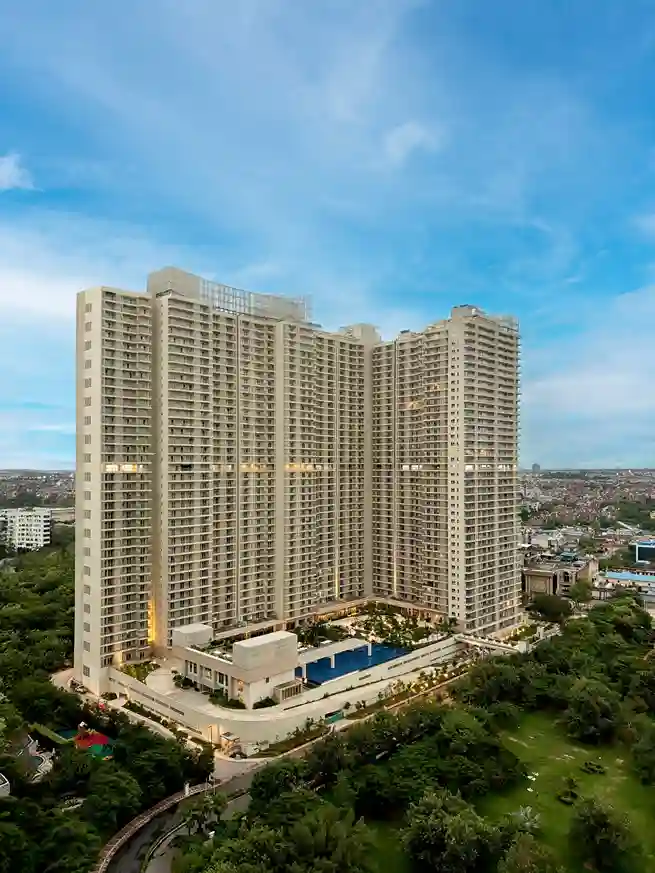
At DLF, The Westpark in Andheri West, buyers evaluate a high-value capital decision within one of Mumbai’s most mature Western Suburbs locations. The project’s large-format 3 and 4-bedroom residences, association with DLF and Trident Realty, and strong urban connectivity demand a disciplined financial approach.
For such purchases, statutory outgoings must be reviewed with the same rigour as the floor plan. A buyer who understands the intersection of stamp duty, GST applicability, TDS compliance, and project-linked charges can evaluate the asset with stronger financial confidence.
Before executing a premium Mumbai property purchase, the complete transaction stack requires auditing:
Mumbai rewards disciplined property decisions. For high-net-worth buyers, understanding the precise mechanics of home buying costs separates basic headline pricing from sophisticated capital planning.
To explore the masterplan, review current phase availability, or arrange a private orientation, connect with the DLF client team.
Note: Stamp duty, registration charges, GST, TDS, statutory costs, project charges, payment schedules, taxes, and applicable legal requirements are subject to change. Buyers should verify all figures through official government portals, project collateral, MahaRERA records, legal advisors, tax advisors, and financial institutions before making purchase decisions.