A RERA registration certificate appears straightforward. It identifies a project, its promoter, the registered phase, the registration number and the declared validity period.
Its significance extends beyond those few lines.
The registration number opens the project’s regulatory record, including disclosures relating to approvals, plans, legal title, encumbrances, carpet areas, timelines and construction updates. The certificate therefore serves as the entry point to due diligence, while the documents behind it provide the substance.
The governing legislation is the Real Estate (Regulation and Development) Act, 2016. Properties in Maharashtra can be reviewed through the official MahaRERA project search.
Section 3 of the RERA Act generally prevents a promoter from advertising, marketing, booking or selling a residence in a project that requires registration until that project has been registered with the relevant authority.
Once registration is granted, the project receives a unique number that should appear in its advertising and transaction documents. The number allows purchasers to locate the project record maintained by the regulator.
Registration indicates that the promoter has submitted the documents and information required under the applicable framework. These disclosures can include sanctioned plans, commencement approvals, location details, title documents, encumbrance information, residence configurations, carpet areas and the proposed completion period.
Registration does not amount to a recommendation by the regulator. It also does not independently guarantee title, completion, possession or future investment performance.
The underlying provisions can be reviewed in Sections 3 to 5 of the RERA Act.
The registration number is the most useful element on the certificate.
For a Maharashtra property, entering that number into the MahaRERA project search reveals the current regulatory record. This is more useful than relying solely on a saved certificate because the online record may reflect later extensions, corrections, regulatory orders or changes in status.
Where the registration number appears, it should remain consistent across:
Any inconsistency should be clarified in writing before the transaction progresses.
Large masterplans are frequently developed and registered in phases.
The RERA Act treats every phase as a separate real estate project for registration purposes. Registration of one phase does not automatically cover every future building or component within the wider development. This requirement appears in the explanation to Section 3 of the RERA Act.
The regulatory record should be matched against the exact:
A development may use one brand name across its complete masterplan while maintaining separate RERA registrations for individual phases.
The relevant question is therefore precise: which registered phase contains the residence under consideration?
The consumer-facing brand and the registered promoter may carry different names.
A development may involve a parent company, subsidiary, joint venture, landowner or special-purpose entity. The RERA certificate identifies the legal entity registered as the promoter for that particular project or phase.
That name should be compared with:
The brand provides commercial context. The legal documents establish which entity carries the contractual obligations.
Section 4 requires the registration application to include details of the promoter’s enterprise and information about projects launched during the preceding five years. The full provision is available in the RERA Act, 2016.
A project registration is granted for the completion period declared by the promoter for the project or registered phase.
The current review should establish:
An extension does not by itself establish misconduct. Section 6 permits extensions in specified circumstances, subject to the Authority’s process and recorded reasons.
MahaRERA maintains separate official records for lapsed projects, revoked or ab initio void registrations and projects suspended, kept in abeyance or deregistered.
An older downloaded certificate should always be checked against the project’s current portal record.
Much of the meaningful information lies in the disclosures attached to the project record.
Depending on the project and the portal, these may include:
MahaRERA publishes an official guide to the documents and forms required for project registration.
Technical drawings and title documents may require professional interpretation. The first review can still test whether the project name, phase, land description, building, residence type and carpet area remain consistent across the portal, application form, cost sheet and agreement.
The original certificate captures the project at the point of registration, while quarterly disclosures provide a continuing record.
Section 11 requires the promoter’s web page to be updated with information that includes booked inventory, approvals obtained or pending and the current status of the project.
For an under-construction property, the sequence of updates can indicate:
A single delayed filing may call for clarification, while a sustained absence of updates requires closer examination.
MahaRERA also identifies projects placed in abeyance due to non-compliance with quarterly progress reporting. Projects appearing in this category may have their bank accounts frozen, and the promoter may be prohibited from executing agreements for sale or sale deeds until the required compliance is completed.
Section 4 requires 70% of the amounts realised from allottees for a project to be deposited in a separate account maintained with a scheduled bank.
The funds are intended to cover the land and construction costs of that project. Withdrawals must correspond to the percentage of completion and require certification by an engineer, architect and chartered accountant. The project accounts are also subject to audit under the Act.
This framework introduces financial controls around the use of buyer collections. It does not provide a complete view of the promoter’s finances or remove the need to review construction and regulatory disclosures.
The requirement appears in Section 4(2)(l)(D) of the RERA Act.
Large headline areas may shape the marketing of a premium residence. The regulatory and contractual documents should identify the RERA carpet area.
Under the Act, carpet area broadly means the net usable floor area of the residence. It excludes external walls, service shafts, exclusive balconies or verandahs and exclusive open terraces, while including internal partition walls.
The figure should be compared across:
Decks, balconies, verandahs, terraces and other areas should be identified separately where applicable.
The purpose of this comparison is to understand which area belongs contractually to the residence and how the consideration has been calculated. The statutory definition appears in Section 2(k) of the RERA Act.
The registration certificate establishes the regulatory identity of the project. The agreement for sale governs the transaction between the promoter and the purchaser.
The agreement should be compared with the portal disclosures for:
Section 13 states that a promoter cannot accept more than 10% of the cost of the residence as an advance or application fee without first entering into a written and registered agreement for sale.
The same section requires the agreement to address project particulars, specifications, payment dates, possession and the interest obligations applicable in case of default.
The provision can be reviewed directly in Section 13 of the RERA Act.
A RERA registration certificate should not be confused with an occupancy certificate.
Registration relates to the project’s entry into the regulatory framework. An occupancy certificate is issued by the competent authority under the applicable local law and permits occupation of the building.
The Act places responsibility on the promoter to obtain the completion certificate, occupancy certificate or both, as applicable. These obligations appear in Section 11 of the RERA Act.
A valid registration certificate does not independently establish that:
RERA registration creates a framework for disclosure and accountability. It does not replace independent legal, technical and financial review.
Before a premium property transaction proceeds to booking or agreement, the regulatory review should cover five areas.
This framework supports an informed preliminary assessment. A property lawyer should examine the title and contractual documents in the context of the specific acquisition.
Reading a RERA certificate is an exercise in verification.
The certificate leads to the portal. The portal leads to the underlying disclosures. Those disclosures can then be compared with the commercial documents and the agreement for sale.
Each stage narrows the distance between the property as presented and the property as legally recorded.
This discipline remains important at every price level. In a premium transaction, the financial consequence of an overlooked inconsistency is simply greater.
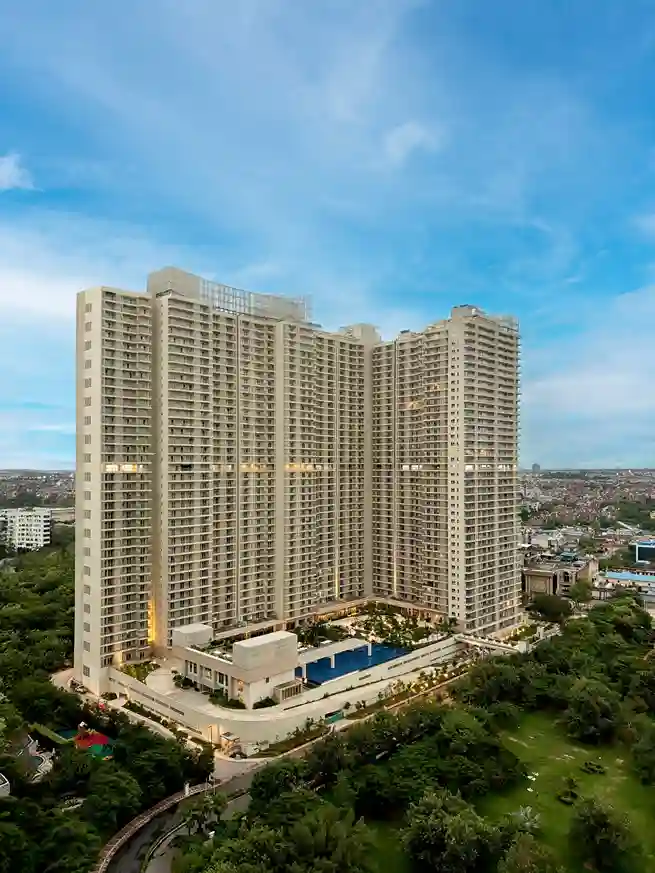
When evaluating The Westpark or another premium development in Maharashtra, the official MahaRERA record should form part of a wider legal, technical and financial review.
To review the masterplan, current phase details or official project documents for The Westpark, connect with the DLF client team.
What does a RERA certificate establish?
It confirms that a particular real estate project or phase has been registered with the relevant state Real Estate Regulatory Authority. The registration number connects the certificate to the project’s wider regulatory record.
Does registration mean that a property is legally risk-free?
Registration creates disclosure and compliance obligations. It does not replace an independent review of title, approvals, encumbrances, construction records and the agreement for sale.
How can a MahaRERA registration be verified?
Enter the registration number into the official MahaRERA project search. The promoter, project, phase and current status should correspond with the certificate and transaction documents.
Can different phases have different registration numbers?
Yes. The RERA Act treats each phase as a separate real estate project for registration purposes.
Is a RERA certificate the same as an occupancy certificate?
No. Registration and occupancy are separate regulatory milestones. The occupancy certificate is issued by the competent authority under applicable local law.
What should be checked when the registration period has expired?
The current portal record should be reviewed for an approved extension, revised date, regulatory order or change in project status.
How much can be collected before a registered agreement for sale?
Section 13 prevents a promoter from accepting more than 10% of the residence cost as an advance or application fee without first entering into a written and registered agreement for sale.
Is independent legal review still relevant for a registered project?
Yes. A property lawyer can review title, encumbrances, approvals and the agreement in the context of the particular residence and transaction.
Disclaimer: This article provides general educational information and does not constitute legal, financial, tax or investment advice. Laws, regulatory procedures, portal formats and individual project records may change. Purchasers should verify the current position with the relevant authority and obtain independent professional advice before making a property decision.