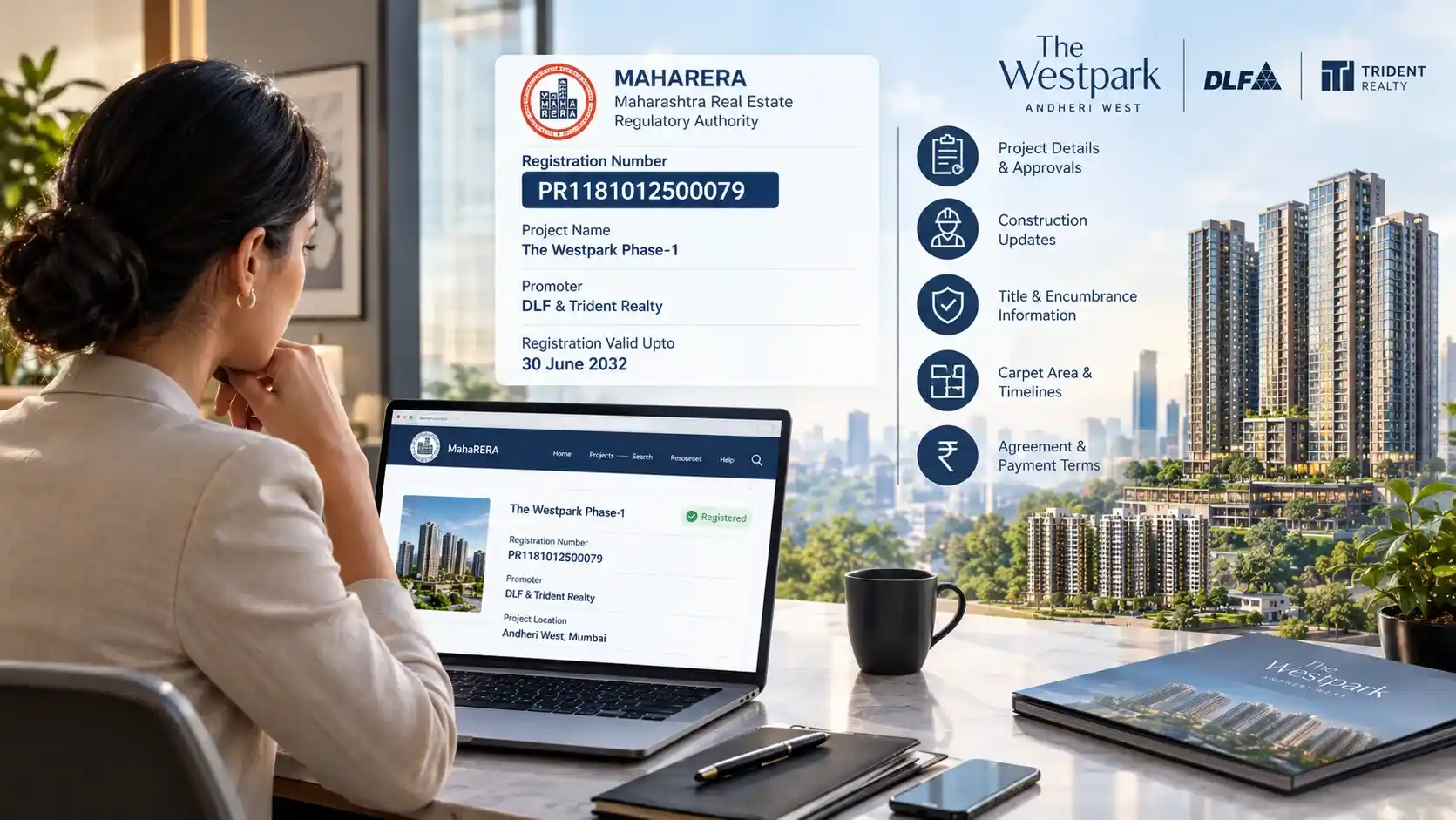
Buying a premium home involves several connected decisions. The residence, registered phase, complete cost, payment schedule and possession terms must remain aligned from the first discussion to the final handover.
The Westpark is currently under construction, and prospective buyers can arrange a visit to its experience centre in Andheri West. For local buyers and NRIs, the journey becomes easier when it is approached through five clear stages.
The first visit should establish how the development fits the household’s plans.
Begin with the location, approach roads and the relationship between The Westpark and the surrounding Andheri West neighbourhood. The review can then move towards the masterplan, tower position, residence layout and the balance between private and common areas.
At the experience centre, the discussion should identify the tower, floor, carpet area, deck area and registered phase attached to the residence under consideration.
The floor plan should also be considered through everyday use. Buyers may wish to examine room proportions, movement between spaces, deck placement and how the residence may support work, family routines or longer visits.
For an NRI buyer, the initial review may take place during a visit to India or through an authorised representative. Video calls and digital documents can support the process, but the authority granted to anyone acting on the buyer’s behalf should be clearly documented.
Once a residence has been shortlisted, its current availability should be confirmed in writing.
The confirmation should identify the relevant tower, unit number, configuration and registered phase. This creates a clear link between the residence discussed during the visit and the documents issued later.
Pricing for The Westpark is available upon request, so the commercial review should be based on the current cost sheet for the selected residence.
That cost sheet should bring together the residence value, applicable taxes, stamp duty, registration charges, deposits and payment milestones. Any parking allocation or other amount forming part of the transaction should also be recorded.
This is also the stage to align the funding structure. Buyers using a home loan should compare the expected sanction, personal contribution and project payment schedule before proceeding. For NRIs, the payment route should comply with the applicable banking and foreign-exchange requirements.
The legal review should confirm that the documents describe the same residence selected during the commercial discussion.
The preliminary review should cover the MahaRERA record, registered promoter, title disclosures, applicable plans, application form and draft agreement for sale.
The Westpark Phase-1 is registered with MahaRERA under registration number PR1181012500079.
The application form should be read carefully before it is signed. Payment deadlines, cancellation provisions, transfer conditions and the treatment of charges should be understood at this stage.
The agreement for sale is the central contractual document. It records the residence, consideration, payment schedule, possession commitment and the obligations of both parties.
Section 13 of the Real Estate (Regulation and Development) Act prevents a promoter from accepting more than 10% of the property cost as an advance or application fee before entering into a written and registered agreement for sale.
Independent legal review is particularly important for joint purchases, NRI transactions and cases involving a Power of Attorney.
For an under-construction residence, payment demands may be linked to milestones set out in the agreed schedule.
Each demand should be checked against the contractual payment stage before funds are released. Buyers should maintain an organised record of demand letters, receipts, loan disbursements and important correspondence.
Project disclosures and construction updates provide useful reference points, while the agreement for sale remains the primary document governing payment and possession obligations.
NRIs should ensure that communications reach the correct email address and authorised representative. This becomes especially important when documents require signatures or payments within a defined period.
The buyer should also review whether the lender requires additional documents before each disbursement. Delays in completing those requirements can affect the timing of payment even when the loan has already been sanctioned.
Preparation for possession should begin before the handover appointment.
As the contractual timeline approaches, the buyer should review the possession notice, outstanding payment position and the documents required for completion.
A structured pre-handover inspection helps identify visible defects, incomplete work and differences from the agreed specifications. The review should cover finishes, fixtures, doors, windows, electrical points, plumbing and the areas described in the unit documents.
Any observations should be recorded in writing and submitted through the prescribed process. An NRI buyer may appoint a qualified representative to attend the inspection and handover, subject to the applicable authorisation documents.
At handover, the buyer should receive or confirm access to the possession letter, payment records, applicable certificates, warranties and operating information connected with the residence.
After physical possession, the applicable necessary documents and plans, including those relating to common areas, should be handed over in accordance with the RERA framework and the project documents.
The buyer should also understand how access, maintenance communication and resident services will operate after possession.
A well-managed purchase keeps the same residence, phase, cost and contractual commitments aligned from the first discussion to possession.
For local and NRI buyers alike, that continuity is what turns a complex transaction into a clear buying journey.
To arrange a site visit, review current phase availability, or request a private orientation, connect with the DLF client team.
1. Can an NRI Complete the Purchase Remotely?
Ans: Several stages may be managed through digital communication and an authorised representative. The Power of Attorney, signing process, payment route and banking arrangements should be reviewed with qualified legal and financial advisers.
2. What Should Be Confirmed Before Paying a Booking Amount?
Ans: Confirm the residence, registered phase, carpet area, complete cost, payment schedule, cancellation terms and the documents that will govern the transaction.
3. What Should Be Checked Before Accepting Possession?
Ans: Review the possession notice, outstanding payment position, applicable approvals, agreed specifications and physical condition of the residence. Any incomplete or defective work should be recorded through the prescribed process.
Disclaimer: This article provides general information and does not constitute legal, financial or tax advice. Project availability, prices, specifications, payment structures and timelines are subject to change and applicable approvals. Buyers should verify current project documents and obtain independent professional advice before making a property decision.