


-
 891
891 - Posted in August, 2026
Sustainable Office Space in India: ESG Factors Enterprises Should Check
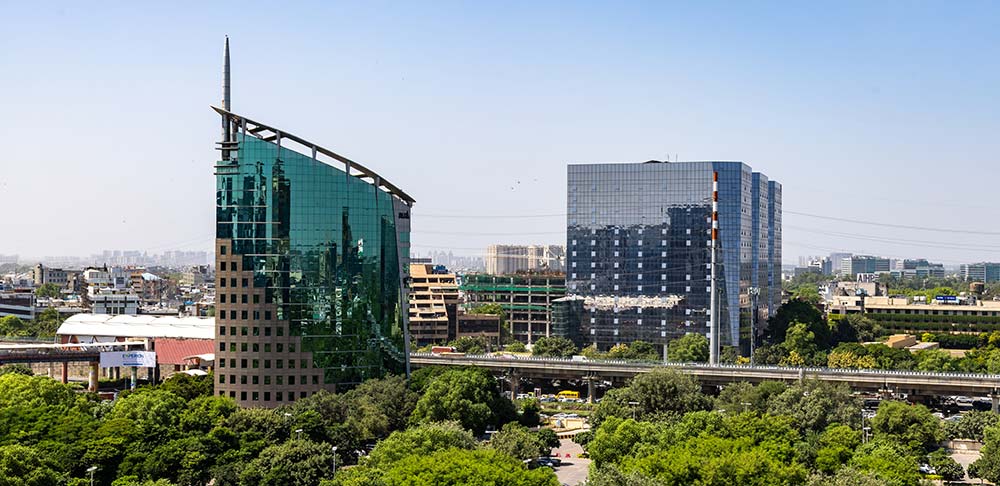
Most enterprise real estate decisions in India still begin with the same short list of considerations: location, cost per square foot, floor plate size, and lease flexibility. These are reasonable starting points. But a growing number of companies are discovering that a building which scores well on all four can still create significant problems, specifically when that building needs to appear in an ESG (Environmental, Social, and Governance) report, pass an internal sustainability audit, or demonstrate to global leadership that the India operation meets the environmental and social standards the organisation publicly commits to.
The gap between "good office space" and "ESG-compliant office space" is narrower than it used to be, but it is not gone. Knowing what to look for and why certain factors carry more weight than others changes how enterprises approach the leasing process entirely.
Why ESG Matters in Office Leasing
The shift has been gradual, but the direction is clear. Environmental, social, and governance considerations have moved from the periphery of corporate real estate decisions to a position where they actively influence which buildings make the shortlist. This isn't purely values-driven. There are regulatory, financial, and reputational pressures all pushing in the same direction.
Global organisations operating in India now report carbon and energy data across their entire real estate portfolio. A building that lacks credible sustainability credentials creates a gap in that reporting that is increasingly difficult to paper over. Investors and institutional stakeholders have become more exacting about the quality of ESG disclosures, and the physical footprint of major operations sits squarely within scope.
There is also a talent dimension that receives less attention than it deserves. Employees, particularly at the senior and specialist levels that GCCs and multinationals compete hardest for, are paying attention to whether their employer's stated commitments are reflected in the places they're asked to work every day. Factors that consistently drive ESG importance in leasing decisions include:
- Mandatory sustainability disclosure requirements from global headquarters and listed parent companies
- Increasing scrutiny from institutional investors on scope 1, 2, and 3 emissions reporting
- Internal ESG governance frameworks that evaluate real estate as a material sustainability risk
- Client and partner expectations, particularly for organisations working with regulated industries or public sector counterparts
Check for Recognised Green CertificationsCheck for Recognised Green Certifications
Certifications matter because they replace assertion with verification. Any developer can describe their building as sustainable. Fewer can demonstrate that claim against a rigorous, independently administered framework that covers energy, water, materials, indoor environment, and site considerations.
LEED (Leadership in Energy and Environmental Design) is the benchmark most enterprise occupiers recognise and most global sustainability reports reference. A LEED Platinum certified building represents the highest tier of this framework, signalling that the development has been designed, built, and verified against demanding standards across multiple performance categories.
For enterprises evaluating sustainable office space in India, the certification level matters. LEED Certified and LEED Silver represent meaningful starting points, but organisations with serious ESG commitments typically seek LEED Gold or LEED Platinum-certified buildings, where the performance gap between the certification and a conventional commercial development is most pronounced. What to examine when reviewing green certifications:
- Whether LEED certification applies to the whole building or only to the fitout (tenant improvements)
- The certification level: Platinum signals materially higher performance standards than Certified
- Whether the certification is current and maintained, not simply awarded at the time of construction
- The scope of the assessment: energy, water, materials, indoor air quality, and site all carry separate weights
Evaluate Energy Efficiency Measures
Energy consumption is typically the largest contributor to a commercial building's carbon footprint, and it is the area where the difference between certified and uncertified buildings is most measurable. For enterprises reporting scope 2 emissions, the energy intensity of their leased space is a number that appears in external disclosures and internal sustainability dashboards.
Well-designed sustainable office buildings in India use a combination of passive design principles and active building management systems to reduce energy demand meaningfully. High-performance glazing, efficient HVAC design, LED lighting with occupancy controls, and centralised building management platforms all contribute. The cumulative effect on energy bills and emissions reporting is significant over a typical lease term. Key energy efficiency factors to assess:
- Whether the building has a certified energy management system and can provide independently verified energy performance data
- The proportion of energy sourced from renewable generation, either on-site solar or through verified power purchase agreements
- Building automation systems that adjust heating, cooling, and lighting based on real-time occupancy
- Availability of energy consumption data at the tenant level, which is necessary for scope 2 reporting
Assess Water Conservation Practices
Water is less visible in ESG frameworks than energy, but increasingly important, particularly in Indian cities where water stress is a genuine operational and reputational concern. Buildings that rely entirely on municipal supply without recycling or rainwater harvesting systems are a liability in high-growth urban markets where supply constraints are intensifying.
Green office buildings in India that take water seriously integrate multiple conservation mechanisms across the full building cycle, from the systems that manage HVAC condensate to the fixtures in washrooms and the irrigation of any landscaped areas.
Water-related factors worth verifying:
- Sewage treatment plants and greywater recycling systems for non-potable uses
- Rainwater harvesting systems with adequate storage and distribution infrastructure
- Water metering at the sub-building level to allow tenant-level reporting
- Water-efficient fixtures meeting recognised low-flow standards
- Zero liquid discharge systems in buildings where wastewater regulations are particularly stringent
Prioritise Employee Health and Wellness
The connection between physical workspace quality and employee health outcomes has moved from aspiration to measurable science. Poor indoor air quality is associated with reduced cognitive performance, increased sick days, and lower reported satisfaction with the work environment. In dense urban markets where ambient air quality is already a concern, what happens inside the building matters considerably.
MERV-14 air filtration is a meaningful benchmark in this context. It captures a significantly higher proportion of fine particulates than standard commercial air handling units, which has direct implications for the respiratory health of people working in the building. Combined with CO2 monitoring, humidity control, and thermal comfort systems that maintain consistent conditions regardless of outdoor weather, a well-specified building creates an environment that is measurably better for the people inside it.
Wellness features that enterprise occupiers should verify:
- MERV-14 or higher air filtration across the HVAC system, not just in specific areas
- Real-time indoor air quality monitoring with visible dashboards accessible to building management and occupants
- Access to natural light across a meaningful proportion of the floorplate, not just perimeter offices
- Dedicated outdoor spaces, landscaping, or green terraces that provide a genuine amenity rather than a decorative function
- Ergonomic and biophilic design principles are embedded in common areas and shared spaces
Review Technology and Smart Building Standards
Technology infrastructure sits at the intersection of the ESG checklist and operational readiness. For GCCs and enterprise technology operations, a building's digital connectivity standards are not secondary to its sustainability credentials; they are part of the same decision.
WiredScore Platinum-certified buildings have been independently assessed and verified against rigorous standards for internet connectivity, resilience, redundancy, and capacity. This certification matters for organisations whose India operations involve continuous data exchange with global teams, real-time processing, or regulatory requirements around network availability. A sustainable building that cannot deliver reliable, verified connectivity is unlikely to make the final shortlist for most enterprise occupiers.
Smart building technology also connects directly to sustainability performance. Buildings with active digital management systems can optimise energy use in response to occupancy data, reducing consumption during low-use periods without compromising comfort during peak hours. The data these systems generate is also increasingly useful for ESG reporting.
Technology standards to assess:
- WiredScore Platinum certification as a verified benchmark for connectivity quality and resilience
- Building management systems with open-architecture platforms that integrate with enterprise energy reporting tools
- Smart metering and sub-metering capability for electricity, water, and other utilities
- EV charging infrastructure as a growing requirement for both employee convenience and scope 3 emissions reporting
Examine Social Infrastructure and Accessibility
The "S" in ESG stands for Social: a company's relationships with its employees, communities, suppliers and other stakeholders, along with its record on human rights, labour practices and broader societal wellbeing. In commercial real estate, this dimension often gets less systematic attention during office leasing than the environmental or governance pillars, yet social infrastructure has become a meaningful differentiator between business park developments. DLF's approach to its campus developments is organised around a framework that includes Sustainability, Safety, Social Infrastructure, Scale and Space Solutions, with Social Infrastructure addressing the amenities, services and community design that shape day-to-day life on campus. Together, these elements determine whether a development functions as a genuine working environment for the full day, not simply a collection of office floors.
Accessibility, inclusive design, transport connectivity, and proximity to essential services all fall within this category. For global organisations with diversity and inclusion reporting obligations, the physical environment's accessibility credentials are relevant to ESG commitments in a direct and auditable way.
Social infrastructure factors to evaluate:
- Transport connectivity, including proximity to metro stations, dedicated shuttle services, and safe pedestrian access
- Disability access and inclusive design compliance across the full building and campus
- Food, healthcare, childcare, retail, and financial services within or adjacent to the campus
- Safety systems, controlled access, and emergency management protocols that meet enterprise standards
Consider Scalability and Long-Term ESG Goals
A building that meets ESG requirements today may not do so in three years if the standards governing enterprise sustainability reporting continue to tighten. For GCCs and multinationals operating under long-term leases, the forward compatibility of a building's sustainability credentials is a legitimate consideration.
LEED Platinum certification is not a one-time achievement. Buildings that maintain it through recertification demonstrate ongoing operational discipline. Developers who invest in renewable energy, upgrade filtration systems, and continuously improve water and energy performance give their occupants a degree of insulation against future regulatory or reporting changes.
Scalability is also relevant in a practical sense. An enterprise that signs a lease in a campus that cannot accommodate future headcount growth without relocating will face real estate disruption at precisely the point when operational continuity matters most.
Leading Sustainable Office Destinations in India
Across India's major commercial markets, certain developments have emerged as genuine benchmarks for what ESG-compliant office space looks like at scale. DLF's portfolio spans multiple cities and represents some of the most recognised LEED-certified office environments in the country.
In Gurugram, DLF Cyber City, DLF Downtown, DLF Cyberpark, Atrium Place and Horizon Center collectively house a substantial portion of the city's enterprise occupier base within campuses that operate to high sustainability standards. In Hyderabad, DLF Cyber City in Gachibowli provides campus-format, LEED-certified office space within one of India's most active GCC ecosystems. DLF Downtown in Tharamani, Chennai and DLF Cyber City in Manapakkam, Chennai address the southern market demand with comparable environmental credentials. DLF Techpark Noida and DLF Techpark Chandigarh extend this footprint into the NCR and northern markets, respectively, for enterprises exploring locations beyond the primary southern metros.
ESG Checklist for Choosing Sustainable Office Space in India
Before committing to a lease, enterprise real estate and sustainability teams should work through this consolidated checklist:
- LEED Platinum or Gold certification confirmed and currently valid
- Energy performance is independently verified with renewable energy integration
- Water recycling and rainwater harvesting systems are in operation
- MERV-14 air filtration and real-time indoor air quality monitoring are in place
- WiredScore Platinum certification confirming connectivity resilience
- Smart building management system with tenant-level utility reporting capability
- Accessible design and inclusive infrastructure meeting enterprise standards
- Social infrastructure embedded within the campus: food, health, transport, and safety
- Campus scalability confirmed: adjacent expansion space available within the same address
- Developer track record in maintaining certifications through active operational management
Final Thought
The ESG factors that shape office leasing decisions are not static. As reporting frameworks tighten and disclosure obligations extend deeper into the real estate decisions of large organisations, the gap between buildings that can be described as sustainable and buildings that can be evidenced as sustainable will widen. DCCDL's latest Sustainability Report, externally assured and benchmarked against GRI and GRESB standards, is a working example of what that evidence looks like when it moves beyond intent and into measurable, verifiable performance. Enterprises that build this distinction into their leasing criteria now will find themselves better positioned when that accountability arrives. Explore sustainable workspaces with DLF Offices to understand what genuinely ESG-compliant office space looks like in practice.
FAQS
Sustainable office space in India refers to commercial buildings designed and operated to reduce environmental impact through energy efficiency, water conservation, indoor air quality management, and verified green certifications such as LEED. These spaces align with enterprise ESG reporting requirements and international environmental standards.
LEED certification provides independently verified assurance that a building meets rigorous performance standards across energy, water, materials, and indoor environmental quality. LEED Platinum, the highest tier, signals the strongest alignment with enterprise ESG and sustainability disclosure requirements.
ESG frameworks require enterprises to account for the environmental and social performance of their real estate. Buildings with certified sustainability credentials reduce scope 2 emissions reporting exposure, improve employee experience scores, and help organisations meet investor and regulatory expectations on non-financial disclosures.
Green office buildings deliver lower energy and water costs, better indoor air quality, improved employee wellness outcomes, and alignment with ESG reporting obligations. For enterprises with global disclosure requirements, certified green buildings reduce compliance risk and support credible sustainability narratives.
Global companies should prioritise LEED Platinum certification, WiredScore Platinum connectivity, MERV-14 air filtration, renewable energy integration, water recycling systems, smart metering for tenant-level reporting, and campus scalability to support future headcount growth without compromising ESG credentials.
Research consistently links poor indoor air quality to reduced cognitive function, higher absenteeism, and lower employee satisfaction. MERV-14 filtration, CO2 monitoring, and active humidity management create measurably healthier environments that support sustained productivity, particularly in urban markets with elevated ambient pollution.
Rising regulatory disclosure requirements, investor scrutiny of non-financial risks, and the expectations of talent in competitive hiring markets are all increasing demand. ESG-compliant offices are becoming a baseline requirement rather than a differentiator, particularly for GCCs and multinationals operating under international governance standards.
